
Thank you for taking time to read my book review of Peter Ross’s excellent work A Tomb with a View: The Stories & Glories of Graveyards.
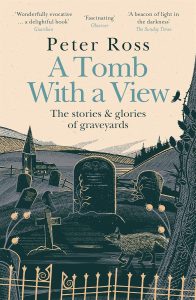 Ross, Peter. A Tomb with a View: The Stories & Glories of Graveyards. London: Headline Publishing Group. 2020. 352 pages, 325 pages of text. Index, selected sources, b/w images. ISBN 9781472267788. $17.99.
“Our new constitution is now established, and has an appearance that promises permanency, but in this world nothing can be said to be certain, except death and taxes.”
Benjamin Franklin, writing to Jean-Baptiste Le Roy in 1789
While Franklin didn’t coin the death and taxes line, his is the most famous use of it, and it is paraphrased to this day.
It is this fascination with death and the commemoration of the dead, whether relatives or not, that leads so many people to websites such as Findagrave, while others prefer the actual wandering of cemeteries. So popular is this hobby that there is a formal name involved: taphophile. A taphophile is someone with an interest in cemeteries and headstones, and their associated meanings. They may also have an interested in funerary history and customs. Tombstone tourism is a popular activity with many seeking to visit as many cemeteries or famous graves as possible. If this at all sounds like you or someone you love, I have the perfect book for you.
Peter Ross has penned a highly readable, and quite interesting, look at the customs and rituals of death, and how we the living remember the departed. He does this through examination of the tiniest handful of the estimated 14,000 cemeteries in the United Kingdom, of which, 3,500 predate World War I (see page 12). Ross visits and provides insights on both the well known and the seemingly forgotten; the traditional and the latest trends; all while paying respects to personal beliefs of others and their religions.
We learn of London’s Magnificent Seven cemeteries including, Kensal Green, West Norwood, Highgate, Abney Park, Brompton, Nunhead, and Tower Hamlets. As the population of London expanded, the small churchyard cemeteries were no longer able to handle the need for burial space. These private cemeteries, based upon French examples, were created outside the central London area. Over time, however, size, and changes in burial custom, i.e. growth of cremation, led to funds shortages. These monuments to the dead deteriorated and in some instances even became dangerous. Fundraising and heavy volunteer commitment has led to a revival in the appearance of these cemeteries.
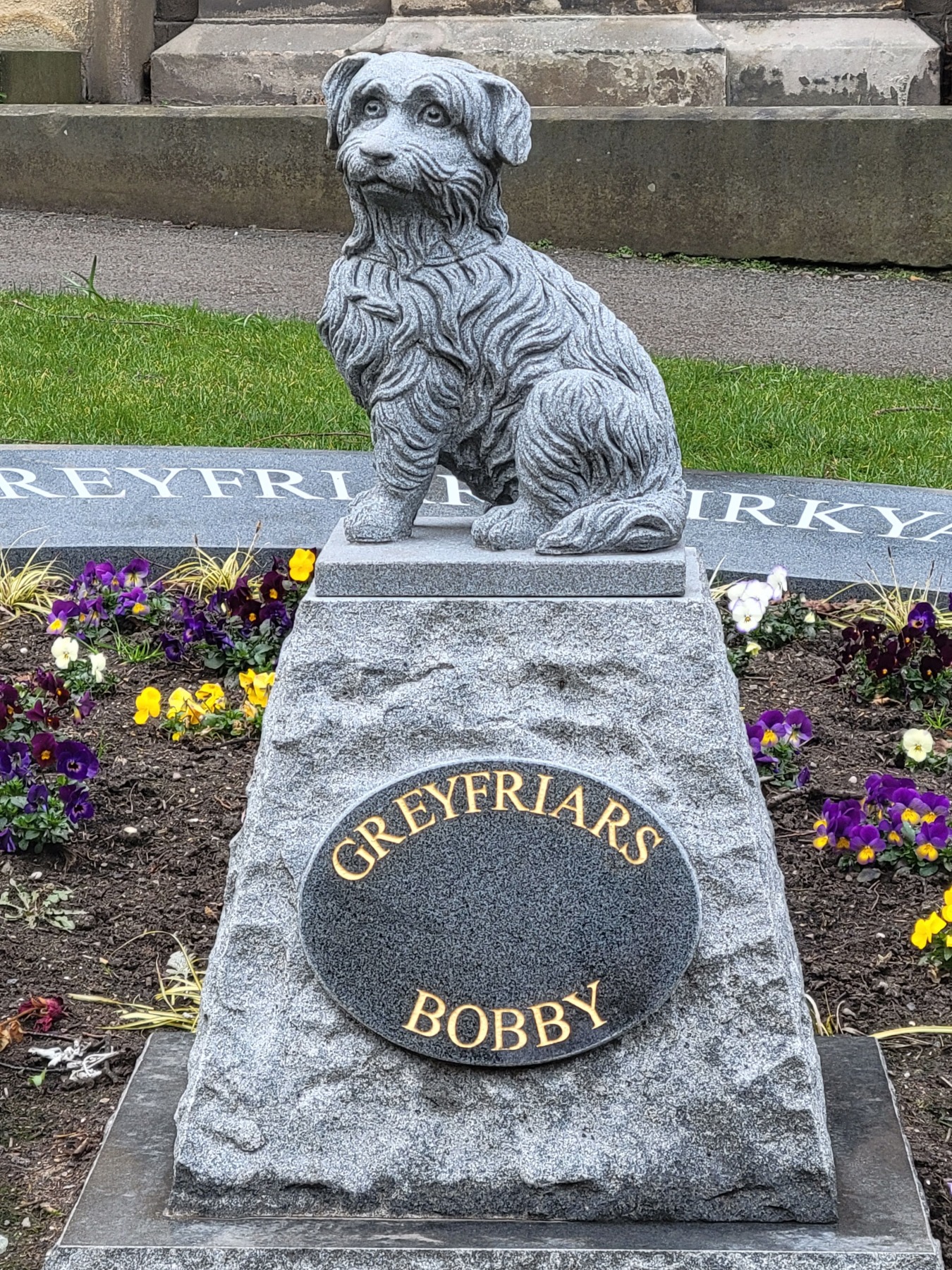
No look at UK cemeteries would be complete without an obligatory visit to Greyfriars and a telling of the Greyfriars Bobby story. The loyalty of Bobby may have made him the most famous dog in Scottish history.
We visit Milltown Cemetery, an Irish cemetery with strong ties to the Irish Republican movement. Ross provides a brief insight into “The Troubles” and a belief that burials in the Republican section had to come from violence for the cause. In 1988, a loyalist called Michael Stone attacked a Republican funeral being held for three provisional IRA members.
Interesting stories and insights are provided into the Commonwealth War Graves Commission including the black market for authentic battlefield memorabilia. Readers are introduced to the Muslim customs of death and burial, chief among these being the requirement to bury the dead within 24 hours and that all Muslims be buried in the same manner. Increases in cost in the London area are making burials more prohibitive for some. Many bodies are being shipped out of country for internment despite the 24-hour burial goal.
We are taken underground to the Bone Crypt at Holy Trinity Church in Rothwell where visitors come face to skull with more than 1,000 skulls and around 2,500 sets of remains. Toward the end of his book, Ross investigates the newer trend of “natural burial” in a chapter titled Crows. A growing trend since around 1991, there are approximately 300 natural burial grounds in the UK. Natural burial entails a usually unembalmed body being placed in a biodegradable coffin or only in shroud. These bodies are buried approximately three to four feet deep, shallower than traditional burial, but deep enough to allow for decomposition while not attracting digging animals. There are seldom headstones associated with this type of burial.
The book concludes with a listing of selected resources, listed by chapter. For a book like this, the style seems to work, though it is a bit nontraditional. There are no notes included and the book is woefully inadequate as far as images. There is one small image at the start of each chapter and a few small images scattered throughout the text. I think that is a missed opportunity and that images would have enhanced the book considerably.
My quibble over photos aside, this is an excellent book. It should be in the library of any reader interested in cemeteries, mourning rituals, and death customs. It is well written and an easy read. The chapters can be read in any order without concern for missing something. This one is going to rank highly in my final listing of books read in 2026.