Visit the Childhood Home of Dr. Howard Thurman, in Daytona Beach, and be sure to read the Florida Historic Marker which is located in the front yard.
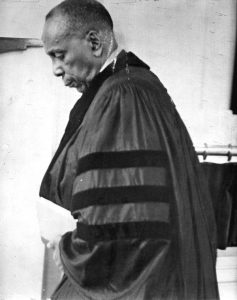
Howard Thurman was born in West Palm Beach, Florida in 1899 and the family relocated to Daytona Beach the following year. Early on, he developed a kinship with nature and a “hunger of the heart”–a curiosity into the meaning of life. He found refuge during times of loneliness and trepidation in an old oak tree in his back yard. It was while young Howard stood with his back placed firmly against the tree that he first felt the unity of all living things and engaged in what he would later call, “the religious experience.”
When Thurman was seven years old, his father died of pneumonia and his mother took on a job as a domestic., so he mainly was raised by a strong and affirming grandmother. She was a former slave who had a profound influence on what would become an essential part of Thurman’s thought–that if theology is to have any validity, it must justly deal with one’s life situation and must affirm one’s worth as a child of God.
One of Thurman’s family friends and early influences was Mary McLeod Bethune, who started a school for African American girls in Daytona Beach in 1904., which later became Bethune-Cookman University. Bethune was an educational role model for Thurman. Later in life, he delivered the eulogy at her funeral in 1955.
Historic Childhood Home of Dr. Howard Thurman
Side One
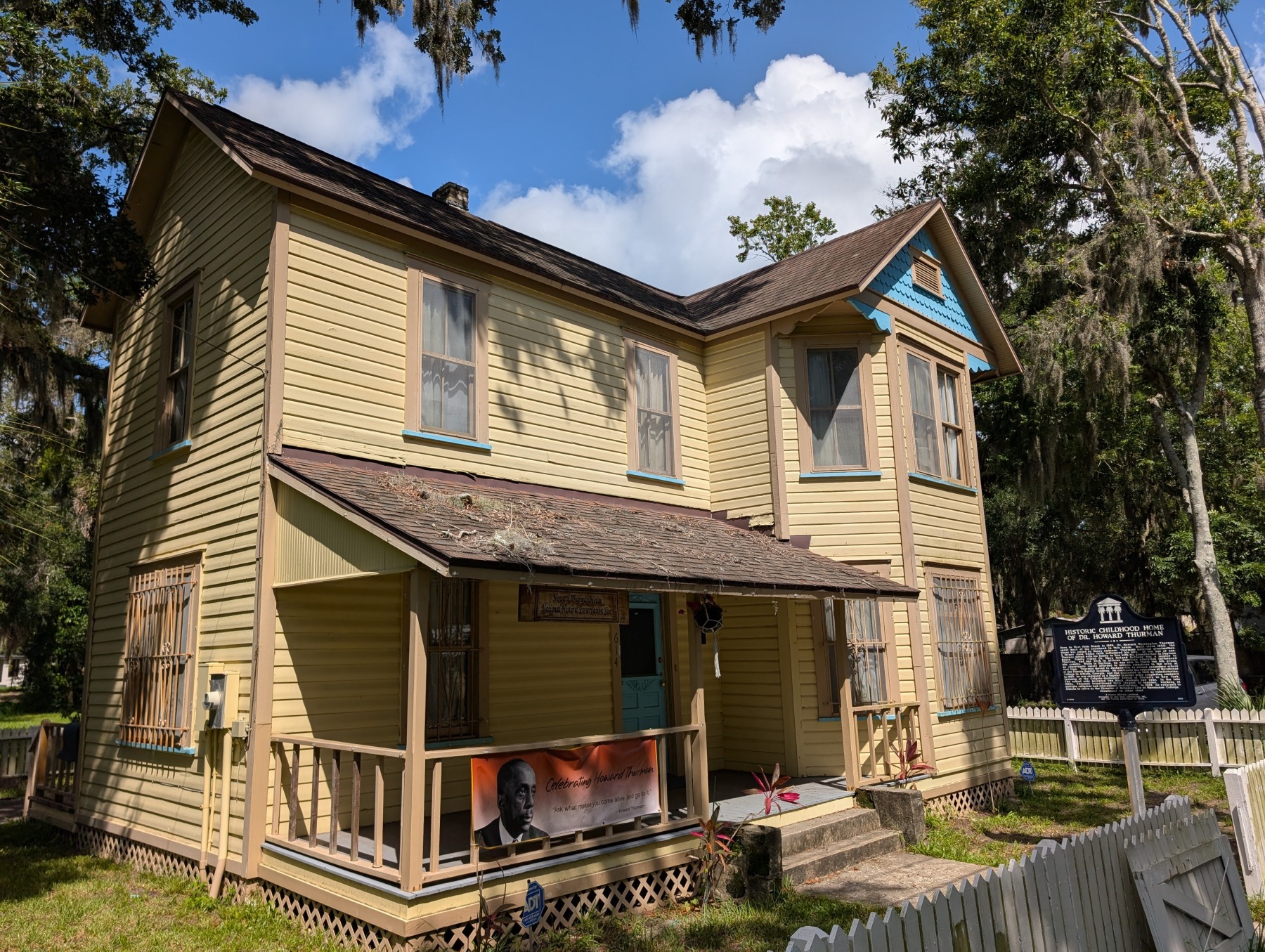
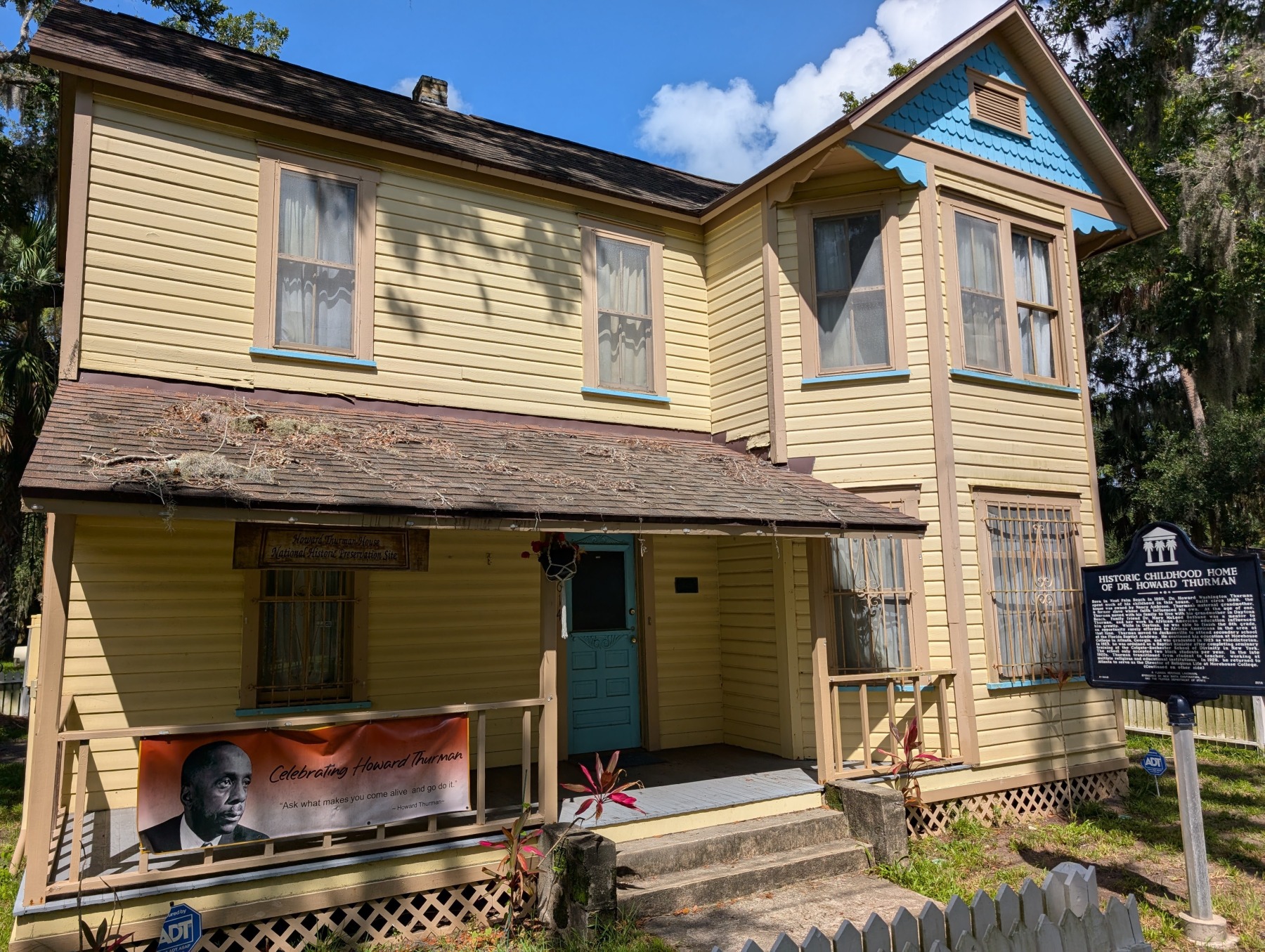
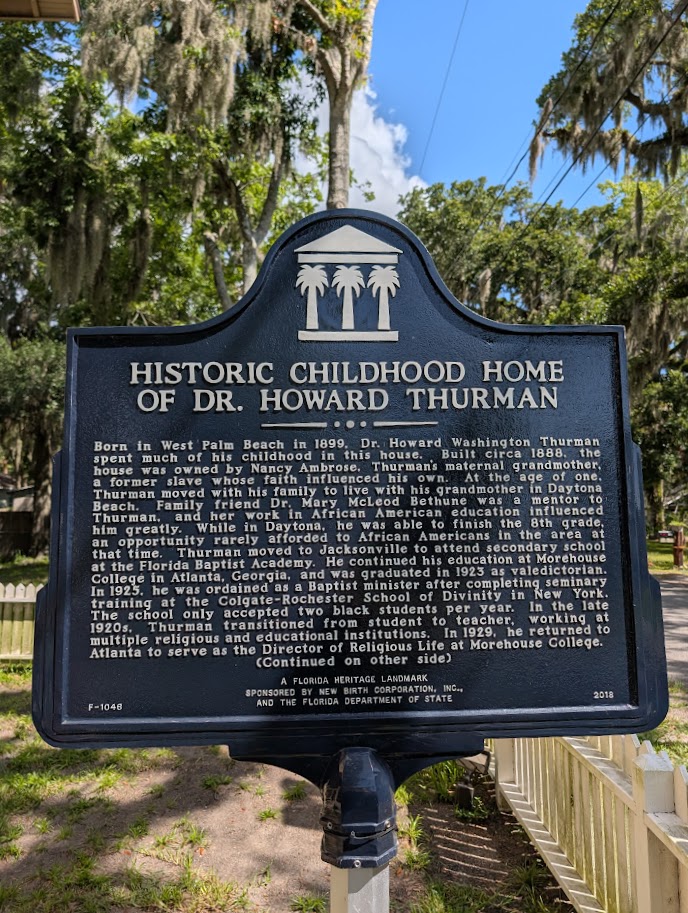 Born in West Palm Beach in 1899, Dr. Howard Washington Thurman spent much of his childhood in this house. Built circa 1888, the house was owned by Nancy Ambrose, Thurman’s maternal grandmother, a former slave whose faith influenced his own. At the age of one, Thurman moved with his family to live with his grandmother in Daytona Beach. Family friend Dr. Mary McLeod Bethune was a mentor to Thurman, and her work in African American education influenced him greatly. While in Daytona, he was able to finish the 8th grade, an opportunity rarely afforded to African Americans in the area at that time. Thurman moved to Jacksonville to attend secondary school at the Florida Baptist Academy. He continued his education at Morehouse College in Atlanta, Georgia, and was graduated in 1923 as valedictorian. In 1925, he was ordained as a Baptist minister after completing seminary training at the Colgate-Rochester School of Divinity in New York. The school only accepted two black students per year. In the late 1920s, Thurman transitioned from student to teacher, working at multiple religious and educational institutions. In 1929, he returned to Atlanta to serve as the Director of Religious Life at Morehouse College.
(Continued on Other Side)
Side Two
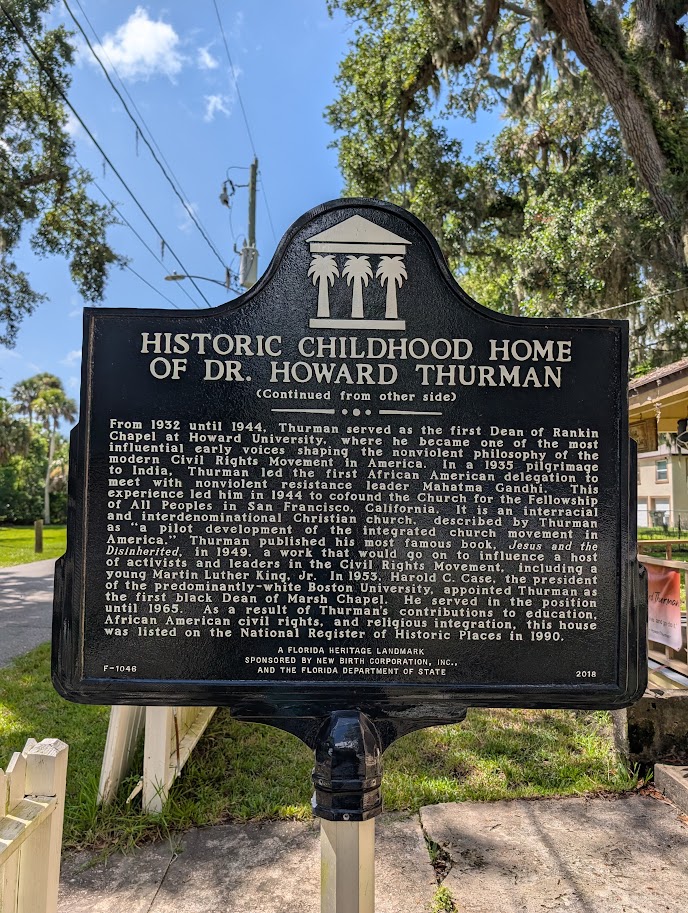
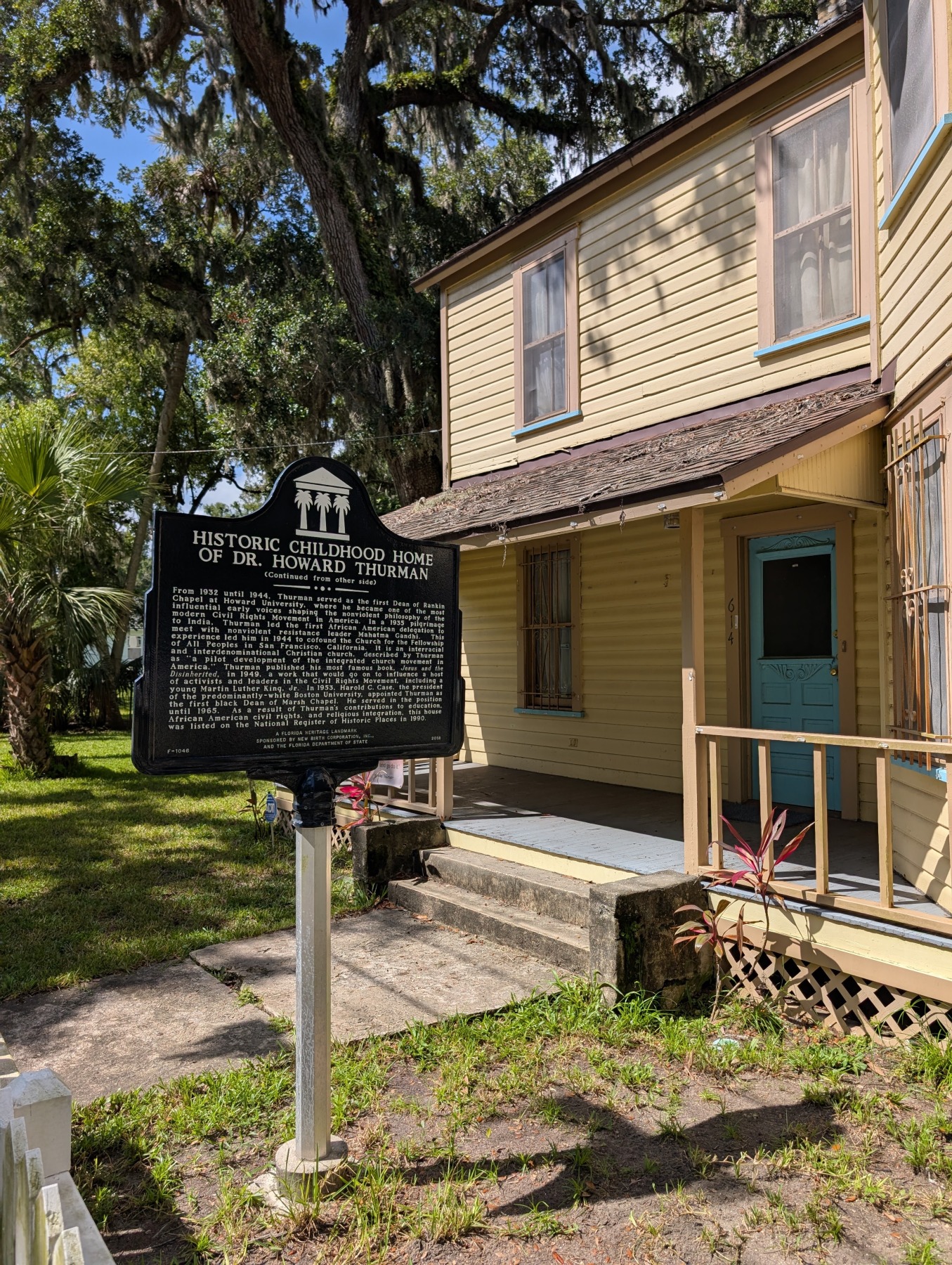
(Continued from Other Side)
From 1932 until 1944, Thurman served as the first Dean of Rankin Chapel at Howard University, where he became of the most influential early voices sharing the nonviolent philosophy of the modern Civil Rights Movement in America. In a 1935 pilgrimage to India, Thurman led the first African American delegation to meet with nonviolent resistance leader Mahatma Gandhi. This experience led him in 1944 to cofound the Church for the Fellowship of All Peoples in San Francisco, California. It is an interracial and interdenominational Christian church, described by Thurman as “a pilot development of the integrated church movement in America.” Thurman published his most famous book, Jesus and the Disinherited, in 1949, a work that would go on to influence a host of activists and leaders in the Civil Rights Movement, including a young Martin Luther King, Jr. In 1953, Harold C. Case, the president of the predominantly-white Boston University, appointed Thurman as the first black Dean of Marsh Chapel. He served in the position until 1965. As a result of Thurman’s contributions to education, African American civil rights, and religious integration, this house was listed on the National Register of Historic Places in 1990.
Sponsored by New Birth Corporation, Inc. and the Florida Department of State
F-1046 2018
Below are a few images I took of the exterior of the Historic Childhood Home of Dr. Howard Thurman. Unfortunately, I stopped by on a day when they weren’t scheduled to be open. I will need to correct that soon.
The Florida Historical Marker Program is one of the Division of Historical Resources’ most popular and visible public history programs. It is designed to raise public awareness of Florida’s rich cultural history and to enhance the enjoyment of our historic sites by citizens and tourists. These markers allow us to tell the stories of the places and people who created the Florida that we all enjoy today, by identifying the churches, schools, archaeological sites, battlefields and homes that represent our past.
If you wish to learn more about this state program, including qualifications, how to apply, the application, costs, and more, please use THIS LINK.
Pin this post to share with your followers and never lose it.