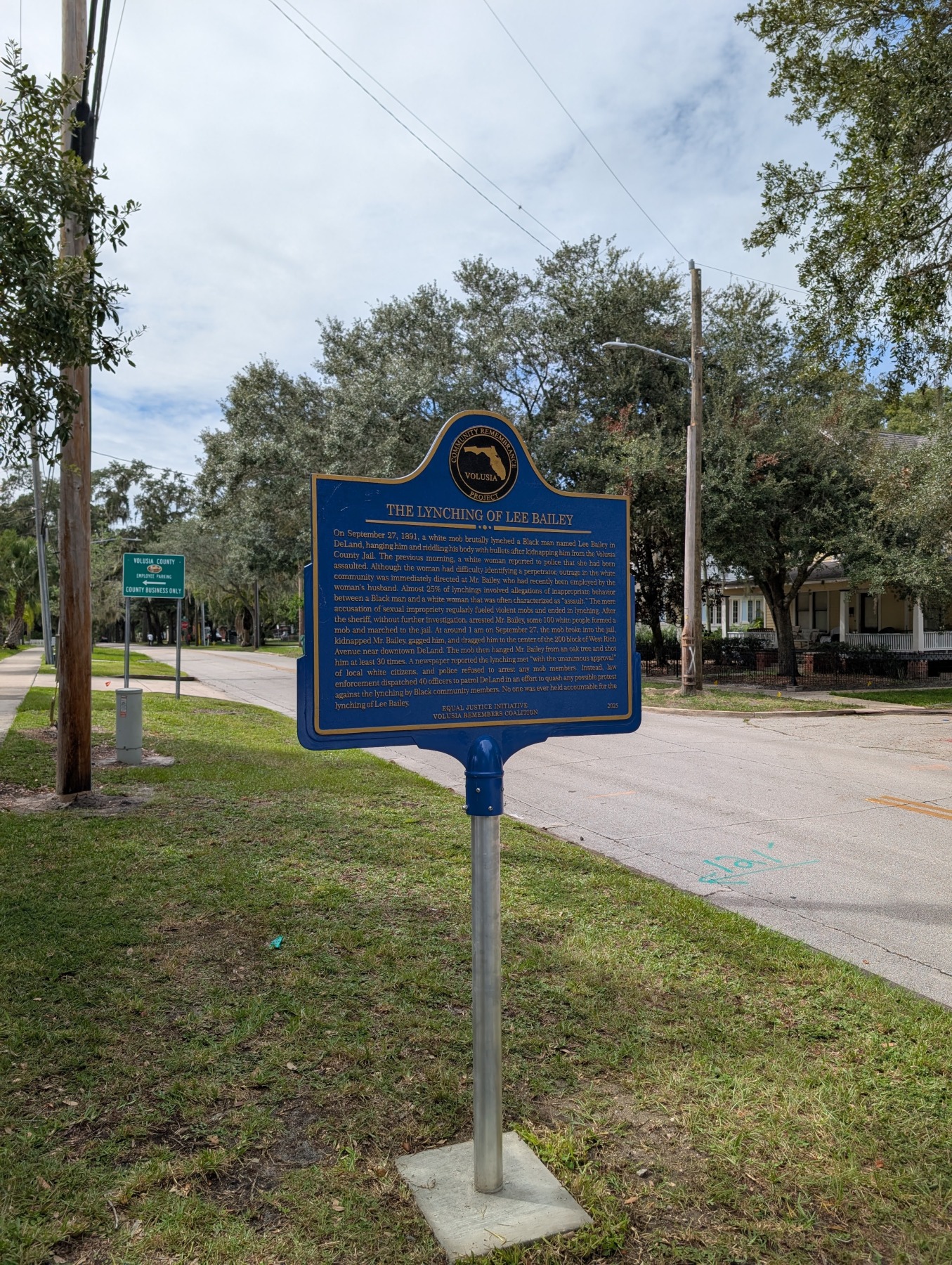
In 1891, Lee Bailey was the victim of a lynching in DeLand, FL. His story is now remembered with a historic marker in DeLand, Florida. The marker is located in the 200 block of west Rich Avenue, near the county owned parking lot. An easy way to find this marker, is to find Tom’s Auto Repair. The marker is across the street.
Bailey is one of five identified lynchings in Volusia County. More than 350 lynchings occurred in Florida between the end of the Civil War and 1950.
The marker was placed with the approval of the City of DeLand by the Volusia Remembers Coalition and the Equal Justice Initiative. A public unveiling of the marker was held on Saturday, September 27. The goal of the marker and Volusia Remembers Coalition is to honor, educate, and reconcile.
 The Lynching of Lee Bailey
On September 27, 1891, a White mob brutally lynched a Black man named Lee Bailey, in DeLand, hanging him and riddling his body with bullets after kidnapping him from the Volusia County Jail. The previous morning, a White woman reported to police that she had been assaulted. Although the woman had difficulty identifying a perpetrator, outrage in the White community was immediately directed at Mr. Bailey, who had recently been employed by the woman’s husband. Almost 25% of lynchings involved allegations of inappropriate behavior between a Black man and a White woman that was often characterized as “assault.” The mere accusation of sexual impropriety regularly fueled violent mobs and ended in lynching. After the sheriff, without further investigation, arrested Mr. Bailey, some 100 White people formed a mob and marched to the jail. At around 1 a.m. on September 27, the mob broke into the jail, kidnapped Mr. Bailey, gagged him, and dragged him to the center of the 200 block of West Rich Avenue near downtown DeLand. The mob then hanged Mr. Bailey from an oak tree and then shot him at least 30 times. A newspaper reported the lynching “met with the unanimous approval” of local White citizens and police refused to arrest any mob members. Instead, law enforcement dispatched 40 officers to patrol DeLand in an effort to quash any possible protest against the lynching by Black community members. No one was ever held accountable for the lynching of Lee Bailey.
2025
Equal Justice Initiative Volusia Remembers Coalition
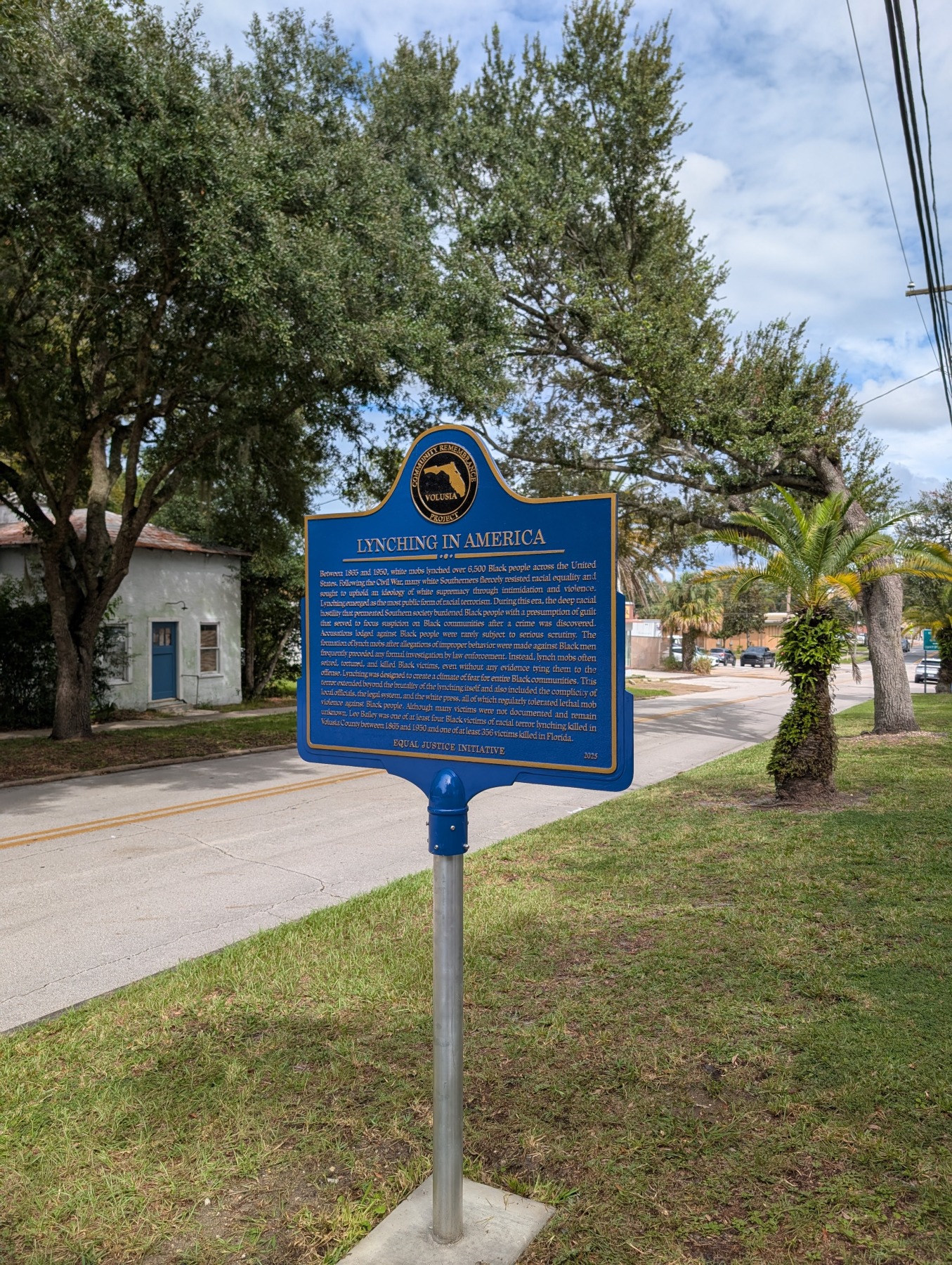
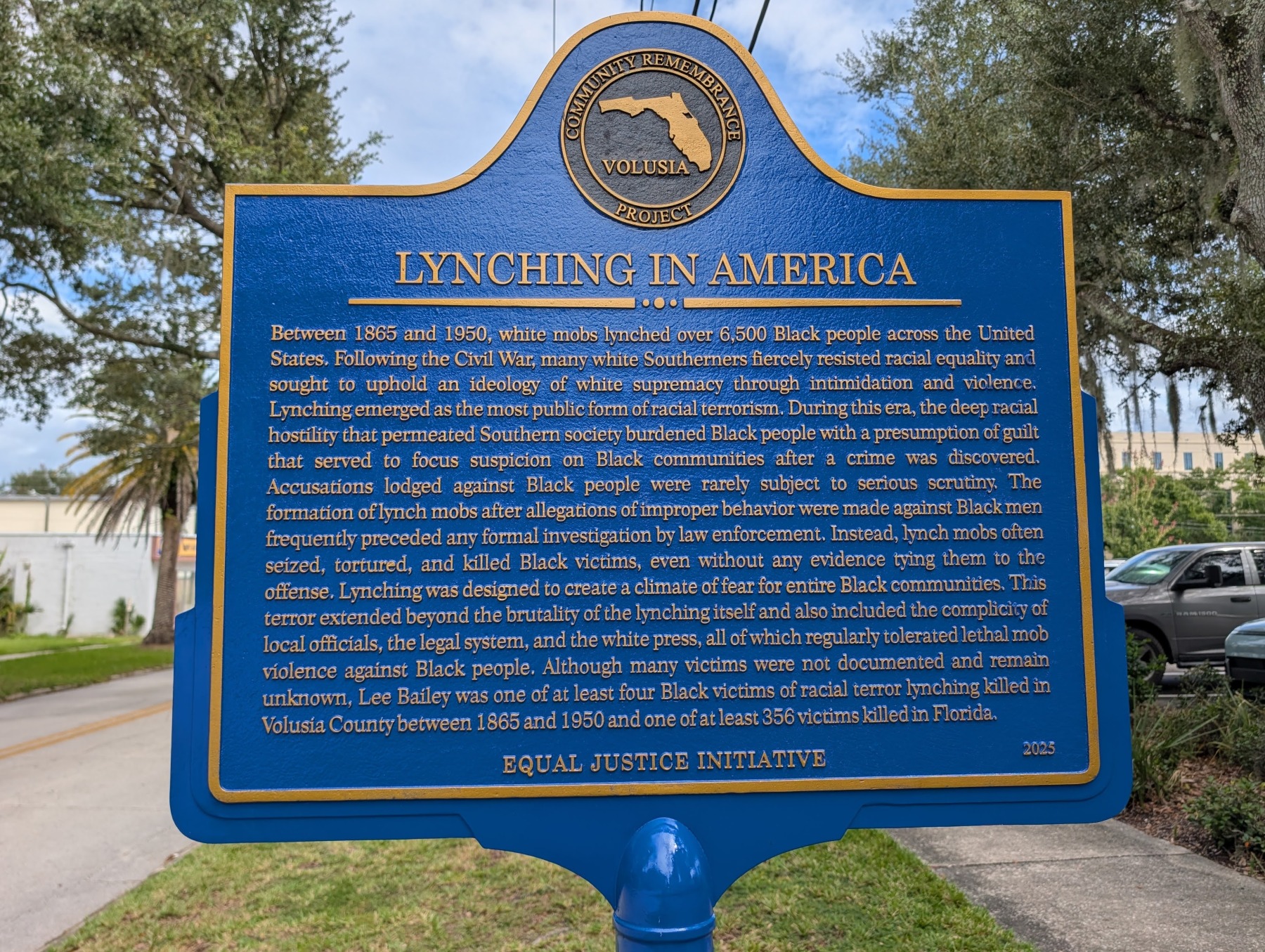 Lynching in America
Between 1865 and 1950, White mobs lynched over 6,500 Black people across the United States. Following the Civil War, many White Southerners fiercely resisted racial equality and sought to uphold an ideology of White supremacy through intimidation and violence. Lynching emerged as the most public form of racial terrorism. During this era, the deep racial hostility that permeated Southern society burdened Black people with a presumption of guilt that served to focus suspicion on Black communities after a crime was discovered. Accusations against Black people were rarely subject to serious scrutiny. The formation of lynch mobs after allegations of improper behavior were made against Black men frequently preceded any formal investigation by law enforcement. Instead, lynch mobs often seized, tortured, and killed Black victims, even without any evidence tying them to the offense. Lynching was designed to create a climate of fear for entire Black communities. This terror extended beyond the brutality of the lynching itself and also included the complicity of local officials, the legal system, and the White press, all of which regularly tolerated lethal mob violence against Black people. Although many victims were not documented and remain unknown, Lee Bailey was one of at least four Black victims of racial terror lynching killed in Volusia County between 1865 and 1950 and one of at least 356 victims killed in Florida.
2025
Equal Justice Initiative
As often occurs, I have a couple of minor quips with this Marker. The first being a grammatical correction I have made in my text. We either capitalize or use lower case for skin color. This choice should be used consistently. I capitalize, so I have done that throughout my transcription of the marker text. My second comment is that I find the text a bit long on both sides of the marker. Both sides seemed to lose a little bit of focus.
NOW, that being said, this is a vitally important marker. Lynchings were (and still are to read about them) terrible events that never should have occurred in a civilized society. We need to not forget these monstrous events happened. The Volusia Remembers Coalition and Equal Justice Initiative deserve credit for researching this story and bringing it to the attention of the world.