
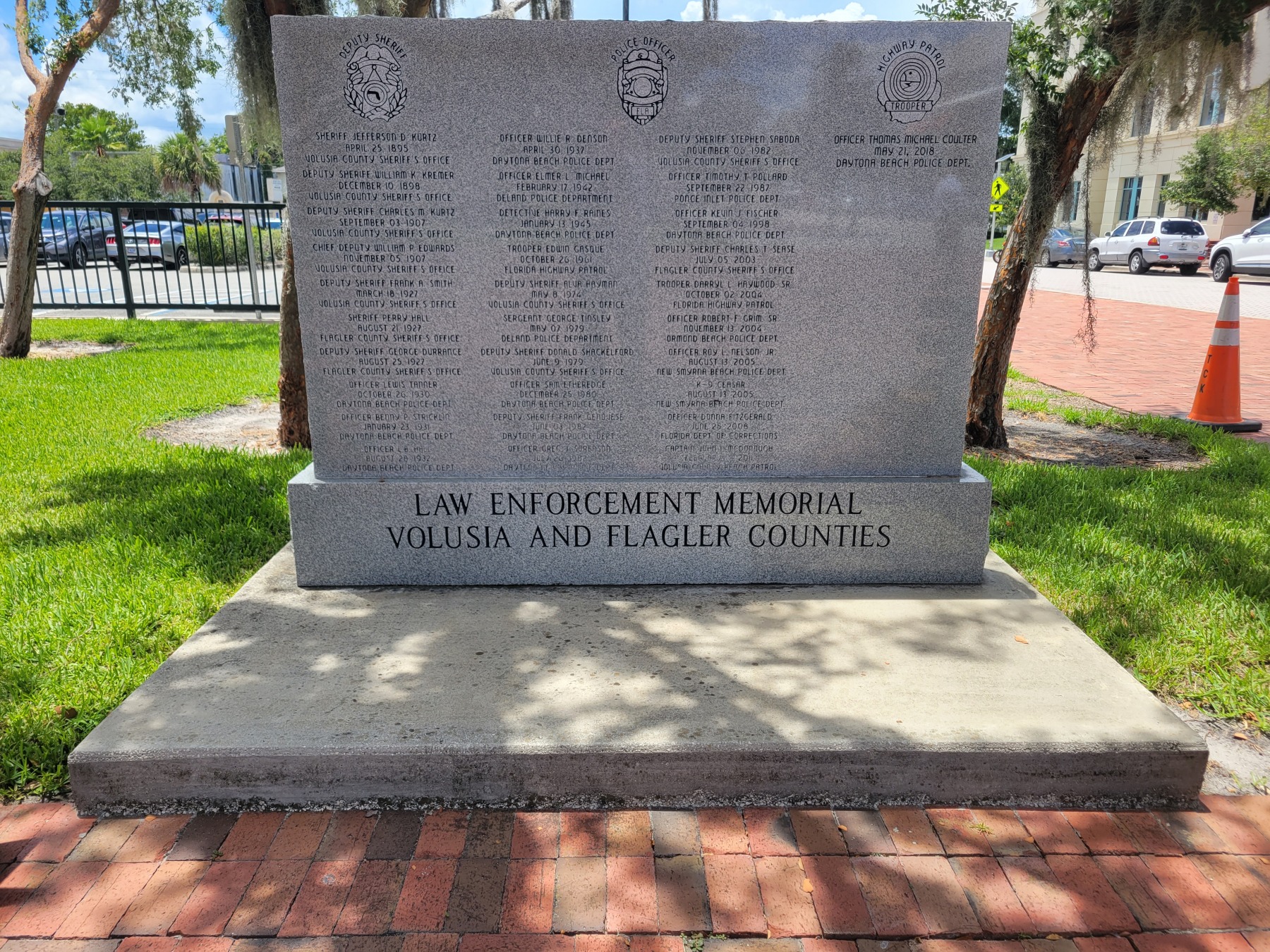
On the night of January 23, 1931, Daytona Beach, FL police officer Banny Praither Stricklin was shot and killed during a shootout with burglary suspect Joe “Nassau Red” Ward.
Banny Praither Stricklin was born in January 1896 to parents James Golden and Sophronia Belle (Brewer) Stricklin, of Wayne County, Tennessee. According to the 1900 United States Census report, father James was a student, at age 26, and Sophronia did not work outside the home. The young Stricklin family lived with James’s parents, Samuel H. and Sarah. By 1910, the younger Stricklin family were living on their own, James working as a surveyor in the Wayne County area. (U.S. Census Reports 1900, 1910)
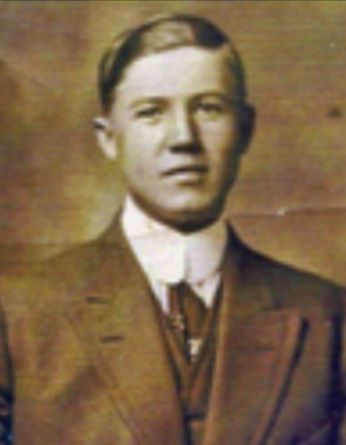
Soon, young Banny was to meet Mary Lois Busby and the two were married on October 4, 1914. Banny was only 18 with Lois being around 16/17. The Nashville Banner ran notice of the wedding stating the young couple were wed at the home of Judge and Mrs. E. E. McNely and that “the wedding was a surprise to the many friends of the young couple.” (Nashville Banner 10/10/14)
The young newlyweds quickly started a family with daughter Lera being born in 1916.
With World War I raging and the United States on the verge of full participation, Banny was required to register for the draft in 1917. The Stricklins were living in Collinwood, TN. Banny described himself on his registration card as being of medium build with brown eyes and black hair. He was self-employed, operating a grist mill. The young man requested an exemption from military service, having served two years in the Tennessee State Guard, in the 1st TN Regiment. Further, he was needed at home to care for his wife, daughter, and mother. I cannot see that Stricklin served during the Great War. (World War I Draft Registration Card)
By 1920, the still quite young family were living with Lois’s family in Lawrenceburg, TN. Little Lera and the family had welcomed a second daughter, Anita, to the family in 1919. Banny was employed as a construction worker, working with his father in law.
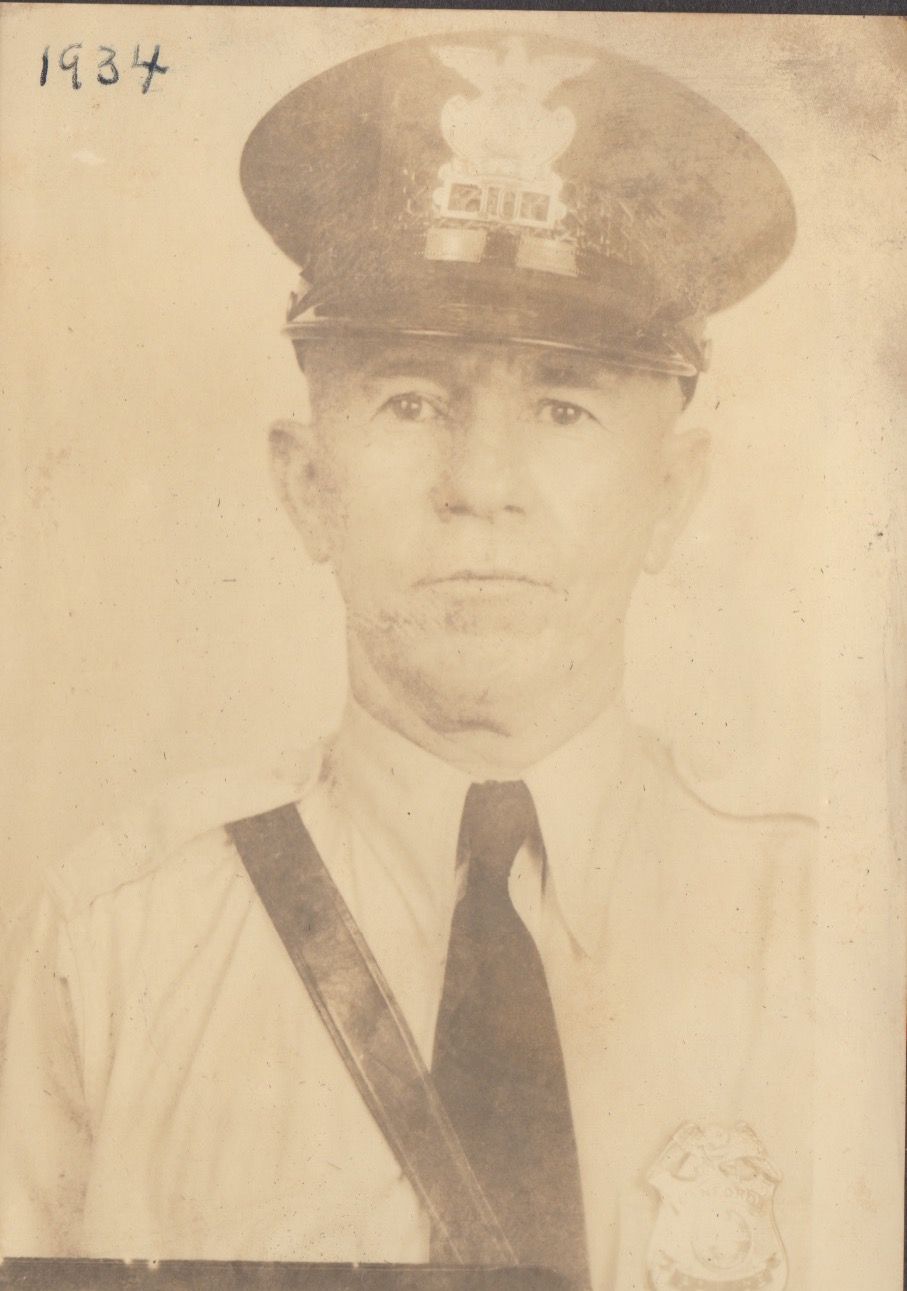
Some time during the late 1920s, the Stricklin family broke from their family ties and moved to Daytona Beach, FL. Here, they rented a home, hoping to start a new life. Banny owned Strickland Service Station, while Lois worked out of the home and was the primary caregiver to the children. Perhaps seeking to provide a stable living for his family, Banny accepted employment with the Daytona Beach Police Department in December 1930.
The early morning hours of January 23, 1931 were eventful ones for Daytona Beach Police Officers. The area south of what was then Halifax Boulevard, now International Speedway Boulevard, was the scene of several home intrusions. Ultimately, one police officer was shot, dying several hours later from his wounds.
M.C. Jones, of First Street, reported the loss of five dollars from his room. A.J. Burch, who lived on S. Beach Street reported chasing a “negro” intruder from his home around 1:30 a.m., firing off two shots in the process. Whether these minor crimes could have been pinned on the same individual who later killed Officer Banny P. Stricklin, is unknown.
According to reports, around 3:00 a.m., Howard Elting of S. Ridgewood Avenue, was awakened to find an intruder in his room who demanded money. Elting’s shouts awakened his wife and maid who were asleep upstairs in the home. When Elting told the intruder he had no cash, the man made off with a pair of pants and an overcoat.
Mrs. Elting screamed awakening the neighbors. Mr. Elting pushed the assailant out a door, though neither he nor his wife managed a good look at the intruder. The burglar left quickly into the night, carrying a flashlight and his pilfered clothing.
Officers were quickly on the scene. Sergeant Roy Tillis, Banny Stricklin, and “two negro patrolmen,” R.C. Clark (I believe this memorial to be for the correct person) and Clarence Roberts gave chase. They tracked the unknown robber to the neighborhood of South and First streets. Sergeant Tillis placed his men at “strategic points,” and ran in search of additional help.
The three officers patrolled their assigned territory, seeking to prevent a getaway. Clark and Roberts reported gunfire; two sharp discharges preceding a much heavier sounding shot. The officers heard Stricklin yell that he had been shot. Rushing to the intersection of South and First, the two officers found Stricklin lying in a pool of blood, where he soon lost consciousness.
Stricklin, gravely wounded, was rushed to Halifax district hospital. Surgeons Joseph H. Rutter and James Ralston Wells quickly found Officer Stricklin had been shot in the right shoulder, a major artery being severed, accounting for the considerable loss of blood. Patrolman Stricklin, on the force less than one year, passed at 10:10 a.m. from severe loss of blood. He is claimed to have said to a fellow officer, “He got me. I’m going to die. Oh, my poor wife and babies.” (Shooting details: Daytona Beach News Journal 1/23/1931)
The immediate investigation determined that Stricklin’s gun had two empty chambers, matching the sounds reported by Officers Clark and Roberts. Local residents however disagreed with the two officers sequence of events, stating the loud, heavier shot was first, followed what would be Stricklin’s two rounds. Residents aroused by the commotion claimed to have seen a seen the assailant, describing him as a “negro wearing a brown overcoat.” (DBNJ 1/23/1931)
The DeLand Sun News provided a racially charged description of the murder suspect stating “that the negro was a light brown or ginger bread color, tall, slim, and stoop shouldered. He was apparently from 35 to 38 years of age and weighed about 165 pounds. The negro is said to have worn a light cap, an overcoat which had been stolen and which was of a light brown or tan color. In this overcoat was a leather cigarette case, a whistle, and some keys. The coat had a New York label in it. ” (DeLand Sun News 1/23/1931)
As happens when a law enforcement officer is killed, action was swift in trying to name and apprehend the accused. A $100 reward was quickly put forward by the City of Daytona Beach. The city was littered with handbills and posters seeking information and residents were quick to respond. Unfortunately, the tips led nowhere quickly.
A jury of inquest into the shooting was held which proved inconclusive. Both officers Clark and Roberts were unable to identify the gunmen and could not state with certainty the man’s race. Howard Elting testified about the intruder at his residence but as with the officers, could not state conclusively if the man was White or Black.
Muddying the waters was the testimony of Dr. Joseph Rutter, who stated the wound suffered by Stricklin would have caused him to bleed to death almost immediately. Rutter stated the right hand firing Stricklin almost certainly would have had to have fired first, because the wound would have paralyzed his arm. The men of the jury discounted the possibility of Stricklin firing with his left hand due to the rapid discharge sounds reported.
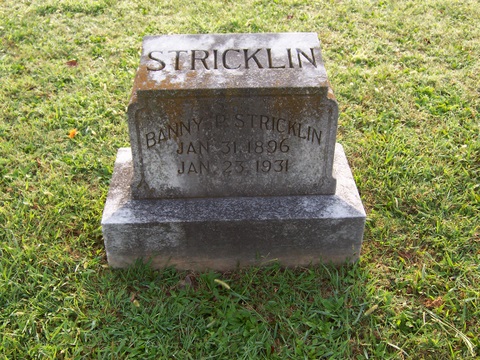
The body of Banny P. Stricklin was handled by the local funeral home, Baggett-Wetherby, and was loaded on a train, which departed for Waynesboro, TN, the day after the murder. The Stricklin family was onboard as well, with it being reported they would be leaving Daytona Beach to live with family in Tennessee. Young officer Praither was laid to rest in McGlamery Cemetery, in Collinwood, TN. (DBNJ 1/25/1931)
During the inquest, Officers Clark and Roberts testified they had seen the robbery suspect race into a wooded area prior to their fellow officer being mortally wounded. Roberts encouraged Clark to go with him into the dark area in an attempt to apprehend them. Clark testified that he was afraid to follow and refused. For his lack of action, Officer R. C. Clark was relieved of duty. In announcing the termination, Daytona Beach Police chief Charles J. Luke stated, “We cannot have men on the force who are afraid to face the music. It’s unpleasant, but that’s what we are for.” (DBNJ 1/26/1931)
In the wake of R.C. Clark being relieved of duty for failing to act, a new officer was needed and Chief Luke wasted little time in filling the opening. As reported in the News Journal, “Jessie Mitchell, negro, will carry out the police duties formerly executed by Patrolman R.C. Clark…” (DBNJ 1/29/1931)
For more than two weeks, there was seemingly little to report and it certainly had to feel as if the trail had grown cold. Two days after Valentine’s Day, on February 16, 1931, news broke that “a negro” by the name of Joe Ward, using the nickname “Nassau Red,” approximately 35 years old, was being held in a Miami jail awaiting Constable George L. Haney to arrive and whisk him back to Volusia County where murder charges awaited him.
Police chief Charles Luke, using informant information from one of five known Ward compatriots, tracked the shooter to Miami where Nassau Red was located, already behind bars, suspected in the robbery of a Miami Beach home. Miami police willing gave up the murder suspect and he was immediately brought back to Daytona Beach, arriving at 3 a.m. in the morning of the 17th. (DBNJ 2/16/1931)
It didn’t take long for the accused to confess to being the shooter. By early afternoon on February 17, Ward had confessed and waived his preliminary hearing. He was to be transported to the county jail facility in DeLand and held for trial. It went unreported whether Ward had received legal counsel at this time. (DBNJ 2/17/1931)
Ward would not be alone in jail for long however. Only days later, Constable Haney made the long drive to Miami a second time, returning with Clyde Morrison, a 25-year old “negro,” who was held for being an accessory before the fact according to the warrant. Morrison appeared before justice Charles L. Beers for a first hearing on February 23 with Joe Ward testifying as a witness.
Ward testified that it was Morrison who acted as his driver and had supplied the weapon used in the shooting of officer Stricklin. Arresting officer Haney testified that Morrison admitted selling the weapon to James Gaskin and that he, Haney, had recovered the weapon from Gaskin.
The accused was represented by attorney Paul W. Harvey. Harvey attempted to provide Morrison with an alibi, placing Jannette Falson, Morrison’s “sweetheart” on the stand. She stated the accused as with her from 8:30p until 2:30a. Morrison’s mother testified that he arrived home at 3:00a.
As would have been expected, Morrison was ordered held for trial and placed in the county jail in DeLand. (DBNJ 2/22/31, 2/23/31)
In early April, Morrison, with the assistance of a new attorney, Elmer Jones, was granted a habeas corpus action with Judge Marion G. Rowe presiding. Bond for the accused was set at $5,000, but there appeared to be no immediate action with Morrison remaining in custody. (DBNJ 4/3/31)
Court actions began in earnest during the second week of July. A grand jury was convened on July 9 with ten witnesses summoned to provide testimony. Called before the grand jury were police chief Charles J. Luke, officers Roy Tillis and J. M. Durden, constable George L. Haney, E. V. Dickman, Clyde Morrison, Lilly M. Lloyd, Nora Adams, James Gaskin, and the accused, Joe Ward.
The grand jury returned with a charge of first degree murder with a trial date set for July 20, 1931. Ward entered a plea of not guilty to the crime charged, which carried with it a death penalty. The court appointed Joseph A. Scarlett to serve as defense counsel. The same grand jury returned a no true bill against Ward conspirator Clyde Morrison. A no true bill meant that they were unable to determine if there was enough evidence against Morrison in order to prosecute at that time. It did not mean they believed him innocent. Morrison was held as a material witness on a $1,000 bail. (DBNJ 7/8/31, 7/13/31)
Court proceedings moved quickly. The same week as a the grand jury indictment, judge Daniel Simmons drew a venire (pool of jurors) of 18 regular and 36 special to potentially serve as jurors for the trial. These same jurors were also called for two additional first degree murder cases. State attorney Murray Sams, known as an aggressive prosecutor, stated that “We are ready for trial Monday…” (DBNJ 7/16/31, 7/19/31)
The trial of Joe Ward took place at the Volusia County Courthouse, in downtown DeLand, to much fanfare as would be expected in such a significant case. A jury was quickly selected in the morning. The defense excused four jurors using peremptory challenges; C.L. Stone, Eric Causey, Arthur B. Wilkinson, and Fulton F. Smith. Two jurors were excused for “conscientious scruples;” F.J. Nordman and John “Pat” Sheedy.
The final empaneled jury included G.R. Brownlee, E.H. Washburn, G.W. Horn, J.G. Cade, J.M. Hughes, Herbert C. Russell, R.O. Kirchoff, Harry Eastman, G.B. Thomas, N.H. Harper, George W. Tanner, and D.L. Waters.
Murray Sams called the first witness, Dr. Joseph H. Rutter, who dramatically testified how officer Stricklin had bled to death from a bullet severed artery. Police Chief Charles J. Luke then identified the bullet which had been introduced as evidence to the jury.
A further parade of witnesses were called by Sams, describing the events of the evening, including robbery and the shooting. Sergeant Roy Tillis described the search for a robbery suspect, leading them to a wooded area. Tillis recounted gathering officers Clarence Roberts and Jessie Clark (earlier reported as R.C. Clark), along with Stricklin and posting them at the woods while he attempted to find additional officers. After hearing of the shooting, Tillis testified, “With officer James McHale, I rushed to the scene. We found Stricklin weltering in blood and unable to walk. I left several officers on the scene in ambush and rushed Stricklin to the hospital where he died a few hours afterwards.”
Next on the stand was officer Clarence Roberts. Roberts stated, “Clark and I were quite a little distance from Stricklin. Suddenly we heard three rapid shots and a call for help from the officer. I rushed to his aid and Clark followed later. I sent him [Clark] to telephone headquarters. Stricklin gave a description of the negro who shot him and told which way he went. Soon the other officers arrived.”
Clyde Morrison, Ward’s accomplice, was called and proved a key witness for the prosecution. Morrison testified that on the day after the shooting, Ward visited him and left the murder weapon in his [Morrison’s] possession. Morrison testified he later agreed to drive Ward to Cocoa for ownership of the gun and ten gallons of gas. Morrison claimed he agreed to this arrangement out of fear.
From here, the ownership of the weapon becomes a bit muddled as Morrison claims he sold the weapon to James Gasque, a Black man from Daytona Beach. Gasque took the stand and stated he turned the weapon over to Constable Haney, who himself took the stand to identify the weapon.
Defense attorney Scarlett attempted to downplay the testimony of Morrison by showing he had been in jail on charges related to this crime. Judge Simmons however reminded jurors that this was done at court order due to his status as a witness.
While on the stand Constable George Haney brought forth perhaps the most stunning testimony and evidence of the trial. Haney brought forth the signed confession from Ward, stating he had seen a copy of this. The typewritten confession in question was given in the presence of attorney Louis Ossinsky and stenographer Lily (Nellie according to the DeLand Sun News) M. Lloyd. Lloyd testified that while Ossinsky was questioning Ward, Ward stated he wished to confess. Attempts by defense counsel to put Ward on the stand to refute the testimony from Ms. Lloyd proved unsuccessful. The confession was read into evidence by attorney Murray Sams.
Witnesses who closed out the day’s testimony included William O’Shea who identified Ward as having purchase twelve bullets from him the day prior to the murder, and W.C. Jones, a man whose home had been robbed the night of the murder.
With his role of witnesses complete, state attorney Murray Sams rested his case at 3 o’clock.
Defense attorney Joseph A. Scarlett faced the unenviable, and near impossible, task of defending a man accused of killing a law enforcement officer when a signed confession was allowed into evidence. Faced with few options, Scarlett put the accused on the stand to attempt to defend himself. Ward claimed he was coerced into making a confession and that he testified against Clyde Morrison out of fear of the police. Ward testified that chief Luke told him he would never reach the county jail if he didn’t sign the confession. “I confessed what he told me to confess. I wasn’t scared of Chief Luke, but of what they might do to me.”
As would have been expected, Sams easily dealt with Ward, with Luke, Ossinsky, and Lloyd all denying Ward’s claims, while enticing him to admit he was a sailor who made frequent trips to and from Bimini and the Bahamas, returning to the Florida with loads of illegal whiskey as prohibition was still the law of the land. (DBNJ 7/20/31, 7/21/31; DSN 7/21/31)
 To learn more about Prohibition in Florida, I invite you to read Florida Prohibition: Corruption, Defiance, & Tragedy, written by Randy Jaye. You may also order this excellent title directly from the publisher, Arcadia Publishing. If you order any books directly from Arcadia, use my discount code REDD24 and save 15%.
The jury needed only 19 minutes to find Joe “Nassau Red” Ward guilty of first degree murder, a charge which carried the death penalty. His attorney, Joseph A. Scarlett began making plans for his appeal. (DBNJ 7/21/31; DSN 7/21/31)
The following morning, Scarlett filed his motion for appeal with circuit court clerk Samuel D. Jordan, citing multiple reasons for requesting the verdict be set aside and a new trial called. As reported Scarlett’s reasons were: the verdict was contrary to law; the verdict is contrary to evidence; the verdict is contrary to law and evidence; the verdict is contrary to the charge of the court; no evidence was admitted upon which to hinge a premeditated design; the jury was influenced by something other than testimony. Judge Simmons made no immediate ruling on the request. (DBNJ 7/22/31)
On the morning of July 23, judge Simmons ruled in favor of Scarlett’s request with the reasoning that “the verdict is not in keeping with the evidence and would not be sustained by the supreme court.” Having gained this victory, Ward’s attorney, Joseph A. Scarlett entered a guilty plea to second degree murder. While spared the death penalty, Ward was sentenced to life in prison. The following week he was transported to Florida State Prison in Raiford. (DBNJ 7/23/31; 7/28/31)
Little is currently known about Joe “Nassau Red” Ward. As he confessed to in the trial, he worked as a sailor, importing illegal liquor into the United States during the prohibition years. Through his movements after the crime, he can be traced to the Miami area. Whether that was a permanent home or just out of convenience is still unknown.
Unfortunately, with a common name like Joe Ward and little else to go on, tracking his life is exceptionally difficult. Newspaper accounts show that in November 1938, he requested a pardon, which was denied.
One helpful bit of information was that he served time at the Florida State Prison Farm & Hospital in Union County, FL. Through that small lead, I was able to find Ward in the 1940 US Census. Through the Census record, we learn that Ward was born in approximately 1896, which made him 34 or 35 years old at the time of his crime. Unfortunately, the report lists his birthplace as Florida, providing no further clues to locating earlier records. Ward was uneducated, having completed only the third grade.
Ward’s time in prison is currently a mystery. A records request for Ward’s prisoner file came back with no record found. That was certainly frustrating but I suppose not unexpected in a nearly 100 year old case.
Ward is not listed in the 1950 US Census for the Florida State Prison. Through Ancestry I was able to locate the Florida State Prison Register, 1875-1959 and luckily did find a record for Joe Ward. Here we find that Ward was granted parole on August 26, 1947. Unfortunately, as often happens, the local press had apparently lost interest in the story and no mention has been found covering this event.
So the big question becomes, what happened to Joe Ward after his release in August 1947. Where did he go? Did he keep clean or return to a life of crime? When did he die and where is he buried? For now, these questions shall remain unanswered.
For those in the Volusia County area, there are two memorials which can be visited that pay tribute in part to Banny Praither Stricklin.

In a peculiar twist of fate, the Stricklin family had suffered tragedy before the killing of Banny in 1931. Stricklin’s father, James G. Stricklin, commonly known as J. G., was a local land agent and trader in Collinwood, TN, who according to the Knoxville Sentinel, “had many enemies in the community, mainly on account of recent activities in connection with some revenue officers.” The Nashville Banner reported that Stricklin “had incurred the enmity of a number of people in the county.” The reason for the apparent dislike is not recorded in any detail. (Knoxville Sentinel 3/1/17, Nashville Banner 2/28/17)
On the evening of February 27, 1917, the elder Stricklin was visiting a friend, J. H. Cole, in Waynesboro. Leaving at the end of the night, Stricklin walked along College Street, unaware danger was lurking near a blacksmith’s shop. Parked on the street near the shop was a log wagon, left overnight for repairs to be made in the coming days.
From behind the wagon, a hidden gunman opened fire at around 10:30 p.m., striking the defenseless Stricklin with nine pieces of buckshot below and to the left of the heart. Local residents, including Katherine Cole, the daughter of Stricklin’s host that evening, raced to the scene and brought the dying man back to the Cole home. The wounded Stricklin would not live long, dying within an hour. Before passing, newspaper reports claim that Stricklin is said to have named who he believed the shooter to have been. That name does not appear to have been released through the press.
A coroner’s jury was quickly impaneled to determine the facts of the murder and who was behind the seemingly unprovoked attack on the otherwise peaceful neighborhood. Working throughout the day after the murder, and despite the possible assailant’s name, the jury returned a verdict that the deceased had met his death at the hands of unknown parties. In a newspaper report more than two week after the murder, it was stated that no arrest had been made.
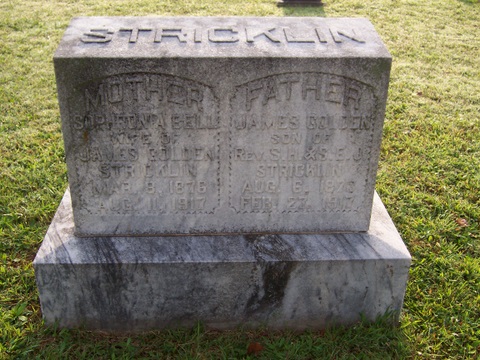
The Nashville Banner reported that in addition to his wife, James “is also survived by a son, aged about 21, Denny[sic] Stricklin.” (Nashville Banner 2/28/17)
James Stricklin was laid to rest in McGlamery Cemetery, in Collinwood, TN. On online memorial may be found HERE. According to Findagrave, Banny’s mother, Sophronia, also passed away later in 1917, but I have been unable to determine the circumstances.