Posted on Leave a comment

Monument of States Kissimmee Florida A History

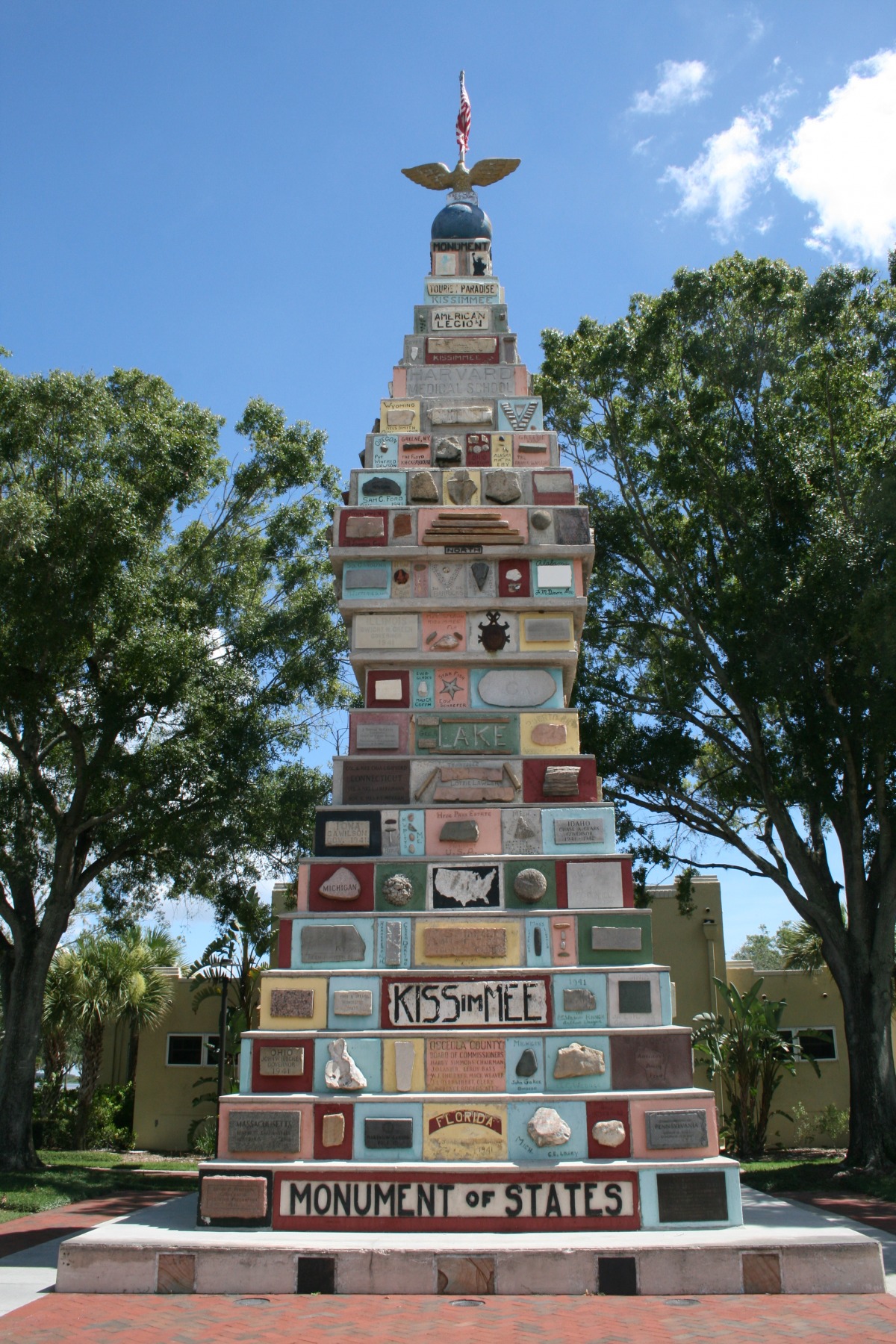
The Monument of States is located just south of downtown Kissimmee, Florida, near the intersection of Lakeview Drive and Monument Avenue.

The Monument of States was the brainchild of Dr. Charles W. Bressler-Pettis. As Joy Dickinson has written about Bressler-Pettis, “…one Central Floridian was galvanized to express the nation’s unity in a singular, towering vision: a monument in his winter home, Kissimmee, that would express the bond between states and continue to inspire tourists to stop, look up and wonder.” (Patriotism)

Monument of States

Monument of States Kissimmee, Florida
Monument of States in Kissimmee, FL

The Monument of States as it currently stands has several origin stories. Some claim it dates back to 1935 (Doctors Love) while most state that it was conceived in response to the Japanese bombing of Pearl Harbor in 1941. (National Register, Patriotism)

Dr. Charles W.  Bressler-Pettis was an active member of the Lions Club and Kissimmee All-States Tourist Club and in the early 1940s partnered with J. C. Fisher to design a monument as a symbol of American unity in a time of war.

To learn more about the war that inspired this incredibly unique and beautiful monument, I recommend a subscription to World War II magazine. World War II magazine covers every aspect of history’s greatest modern conflict with vivid, revealing, and evocative writing from top historians and journalists

Promotion for the monument began immediately. By the end of December 1941, an Honor Role of Cement Donors had been established. Here, individuals and businesses who supplied a bag of concrete were thanked for their contribution. A pamphlet was produced listing 507 concrete donors.  (National Register)
Honor Roll of Cement Donors dated December 21, 1941, just days after the bombing of Pearl Harbor

Groundbreaking occurred on January 11, 1942 with the cornerstone being set in place. Volunteer labor, much of it coming from the Kissimmee All States Tourist Club, kept the project in motion. Bressler-Pettis collected rocks from donors across the country for use in the monument. Bressler-Pettis also supplied many rocks from his own travels.  He wrote letters to state governors asking for representative rocks. President Franklin D. Roosevelt contributed a stone from his Hyde Park, New York residence.

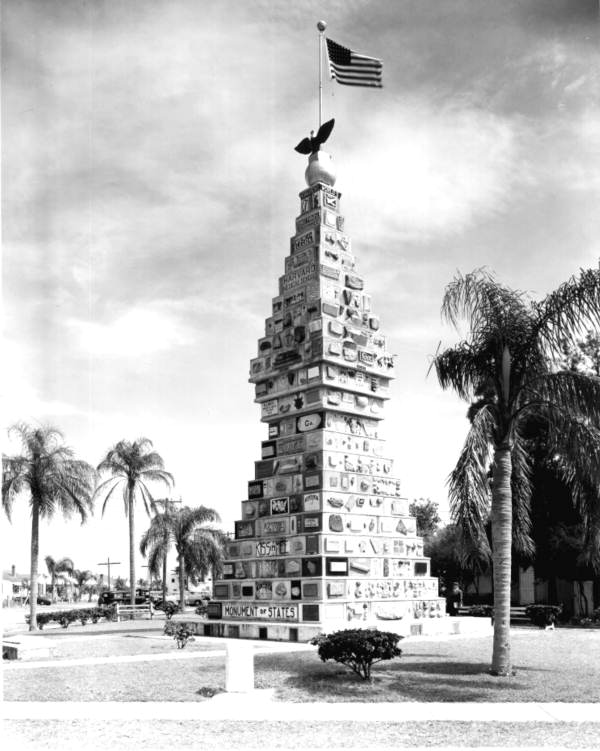
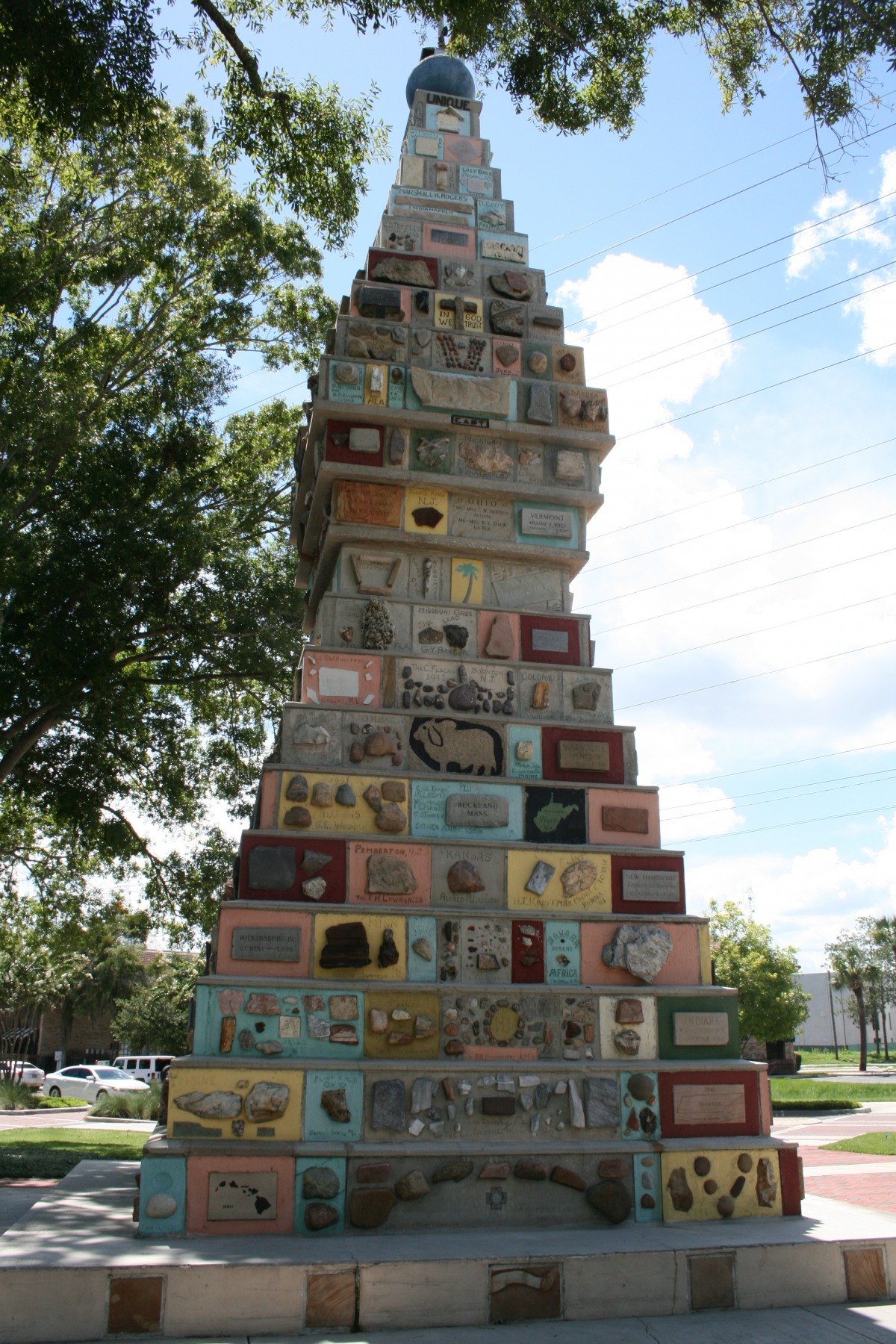
Once complete, the monument consisted of more than 1,500 stones from the then 48 states and 21 countries. It contained 21 tiers and reached 50 feet tall. The eagle atop the monument has a wingspan of six-feet. The base of the monument measures sixteen square feet and the top tier is only  two and one half square feet. The foundation for the monument is three feet thick, twenty-two square feet, and weighs approximately 100,000 pounds. (National Register, Patriotism)


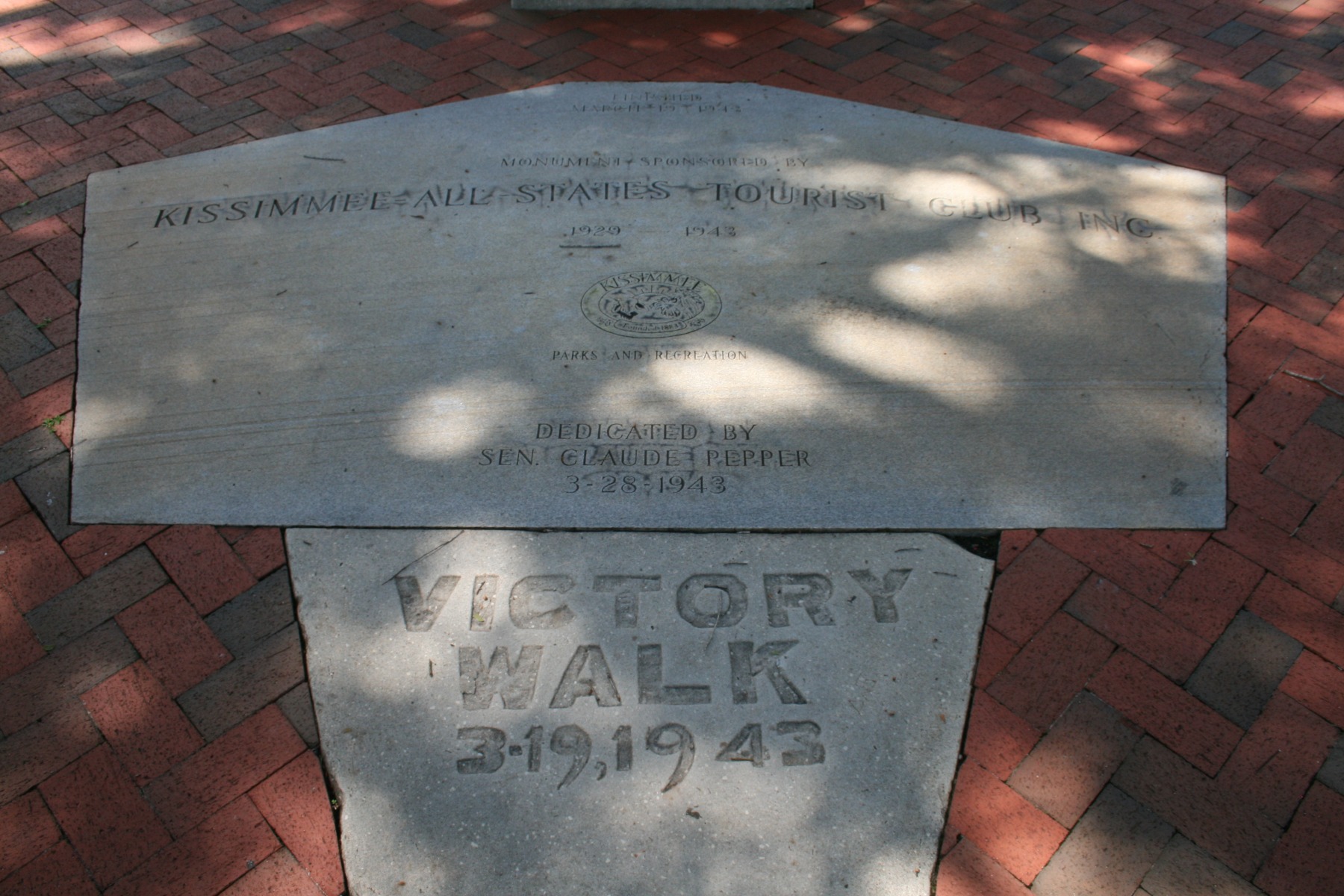
Senator Claude Pepper was on hand for the monument dedication
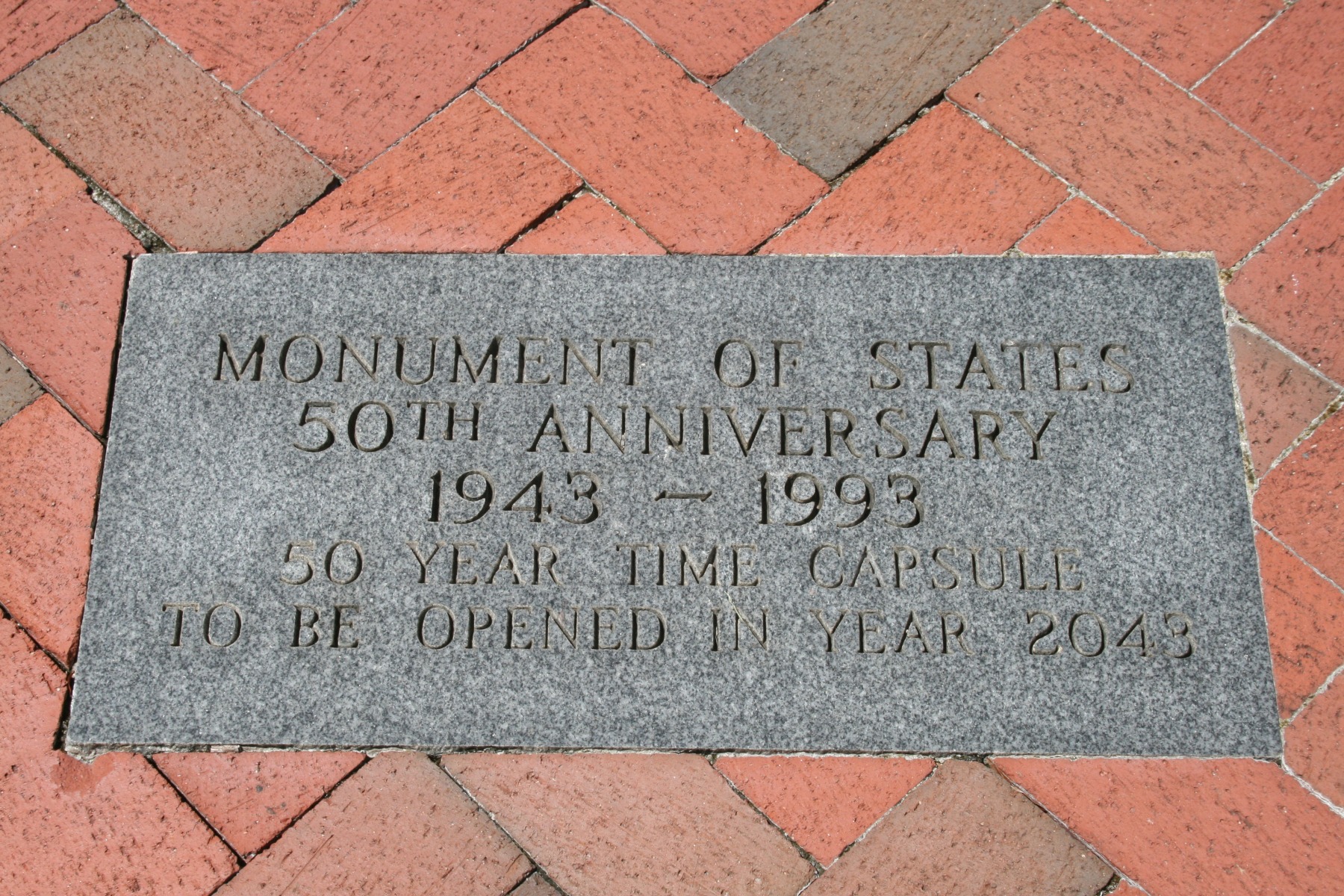
A time capsule was placed on the 50th anniversary of the monument dedication. It is to be opened on the 100th anniversary.


United States Senator Claude Pepper was on hand for the monument dedication on March 28, 1943. In the years since the monument has been the location of many ceremonies including a 50-year celebration on March 28, 1993 when officials placed a time capsule at the monument. The capsule will be opened on the 100th anniversary of the dedication.

Cultural Importance

The Monument of States represents a time in Florida tourism before the onslaught of theme parks and mass commercialization. The effort to create this monument brought together a community toward a common goal in a way that cartoon characters and comic book heroes never will.

For those interested in the significance of this monument to visitors, there are seemingly dozens of different postcard images of the Monument of States. This collection of images is important first, in placing the monument in time but also in documenting its early appearance. The diversity of images and the often handwritten messages sent home, show the impact the monument had on visitors. They felt this was an image worthy of sharing with the folks “back home.” In the era before social media, postcards were a convenient way of “tagging” where you were for your friends to follow.

In the years before Disney, those days of the road trip, Stuckey’s, “are we there yet,” and the roadside attraction, the Monument of States served as a tourist draw. In describing the monument and it’s relevance, the National Register of Historic Places Registration Form states, “It retains integrity of design, materials, workmanship, feeling and association with the early history and tourism efforts in Kissimmee, and continues to serve as a draw for both residents and visitors alike.” (National Register) The monument was officially added to the National Register of Historic Places in December 2015.


Dr. Charles W. Bressler-Pettis

Just who was Dr. Bressler-Pettis? Charles was born on February 12, 1889 in Grant City, Missouri to parents Manuel and Nellie A. Bressler. When or why Charles changed his surname to Bressler-Pettis is unknown. We do know that Pettis was his mother’s maiden name. The first known recorded use of this new name is on a 1922 passport application. (Osceola History)Young Charles was encouraged to become a medical doctor. At the urging of his family, after graduating from the University of Missouri he attended Harvard Medical School, graduating in 1917 and served his internship in Boston.During World War I Charles served in the British army medical corps before joining the United States army medical corps later in the fight. During the war Charles visited a wealthy uncle who was living in Nice, France at the time. After the war he returned to France where he became the personal physician for his uncle. Charles was to receive a large, lifetime income from the estate of his uncle.After returning to the States, Charles met, and married, Laura Mead. After their January 1927 wedding they embarked on a long honeymoon, logging over 78,000 miles by automobile.

Monument of States Kissimmee Florida
A plaque in honor of Charles Bressler-Pettis, the man behind the Monument of States in Kissimmee Florida

Charles suffered a fatal heart attack while already in the hospital, on May 12, 1954. It is often repeated that Bressler-Pettis’s ashes are buried at the Monument of States. There is some truth to this story. After Charles’s death, his wife made request of the Kissimmee City Commission to be allowed to inter Charles’ ashes at the base of the Monument of States; a request that was approved by special ordinance.  It appears however that Mrs. Bressler-Pettis may have reconsidered. The website, Findagrave, shows a listing for Charles W. Bressler-Pettis in Grant City Cemetery, in Grant City, Missouri, the city where Charles was born. (Findagrave, Osceola History) Both stories are true. I have found reference that part of his ashes were buried in each location. This seems like a reasonable answer based upon the City Commission going to the trouble of amending local ordinances. (Memorialogy, National Register)

Monument of States Kissimmee, Florida
A circa 1943 postcard image of the Monument of States in Kissimmee, Florida Image courtesy State Archives of Florida https://www.floridamemory.com/items/show/332238
Monument of States Kissimmee Florida
Postcard image circa 1950. Courtesy State Archives of Florida https://www.floridamemory.com/items/show/31891
Monument of States Kissimmee, Florida
Photo image of the Monument of States in Kissimmee, Florida 2017.
Monument of States Kissimmee Florida
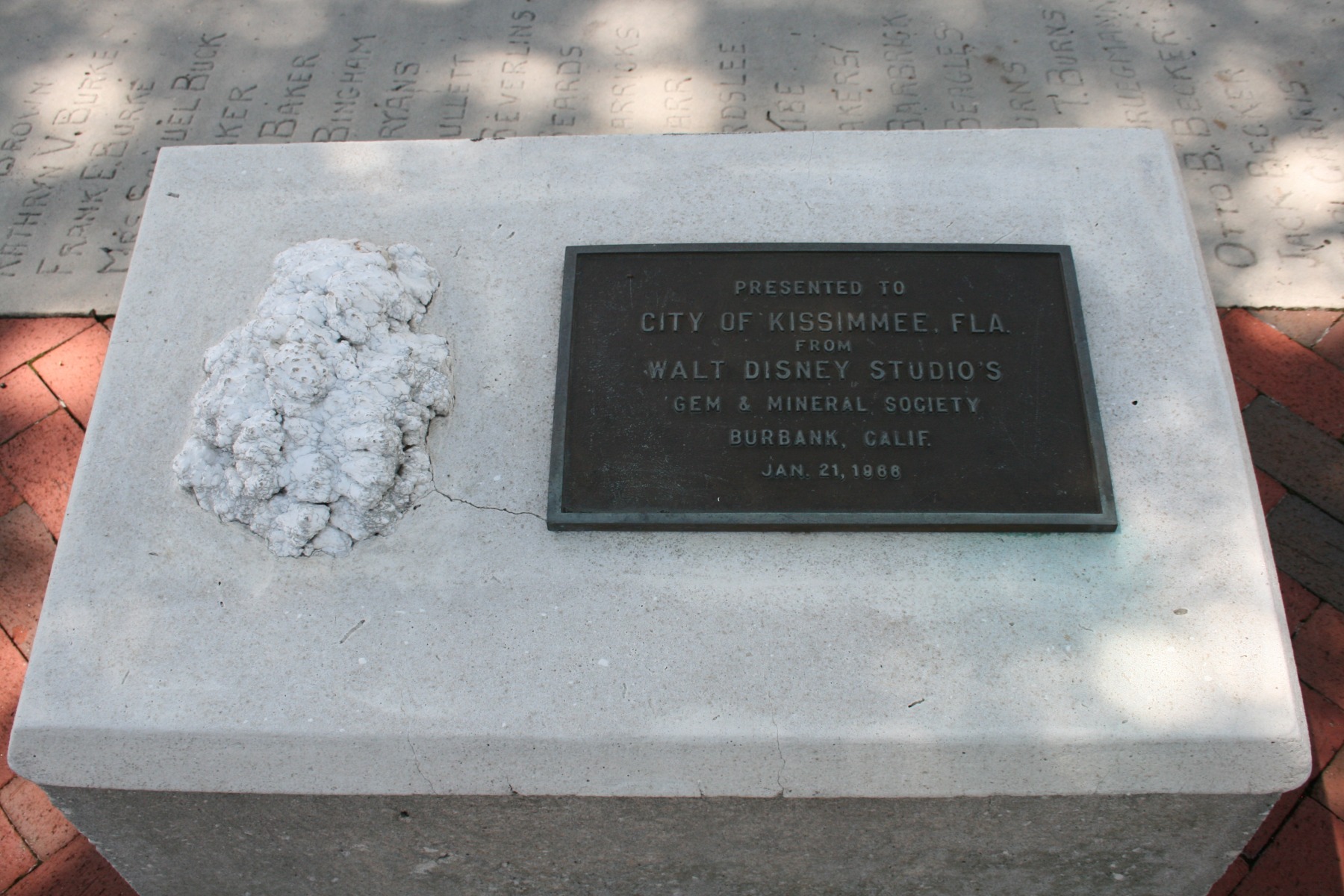
Even after completion, donations of rocks kept arriving such as this from Disney Studio’s Gem and Mineral Society. Photo 2017


Sources:

“Doctors Love of Area Fueled Drive for Monument.” Orlando Sentinel. July 22, 1990.

Findagrave. https://www.findagrave.com/memorial/14214087/charles-w-bressler-pettis

Memorialogy. https://memorialogy.com/pages/entries/entries.php?post=n112

National Register of Historic Places Registration Form.

Osceola History. https://osceolahistory.org/charles-w-bressler-pettis-the-bearded-man/

“Patriotism After Pearl Harbor Fueled Creation…” Orlando Sentinel. December 12, 2021.

Sandler, Roberta. A Brief Guide to Florida’s Monuments and Memorials. Gainesville: University Press of Florida, 2008.


This post may contain affiliate links. If you click these links and make a purchase, I may receive a small commission. This commission does not affect any price that you pay. Affiliate programs or sponsors providing products do not influence the views and opinions provided in this blog. 

Subscribe to World War II History magazineWorld War II History
from: Magazine Values

Keep up with some the best short form writing on World War II with a subscription to the bi-monthly magazine World War II History click the link or the photo to the left for exclusive savings and have it delivered right to your door.

Posted on Leave a comment

Civil War Monument and Memorial Resources

Confederate Monument Monticello, FL

Memory can be a funny thing. It changes over time. People change, times change, interpretations change, what we consider important changes. With this listing, you will be able to find Civil War Monument and Memorial Resources to help you better understand the who, where, and why of these often times controversial reminders. 

Nowhere is this more evident than in the field of Civil War memory and monuments. In the years immediately after the war, monuments and memorials were constructed for several different reasons. In some instances, it was to remember and honor those who served and maybe did not return from battle. In the south, these monuments were often meant to recall what those of the time considered a better time. Words carved into granite were chosen with great care as to meaning.

Confederate Monument Monticello, FLCivil War Monument and Memorial Resources
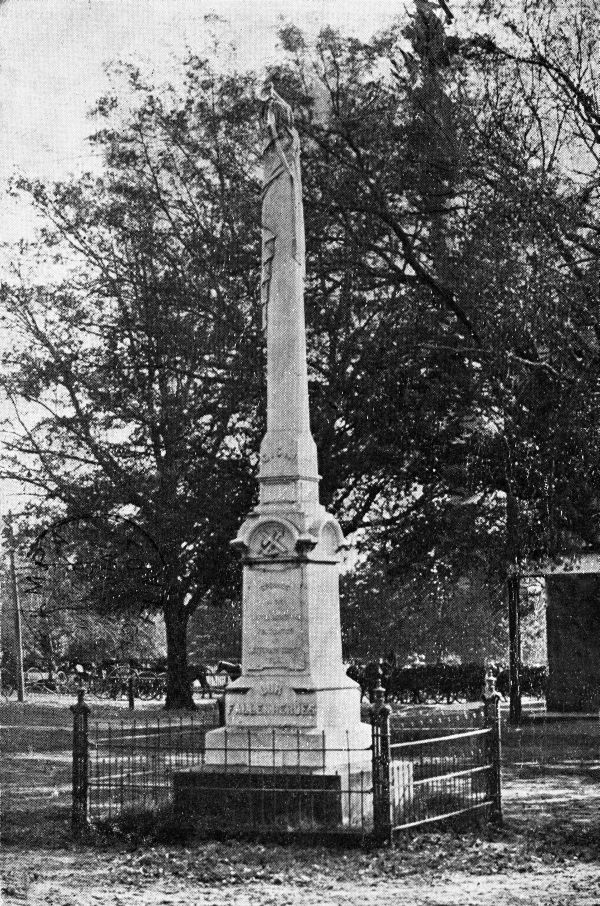
Confederate Monument in Monticello, FL erected by the Ladies Memorial Association of Jefferson County. Image courtesy State Archives of Florida.

Ladies Memorial Associations and similar groups were often at the head of constructing these memorials; raising funds and dealing with stonemasons to make sure these reminders of the past were exactly what they wanted. Most scholars consider these memorials a key component of Lost Cause mythology.

In the years after the passing of Civil War veterans and their direct descendants, memorial creation has passed to new generations. These newer monuments often have a different, and many times politically charged rhetoric. As memorials, particularly those honoring the Confederate cause, are removed from publicly owned lands; new monuments are usually placed on privately held lands. Historians have often questioned the need or motives for placing new memorials.

The fate of memorials removed from public lands is a thorny one that does not have a clear and easy answer. Many people are against removal of any type of monument, often claiming it is erasing history. On the other side are those who would not just remove what they deem offensive memorials, but they would destroy them, often in a public scene in order to gain attention to their cause.

An often-cited answer is to put them in a museum. It is not as easy as that. Museums have collection policies and goals that Boards of Directors must abide by. Housing a large Civil War monument in usually not in those goals. Space is often a concern. How many museums have room to house a twenty-five foot tall memorial? Are museum facilities structurally able to hold the weight of what might be a several ton piece of granite or a large bronze piece? Finally, who will pay for the moving and exhibit upkeep? Even if a museum can address these concerns, community input is important. Do museum patrons feel owning a Civil War monument is in the best interest of the organization? Finally, again we come  to the thorny question, who and how would these pieces be interpreted. 

A final concern with any type of public memorial is interpretation and context. Interpretation and context are areas that some of the public do not appreciate. They feel they should be left as is with no attempt to explain what a viewer is witnessing. Also, should monuments to the Confederate cause be placed at government buildings no matter the interpretation.

Some memorials are blatantly obvious what they are trying to achieve. Others are more nuanced with carefully chosen language and symbolism. While maybe not obvious to everyone today, to contemporaries, these monuments were understood in their day. 


As stated above, interpretations change. No matter where a monument may be located, it is important today that some level of interpretive work be included to let visitors know the who, what, and why of a monument or memorial. It is then up to the viewer to make a determination what they think. This might be memorials to lost soldiers and family members. Memorial builders could be lamenting having lost a prior way of life. Some monuments meant to hurt and intimidate others. Many are a reminder of a way of life we should not allow to be forgotten. Can these become a teaching tool or are they strictly now a work of art like any other sculpture? 

African American Civil War MemorialCivil War Monument and Memorial Resources
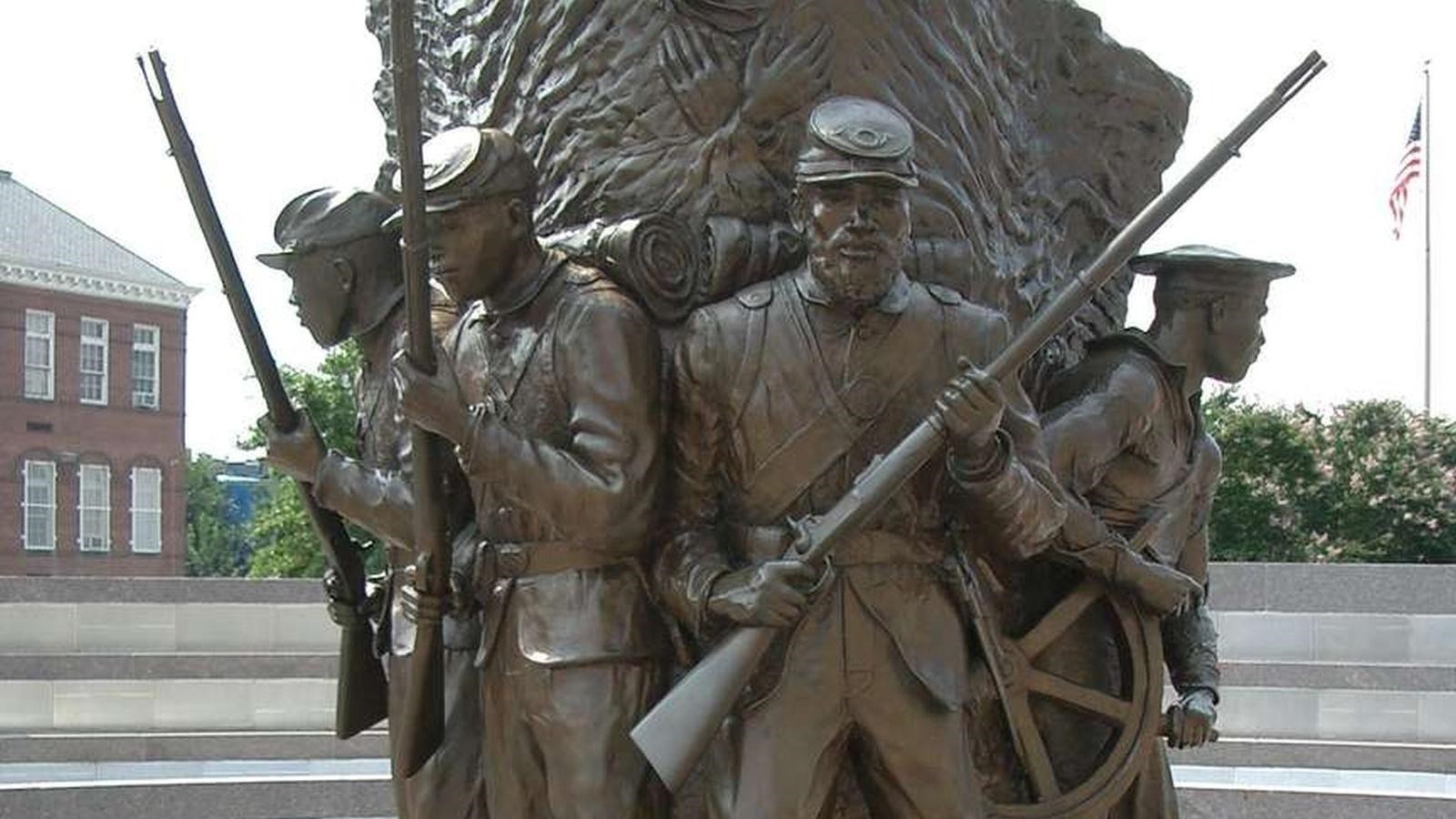
The African American Civil War Memorial located on the National Mall in Washington D.C. Photo courtesy National Park Service

Today, there is increasingly an effort to memorialize those who have been forgotten in the past. This includes memorials to women, those on the home front, and the telling of stories of slavery and African American soldiers.  No longer are cities, states, and organizations scared of telling the true horrors of war and what it was like for those outside the sphere of battle. While this movement has not proven universally popular, it is one that will continue, particularly as further scholarship develops these previously unknown stories.

What I have gathered below is a listing of materials related to Civil War monuments, memorials, and memory. These works are often from academic presses and may have a scholarly bent. Some of these titles tackle head on the controversy of Civil War memorials while others are concerned with cataloging memorials by state or battlefield.

While I do own quite a few of these titles, I have not reviewed all of them. If I have included them I feel they are appropriate to the subject and worthy of your consideration.

Please note, the intent of this bibliography is not to take sides or promote an ideology, but rather it is to provide you, the reader, with resources allowing you to better understand the topic. Titles that appear to be intentionally inflammatory are excluded. 

I have not yet mined academic journals and other periodicals regarding the subject, but I hope to do so in the not too distant future. A new section will be created in this post for these materials.

Please feel free to reach out to me or leave a comment regarding books I have not listed. Materials dealing with Civil War memorials, groups who erected these memorials, artists and those who created monuments, and related topics are encouraged.  If you have read any of these titles, please feel free to leave a comment about the book. An open and respectful dialogue is encouraged.

I will periodically be updating this list based upon reader input and especially as publishers release new titles.

To keep up with all things Civil War including modern interpretation, I strongly recommend a subscription to Civil War Monitor. With writing by top notch scholars you will look forward to receiving each issue.


bookshop.org affiliate button
Support small businesses. Click this link to purchase from bookshop.org and help support my blogging efforts. Your support is truly appreciated.


BOOKS

Allison, David B. Controversial Monuments and Memorials: A Guide for Community Leaders. Lanham: Rowman and Littlefield, 2018.

Andres, Matthew Cenon. Stone Soldiers: Photographing the Civil War Monuments in Illinois. Self Published. 2019.

Brown, Thomas J. Civil War Monuments and the Militarization of America. Chapel Hill: University of North Carolina Press, 2019.

Brown, Thomas J. The Public Art of Civil War Commemoration: A Brief History with Documents. New York: Macmillan Publishers, 2004.

Butler, Douglas J. North Carolina Civil War Monuments: An Illustrated History. Jefferson: McFarland & Co., 2013.

Chevalier, R.N. and Donna Chevalier. Rhode Island Civil War Monuments: A Pictorial Guide. Pawtucket: Stillwater River Publications, 2017.

Cox, Karen L. Dixie’s Daughters: The United Daughters of the Confederacy and the Preservation of Confederate Culture. Gainesville: University Press of Florida, 2019.

Cox, Karen L. No Common Ground: Confederate Monuments and the Ongoing Fight for Racial Justice. Chapel Hill: University of North Carolina Press, 2021.

Domby, Adam. The False Cause: Fraud, Fabrication, and White Supremacy in Confederate Memory. Charlottesville: University of Virginia Press, 2022.

Foster, Gaines M. Ghosts of the Confederacy: Defeat, the Lost Cause, and the Emergence of the New South, 1865-1913. New York: Oxford University Press, 1987. 

Gallagher, Gary W. and Alan T. Nolan. The Myth of the Lost Cause and Civil War History. Bloomington: University of Indiana Press, 2010.

Gill, James. Tearing Down the Lost Cause: The Removal of New Orleans’s Confederate Statues. Jackson: University Press of Mississippi, 2021.

Goldfield, David R. Still Fighting the Civil War: The American South and Southern History. Baton Rouge: Louisiana State University Press, 2002.

Hagler, Jr., Gould B. Georgia’s Confederate Monuments: In Honor of a Fallen Nation. Macon: Mercer University Press, 2014.

Hartley, Roger C. Monumental Harm: Reckoning with Jim Crow Era Confederate Monuments. Columbia: University of South Carolina Press, 2021.

Harvey, Eleanor Jones. The Civil War and American Art. New Haven: Yale University Press, 2012.

Huntington, Tom. Guide to Gettysburg Battlefield Monuments: Find Every Monument and Tablet in the Park. Mechanicsburg: Stackpole Books, 2013.

Ingall, David and Karin Risko. Michigan Civil War Landmarks. Charleston: Arcadia Publishing, 2015.

 Isbell, Timothy T. Gettysburg: Sentinels of Stone. Jackson: University of Mississippi Press, 2006.

Isbell, Timothy T. Shiloh and Corinth: Sentinels of Stone. Jackson: University of Mississippi Press, 2007.

Isbell, Timothy T. Vicksburg: Sentinels of Stone. Jackson: University of Mississippi Press, 2006.


Jacob, Kathryn Allamong and Edwin H. Remsberg. Testament to Union: Civil War Monuments in Washington D.C. Baltimore: Johns Hopkins University Press, 1998.

Janney, Caroline E. Burying the Dead but Not the Past: Ladies Memorial Associations and the Lost Cause. Chapel Hill: University of North Carolina Press, 2012.

Johnson, Kristina Dunn. No Holier Spot of Ground: Confederate Monument & Cemeteries of South Carolina. Charleston: Arcadia Publishing, 2009.

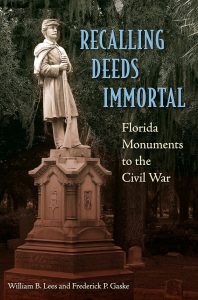
Lees, William B. and Frederick P. Gaske. Recalling Deeds Immortal: Florida Monuments to the Civil War. Gainesville: University Press of Florida, 2014.

McMichael, Kelly. Sacred Memories: The Civil War Monument Movement in Texas. Denton: Texas State Historical Association, 2009.

Mills, Charles. Civil War Graves of Northern Virginia. Charleston: Arcadia Publishing, 2017.

Mills, Cynthia and Pamela H. Simpson. Monuments to the Lost Cause: Women, Arts, and the Landscapes of Southern Memory. Knoxville: University of Tennessee Press, 2003.

Newsome, Ryan Andrew. Cut in Stone: Confederate Monuments and Theological Disruption. Waco: Baylor University Press, 2020.

Pelland, Dave. Civil War Monuments of Connecticut. Monument Publishing, 2013.

Reaves, Stacy W. A History & Guide to the Monuments of Chickamauga National Military Park. Charleston: Arcadia Publishing, 2013.

Reaves, Stacy W. A History & Guide to the Monuments of Shiloh National Park. Charleston: Arcadia Publishing, 2012.

Reaves, Stacy W. A History of Andersonville Prison Monuments. Charleston: Arcadia Publishing, 2015.


Savage, Kirk. The Civil War in Art and Memory. Washington D.C.: National Gallery of Art, 2016.

Savage, Kirk. Monument Wars: Washington D.C., the National Mall, and the Transformation of the Memorial Landscape. Berkeley:University of California Press, 2011.

Savage, Kirk. Standing Soldiers, Kneeling Slaves: Race, War, and Monument in Nineteenth-Century America. Princeton: Princeton University Press, 2018.

Sedore, Timothy S. An Illustrated Guide to Virginia’s Confederate Monuments. Carbondale: Southern Illinois University Press, 2018.

Sedore, Timothy S. Mississippi Civil War Monuments: An Illustrated Field Guide. Beverly: Quarry Books, Inc., 2020.

Sedore, Timothy S. Tennessee Civil War Monuments: An Illustrated Field Guide.Beverly: Quarry Books, 2020.

Seger, Marla and Joanna Davis-McElligatt. Reading Confederate Monuments.Jackson: University Press of Mississippi, 2022.

Seidule, Ty. Robert E. Lee and Me: A Southerner’s Reckoning with the Myth of the Lost Cause.New York: St. Martins Press, 2022.

Tracey, John and Chris Mackowski. Civil War Monuments and Memory: Favorite Stories and Fresh Perspectives from theHistorians at Emerging Civil War.El Dorado Hills, SavasBeatie, 2022.

Wiggins, David N. Georgia’s Confederate Monuments and Cemeteries. Charleston: Arcadia Publishing, 2006.


Thank you for taking time to review my listing of Civil War Monument and Memorial Resources. Do you know of other resources that should be included here? Please drop me a line so that I can update this list.


Buy Me A Coffee donation link
Click the image above to support this site through Buy Me A Coffee. Your helps pay for website fees and maintenance, research fees for blog and book writing, photo usage and rights fees, and other associated costs. And maybe, it will go to buying a bag of coffee to help keep me focused on the research topic at hand.


This post may contain affiliate links. If you click these links and make a purchase, I may receive a small commission. This commission does not affect any price that you pay. Affiliate programs or sponsors providing products do not impact the views and opinions shared in this blog. 

Recalling Deeds Immortal
Recalling Deeds Immortal is a book that should be in every personal library of Florida Civil War students.
Posted on Leave a comment

Bataan-Corregidor World War II Monument in Kissimmee, Florida

The fall of Bataan and Corregidor in the Philippine islands to Japanese forces were arguably the
worst defeats of United States forces during World War II.

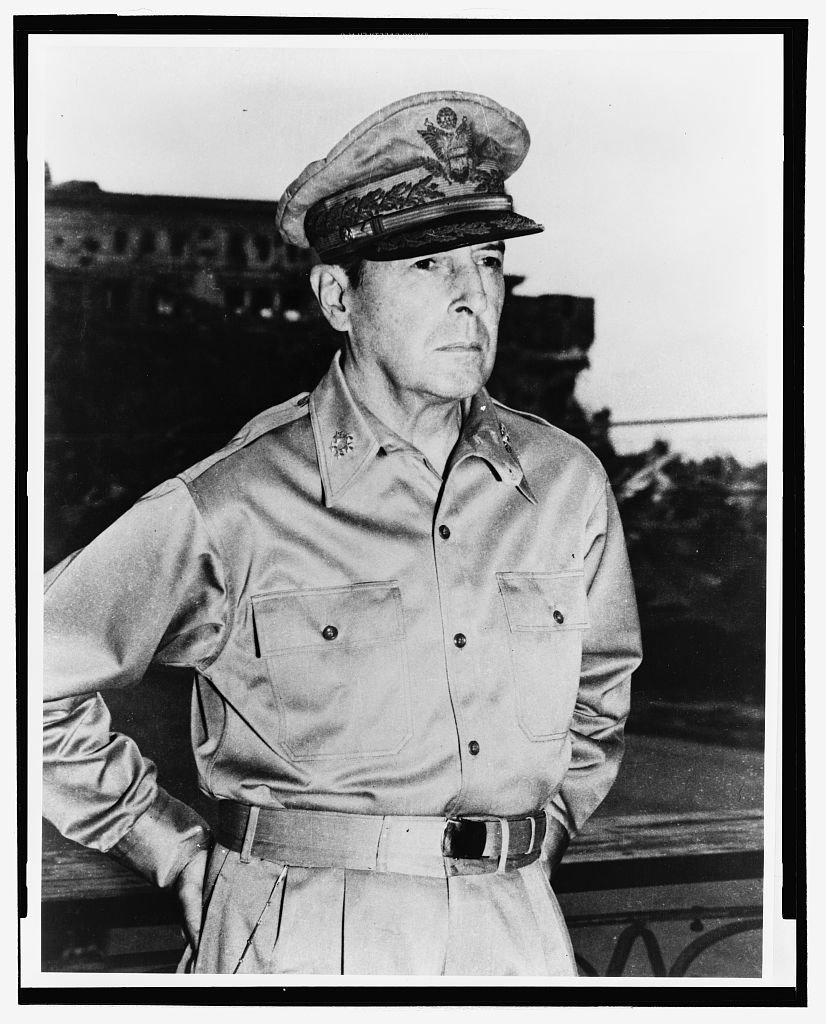
General Douglas MacArthur. Photo courtesy Library of Congress

In VERY simplified form, General Douglas MacArthur and his troops in the Philippines were tasked with holding back the advancing Japanese Imperial Army. Their objective was to keep Japan out of the American territory of the Philippine Islands.

General MacArthur consolidated his troops on the Bataan Peninsula where a combined force of American and Filipino troops were able to hold back the onslaught of Japanese troops for three months, a crucial delay to the plans of Japanese leadership.

After escaping Corregidor during the night of March 12, 1942, General MacArthur later uttered his famous “I Shall Return” speech, a promise he made good on in 1944.

On April 9, 1942, Bataan fell. Major General Edward P. King surrendered the allied troops to Major General Kameichiro Nagano, beginning what would become a further nightmare for the already hungry and weary troops. The surrender of Bataan would lead to the surrender of Corregidor less than a month later.

A Map Showing the Route of the Bataan Death March


It was at this point, where Japanese soldiers ordered their prisoners into a series of marches that collectively are known as the Bataan Death March. This march was approximately 65 miles with little to no food and water.

Online sources vary as to the number of prisoners and to the number who perished. A good estimate as to the number of prisoners forced into the march is 75-80,000 combined U.S. and Philippine troops. Death estimates from the forced march and conditions at Camp O’Donnell range to as high as 20,000 soldiers.

MagazineValues.com

The Monument

Fast forward to the 1990s in the city of Kissimmee, FL. In 1991, the city approved the project and dedicated a quarter acre plot at Monument Avenue and Lakeshore Boulevard for the erection of a memorial honoring those who served in the Philippines during World War II. The men who spearheaded the project were former Kissimmee City Commissioner Richard Herring and resident Menandro de Mesa who founded the Bataan-Corregidor Memorial Foundation. The Foundation set a goal of raising the roughly $125,000 needed for the creation and installation of the monument. The Osceola County Tourist Development Council contributed $10,000 toward the goal.

A Tribute to Courage

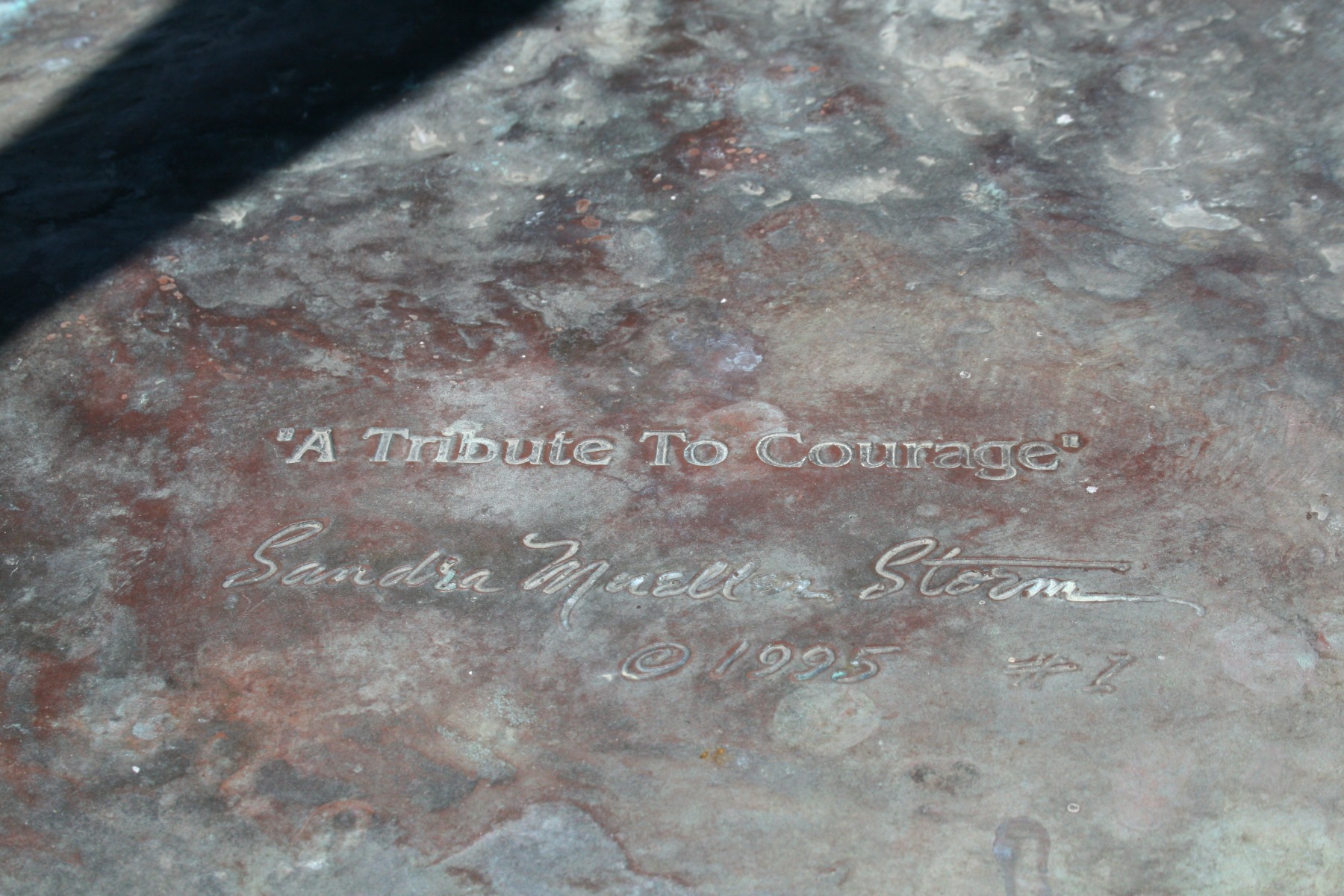
Sculptor Sandra Mueller Storm received the commission to create the haunting memorial. Storm is a renowned artist with multiple large commissions to her credit including “The Courage to Challenge” in Vierra, FL, “Called to Serve” in Hillsboro, KS, and “Melody of Arts” in Panama City, FL. Her work is featured in major collections throughout the country. In discussing her work she stated, “I think my major strength as a sculptor is the intensity of my involvement in what I create in bronze and the emotional impact my sculptures have on those who view them. Teaching sculpture for many years has also showed me how art can change lives, especially of children and the elderly.”

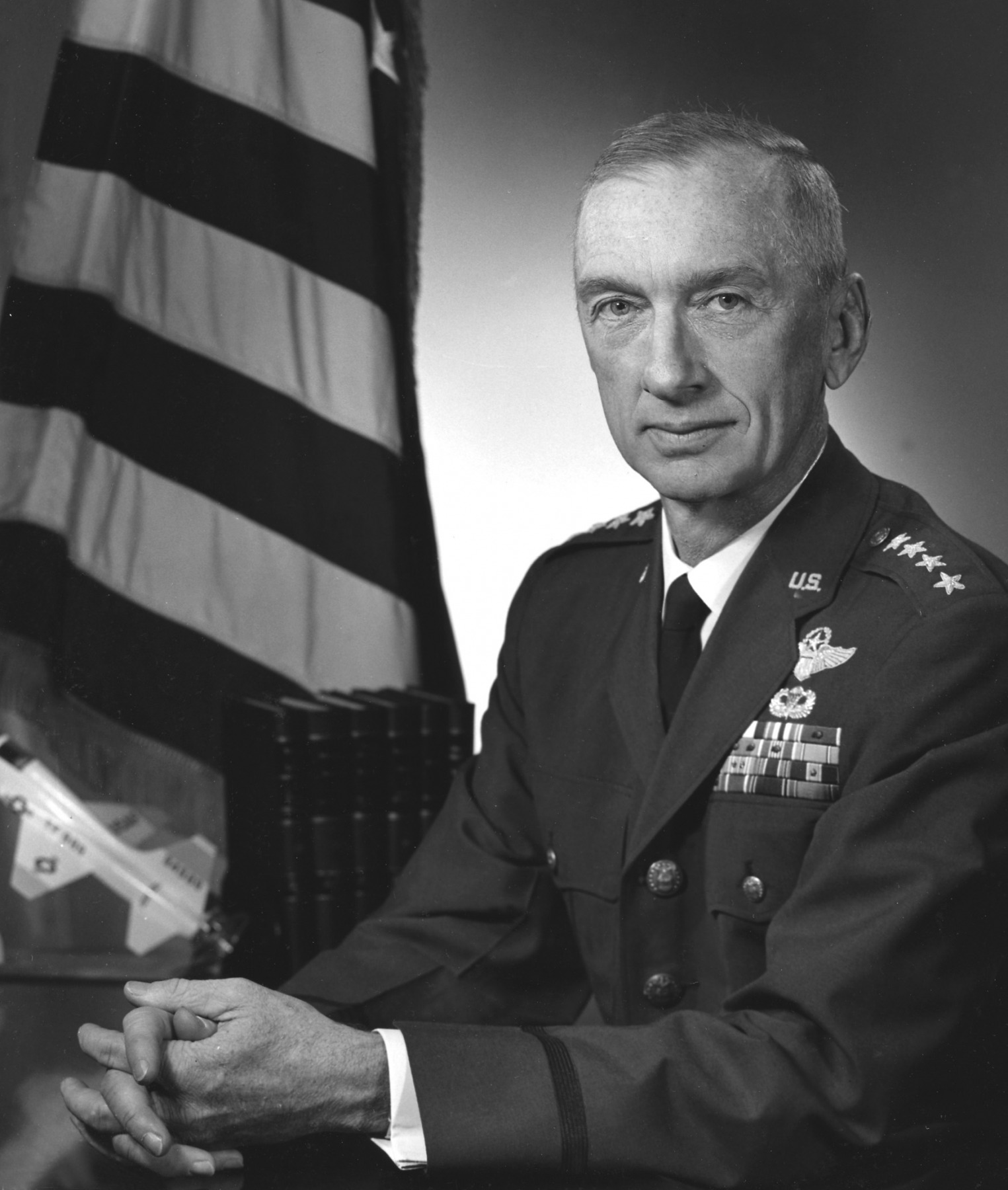
General Bruce Holloway who gave one of the speeches at the monument dedication. Photo courtesy U.S. Air Force

On Saturday, May 20, 1995, a day in which Florida spring rains would not hold off, the city unveiled the life sized bronze statue to a crowd of several hundred. The program included a wreath laying, and keynote speeches from Philippine Brigadier General Tagumpay Nanadiego and retired United States General Bruce Holloway.

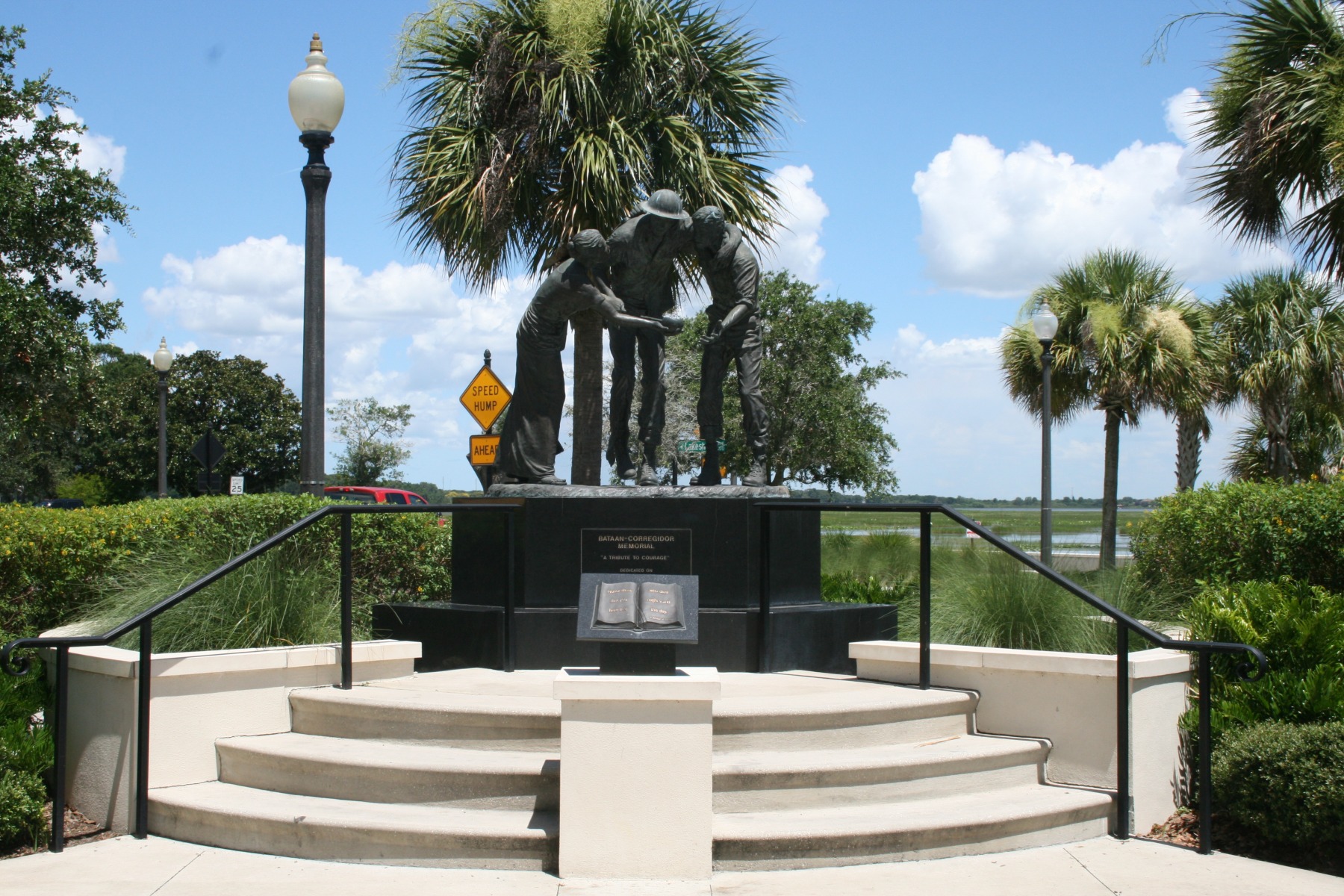
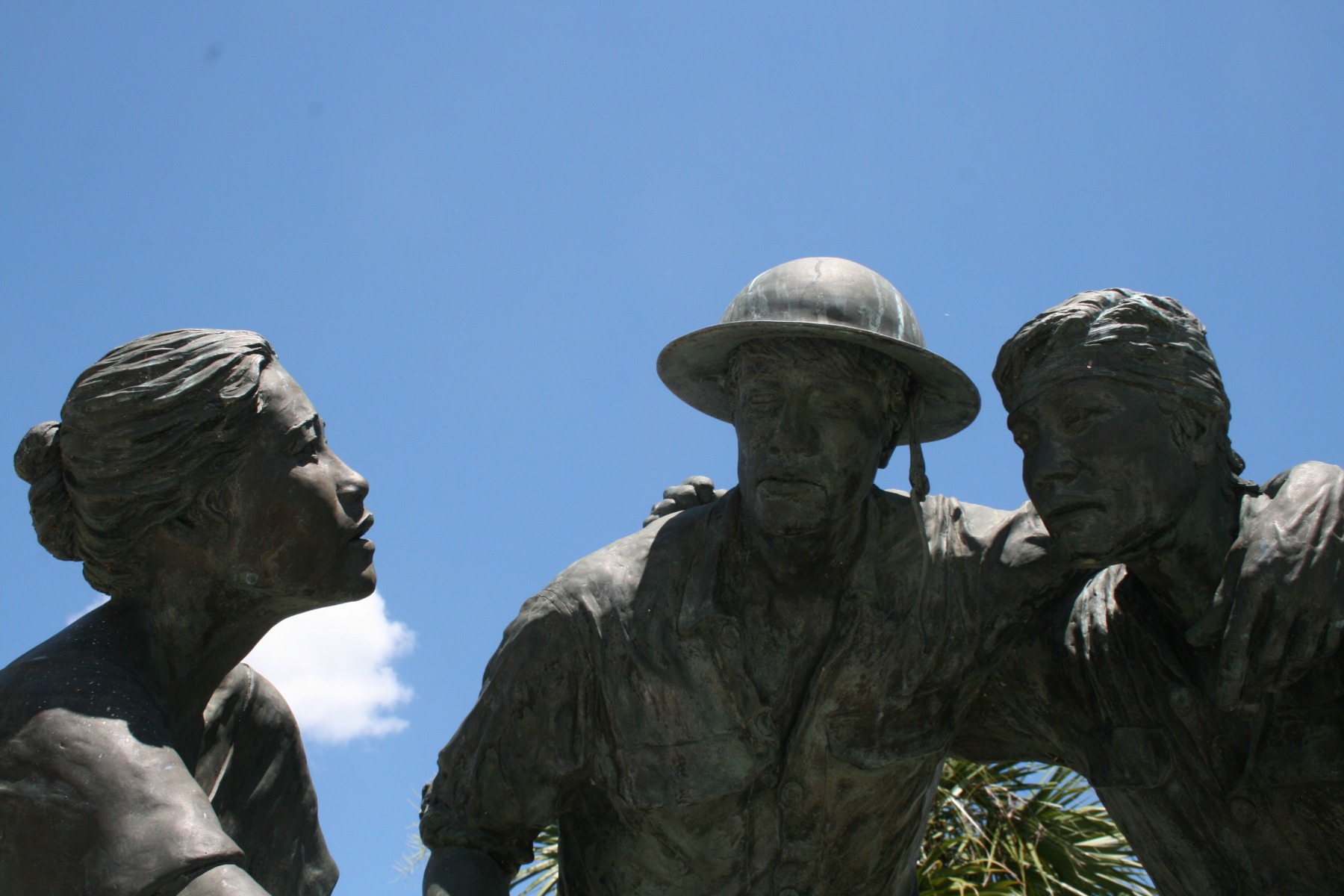
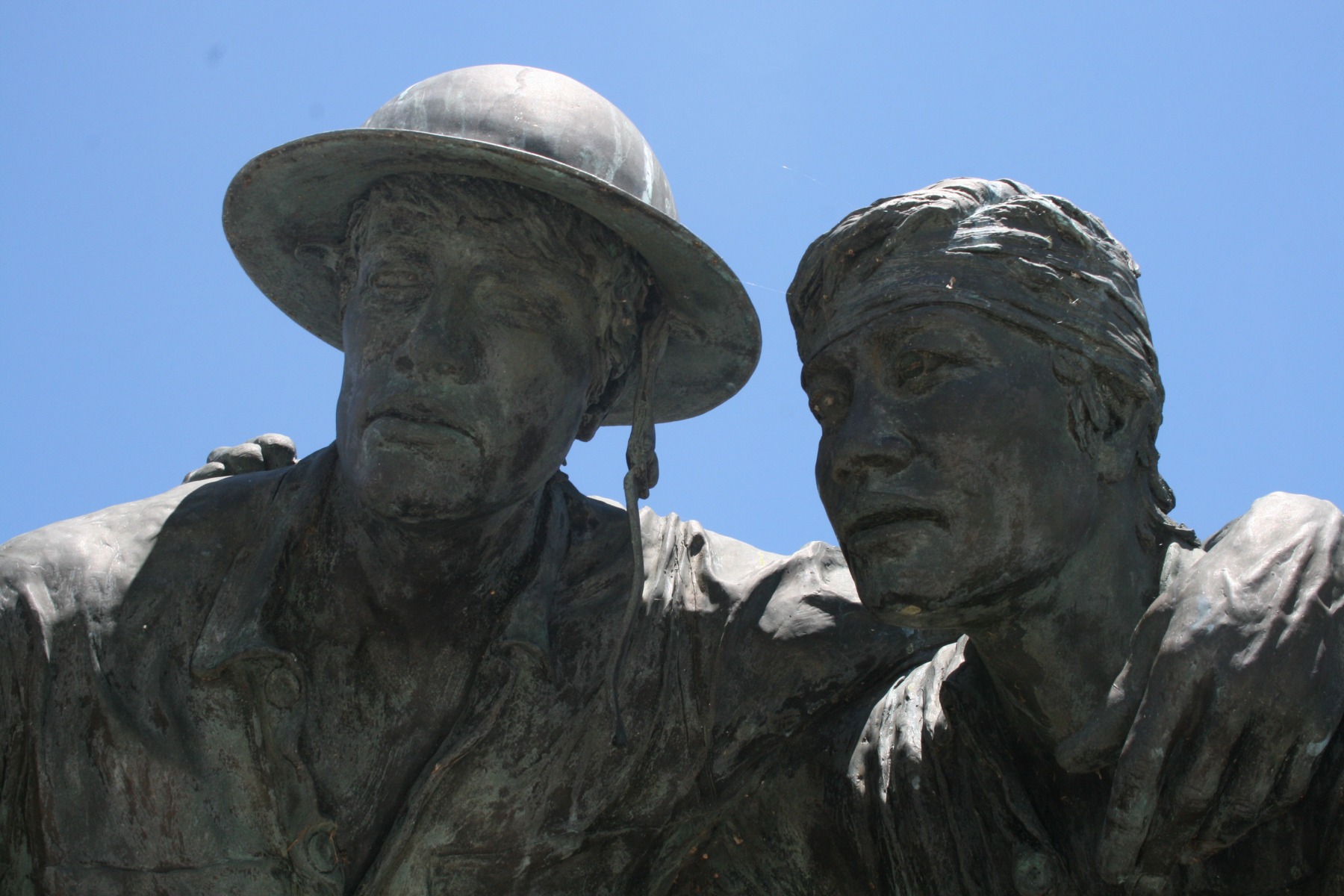
The statue features three figures huddled together showing the pain and desperation of the march. The scene depicts a Filipina woman offering care and water to two soldiers, one Filipino and the other American.

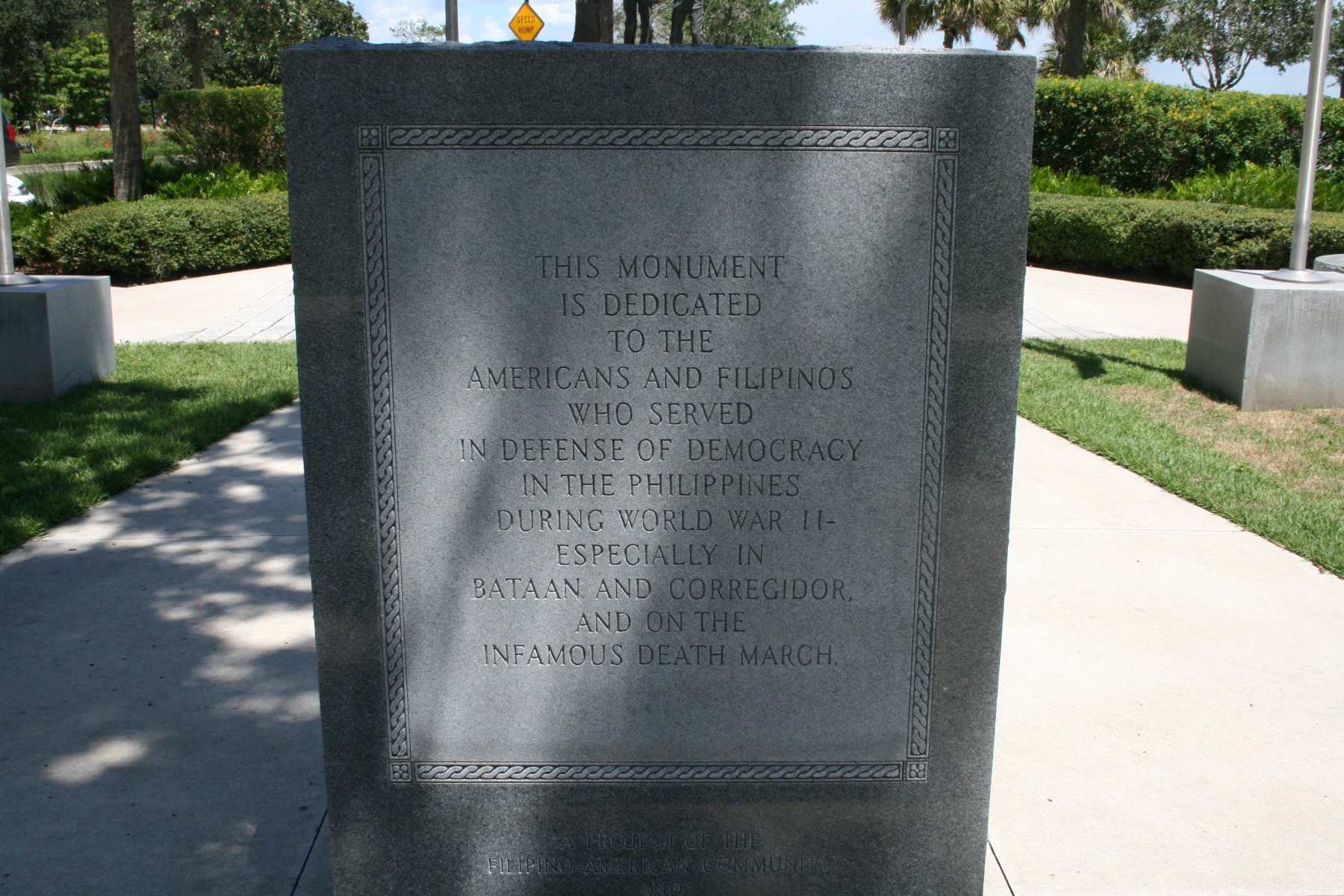
Dedication Plaque
Dedication Plaque for the Bataan-Corregidor Memorial at Lakefront Park in Kissimmee, FL


The text of the dedication plaque reads:

This monument is dedicated to the Americans and Filipinos who served in defense of democracy in the Philippines during World War II, especially in Bataan and Corregidor and on the infamous death march.

Photos of the monument

A View of the Full Monument
Detail of the Pain Soldiers and Civilians Felt
Anguish on the Face of a Filipina Woman Providing Water to Philippine and U.S. Soldiers
Pained Soldiers Who Were on the Bataan Death March Receiving Water


Buy Me A Coffee donation link
Click the image to support this site through Buy Me A Coffee. Your support pays for web services, research trips, photocopies, and photo usage fees. You may actually be buying my next cup or bag of coffee. I do love my coffee after all. 


This post may contain affiliate links. If you click these links and make a purchase, I may receive a small commission. This commission does not affect any price that you pay. Affiliate programs or sponsors providing products do not influence the views and opinions provided in this blog. 

Subscribe to World War II History magazinefrom: Magazine Values

Every student of World War II should subscribe to World War II History. Written by experts and beautifully illustrated you will save each issue. Click the photo or the link to receive exclusive savings offers on this title and hundreds more. Your first issue will be in your mailbox before you know it.

Posted on Leave a comment

In Memory: Lieutenant Jerry Doyle Blinded During Korean War

Any person who walks cemeteries for any length of time can tell you about
interesting finds. These finds do not always occur in the old sections or in
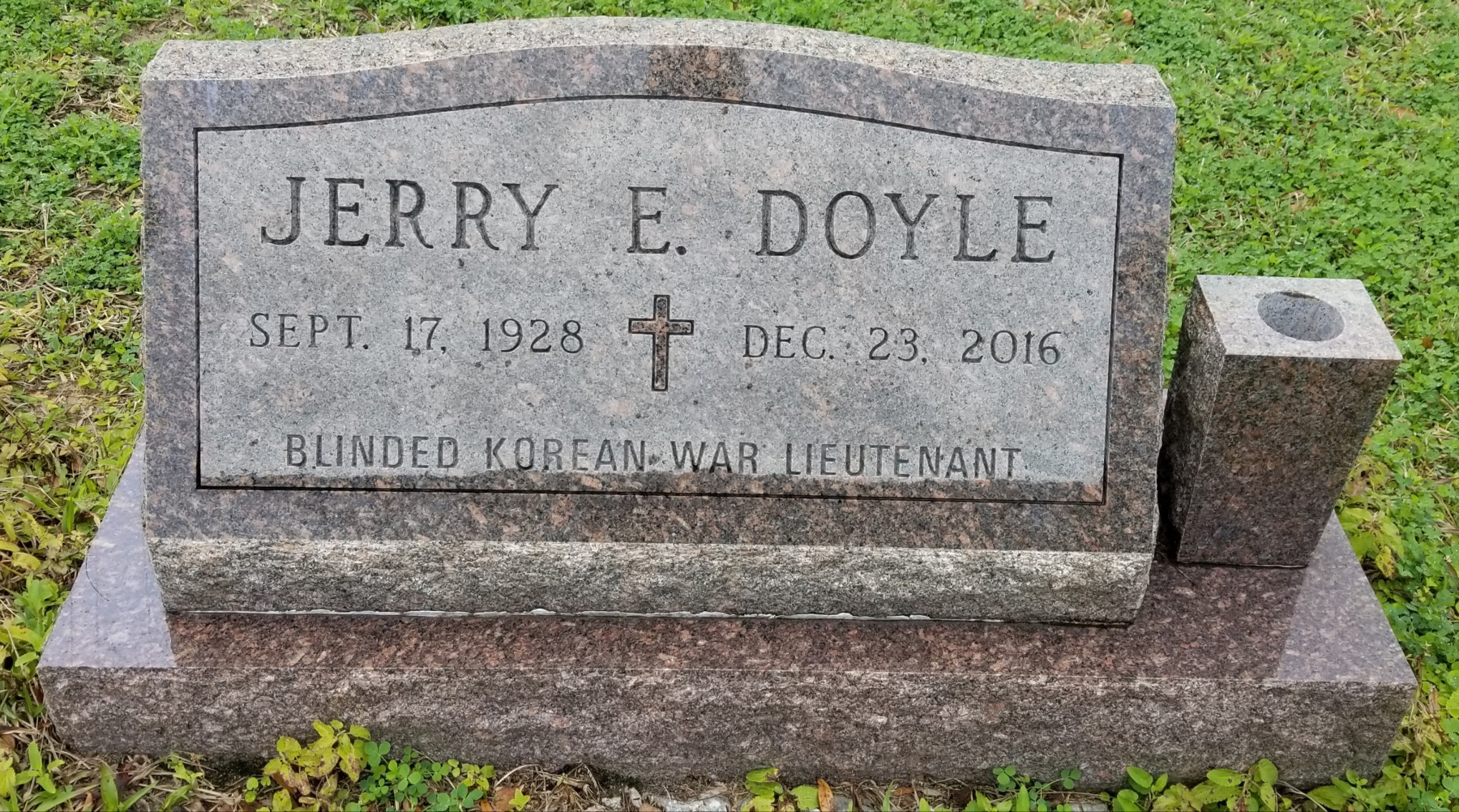
cemeteries deemed “historic.” The headstone of Jerry Doyle, a soldier blinded during the Korean War, is certainly one of
those that demanded a look into the man’s life.

Jerry Doyle Blinded Korean War Lieutenant
Jerry Doyle headstone located in Oakdale Cemetery, DeLand, FL


Jerry Doyle was born on September 17, 1928 to parents James V. and Nora C.
Doyle in the town of DeLand, Florida. He was the fourth of what would be ten
children. At the time, DeLand was home to around 5,000 residents.

Doyle attended local schools and graduated from DeLand High School in 1946, the
same year he registered for the draft. His 1946 draft card states he stood 5’ 8” and
weighed 135 pounds with brown hair, blue eyes, and a ruddy complexion.

Young Doyle was to attend classes at the University of Florida before receiving his
call to active duty with the rank of First Lieutenant, serving in the 40th Infantry
Division.


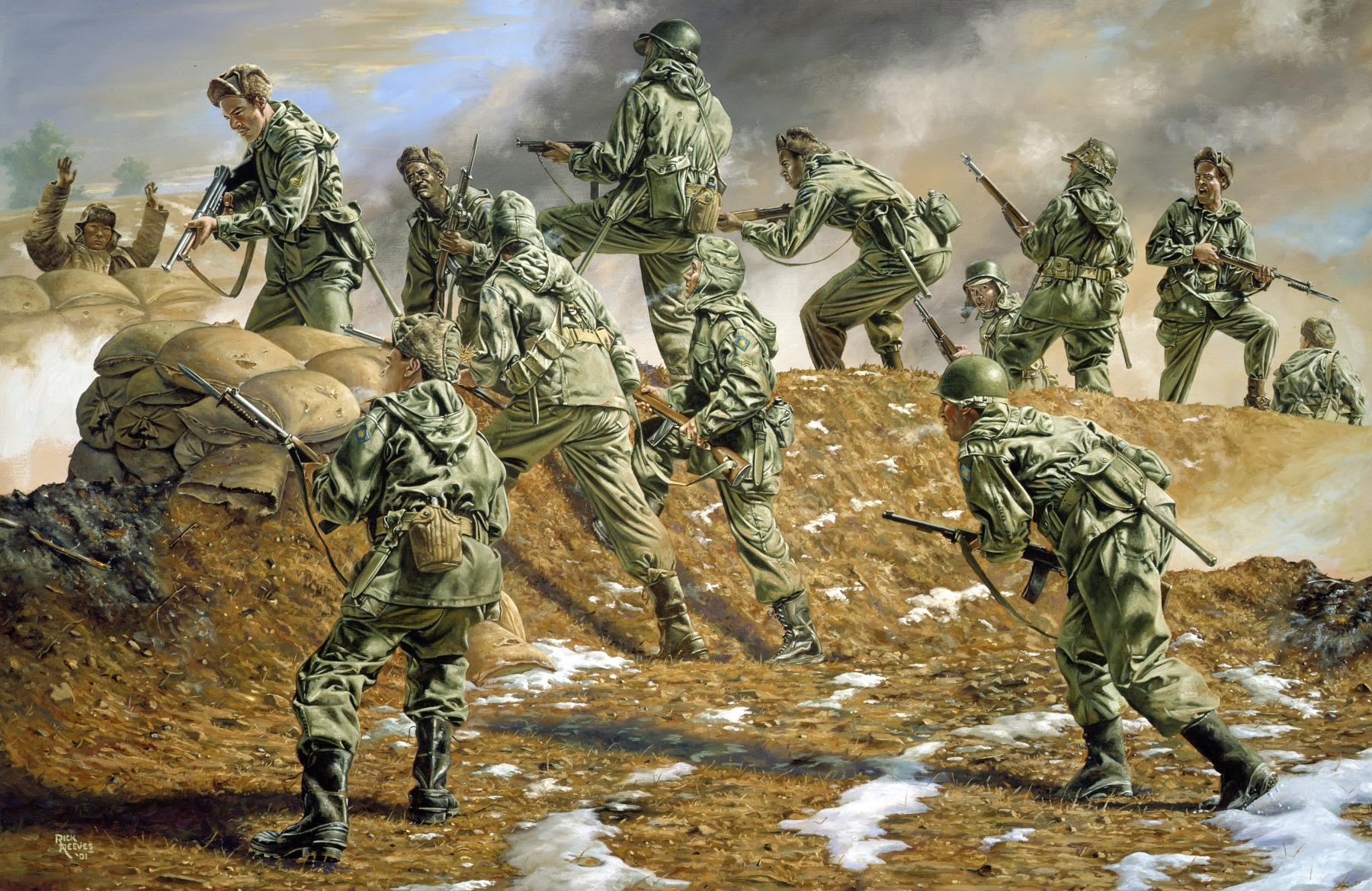
Major General Joseph P. Cleland led the 40th Infantry Division, often called the

Courtesy: U.S. National Guard. “The Sunshine Division in Korea.”
https://www.nationalguard.mil/Resources/Image-Gallery/HistoricalPaintings/Heritage-Series/Sunshine-Division-in-Korea/.

Sunshine Division, for much of the Korean War. The troops of the 40th were deployed to Japan in the spring of 1951 for training. In January 1952, the 40th relieved the men of the 24th Infantry Division. They were to serve during the hard fighting at Heartbreak Ridge and at the “Punchbowl” as the war came to an armistice in 1953.

Doyle served faithfully during the war. He was wounded severely in January 1953, during action around the “Punchbowl” when the jeep he was riding in was struck by enemy fire. Lt. Doyle lost his right eye, received a penetrating wound of the brain and a compound fracture of the skull because of the attack. A newspaper report of the time stated that in his present condition, Doyle was satisfactory. It was uncertain how long he would need to remain hospitalized and that he would be removed from his Tokyo hospital room to a facility in the United States as soon as practicable.

Doyle received the Purple Heart in recognition of his injuries.

The seriousness of his injuries led to a prolonged period of recovery. In mid February 1953, the army transferred Doyle back to the United States and he received further treatment at the Travis Air Base Hospital in Fairfield, CA. Later that year he was still hospitalized, receiving a short-term release from the VA Hospital in Hines, IL in order to visit his parents over the holidays.

In what must have been a proud moment, On June 1, 1954, James V. Doyle was
able to initiate his son Jerry into the Veterans of Foreign War, in a meeting held at
the Knights of Pythias Hall.

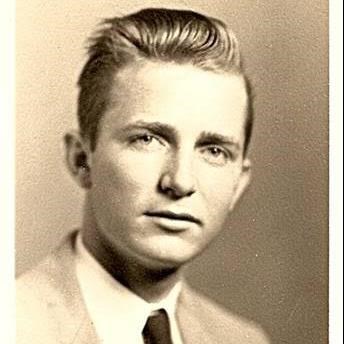
Jerry Doyle obituary photo

Despite his injuries, Jerry Doyle was to live a long and productive life. His
obituary touted his work with the American Legion, his love of family, and the joy he took in listening to University of Florida football games. In his obituary, Jerry is remembered as expressing no regret over his service or resulting blindness. Military service was what he had to do at the time.

He passed away on December 23, 2016 at the age of 88. Lt. Jerry Eugene Doyle is buried in Oakdale Cemetery, in DeLand, FL.


Sources:

DeLand Sun News. January 20, 1953; February 15, 1953; September 13, 1953;
November 23, 1953; May 31, 1954.

Historical Marker Database. 40th Infantry Division Korean War Memorial.

Orlando Sentinel/Legacy obituary.

U.S. Census 1930 and 1940.

U.S. Korean War Casualties Listing 1950-1957.

U.S. National Guard. “The Sunshine Division in Korea.”

U.S. World War II Draft Cards 1940-1947.

To learn more about the Korean War I recommend The Korean War written by Max Hastings or The Coldest Winter written by Douglas Brinkley. Both are a solid starting point for learning about the Korean conflict.

Korean War written by Max Hastings

This post may contain affiliate links. If you click these links and make a purchase, I may receive a small commission. This commission does not affect any price that you pay. Affiliate programs or sponsors providing products do not influence my views and opinions.


Buy Me A Coffee donation link
Click the image above to support this site through Buy Me A Coffee. Your helps pay for website fees and maintenance, research fees for blog and book writing, photo usage and rights fees, and other associated costs. And maybe, it will go to buying a bag of coffee to help keep me focused on the research topic at hand.
Posted on Leave a comment

Anne Hyde House in DeLand, Florida

The city of DeLand, Florida is most commonly associated with Henry A. DeLand and John B.
Stetson. They were certainly the movers and shakers that helped bring the town to life. Captain
John Rich is often overlooked in the telling of the history of DeLand. In 1875, Rich built a cabin
in the area that is now New York Avenue, near St. Peter Catholic Church.

It was at the Rich cabin where Henry and Helen DeLand spent their first night in the area in
1876. Of that night, Helen DeLand is quoted as saying that she, “slept on the floor where I could
look out at the stars and put my hand between the logs.” (1)

An image of the Rich cabin is shown in a book published by West Volusia Historical Society. (2)

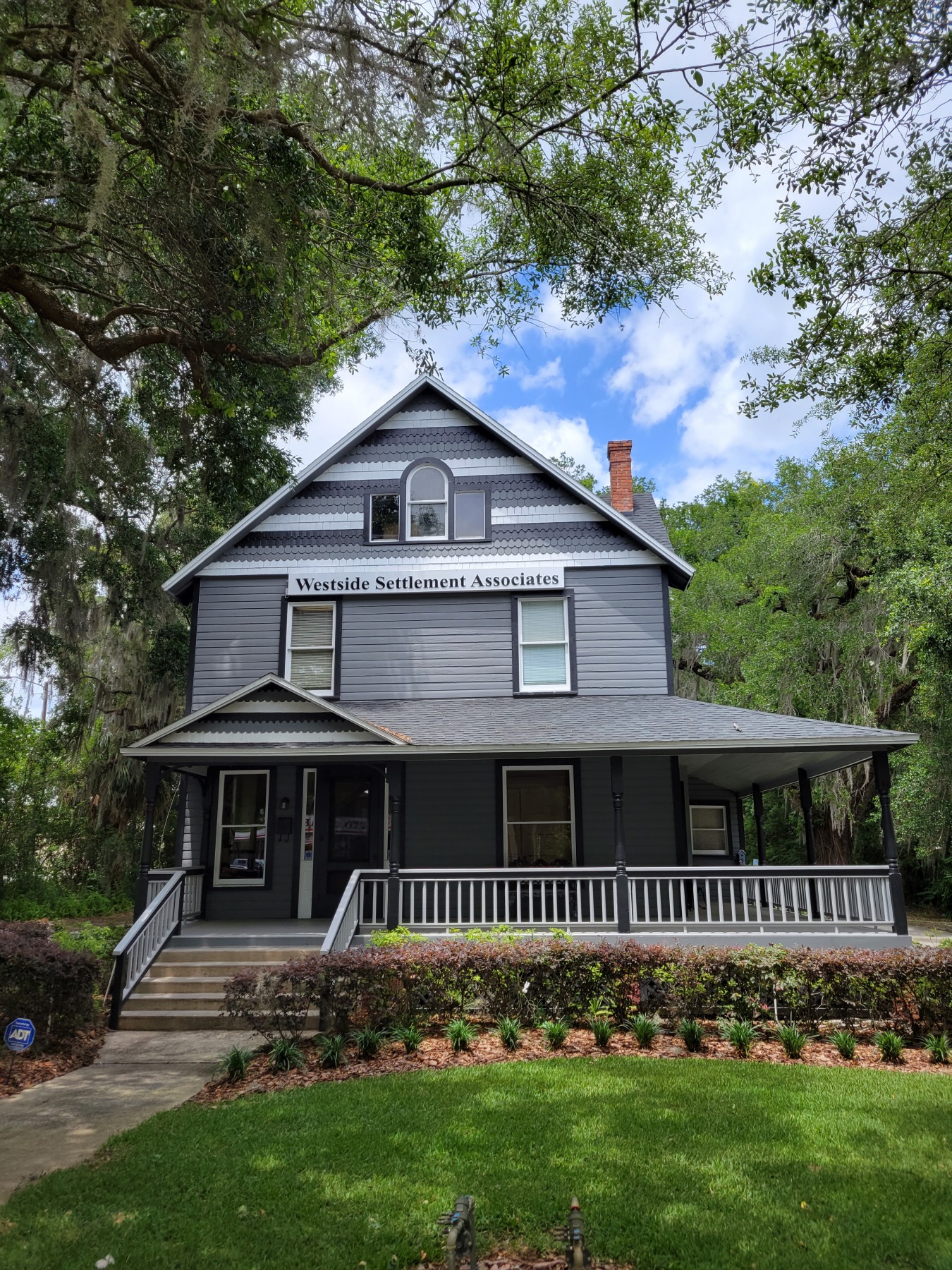
Westside Settlement Associates
339 W. New York Avenue

Looking at the property today, a visitor will see a large two and one half story building built around 1905 that is home to Westside Settlement Associates. The building is well kept and the grounds manicured. The modern address is 339 W. New York Avenue.

The Florida Master Site File for the property does not provide much information. The building is in the Colonial Revival style, a style that predominated in the early twentieth century. An early resident of the home was Annie Hyde.

The building is not individually eligible for the National Register of Historic Places but is listed as a contributing structure to the West DeLand Residential District that is on the NR. (3)


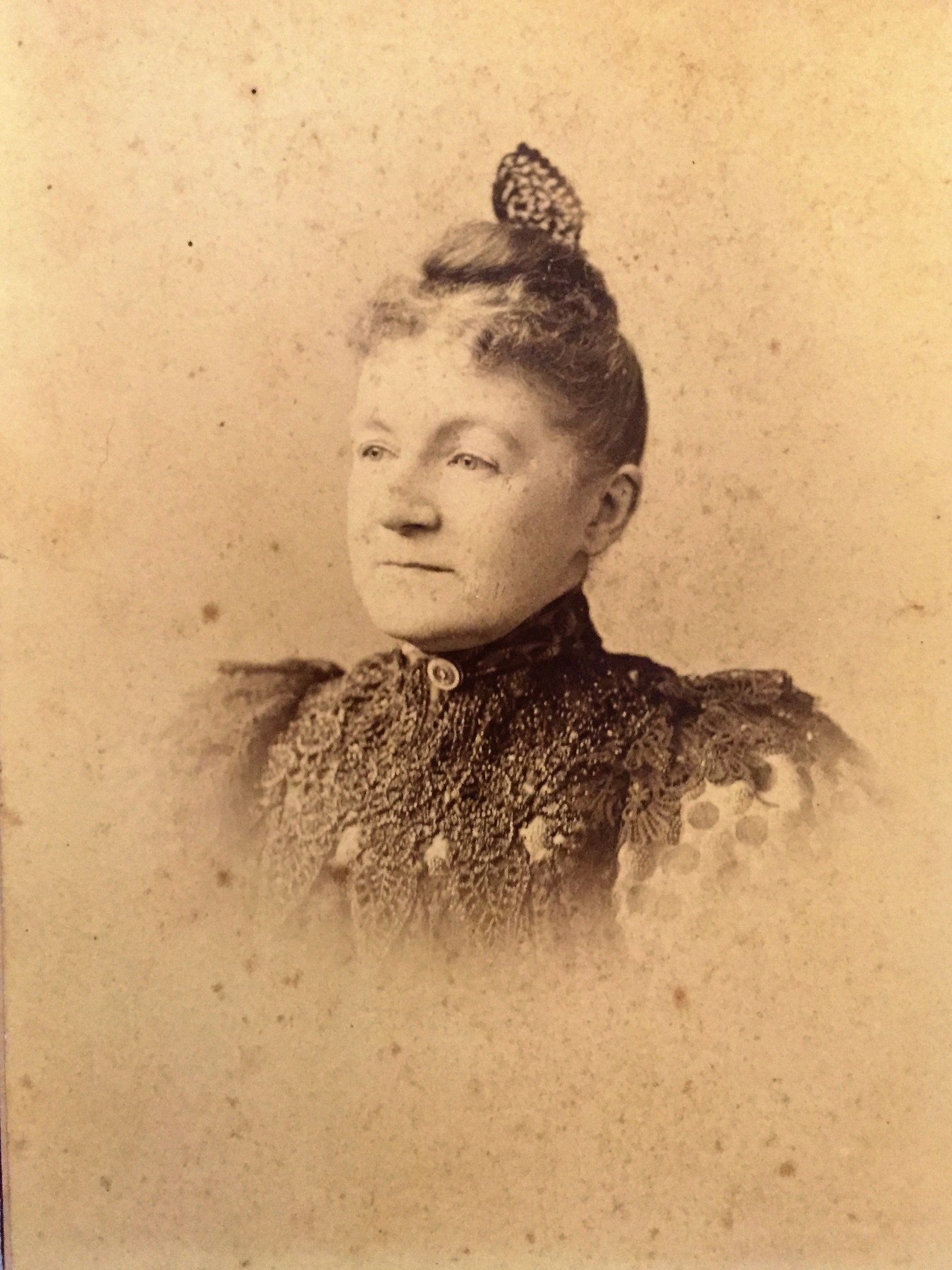
Anne Hyde
Anne Hyde Courtesy Findagrave

Anne Elizabeth Copcutt was born January 15, 1840 in New York City to parents John and Rebecca Copcutt. The family moved to Yonkers in 1854 where John owned more than twenty-five acres. The family must have had some prominence as an obituary states that she met Washington Irving at her grandfather’s home. (4)

Anne was to marry Peter L. Hyde; a marriage that was to end in separation/divorce. The outcome is not 100% certain and records appear to be missing. What is certain is that they did not live together for many years and she is not mentioned in Peter’s obituary when he died in 1925. Peter is buried in Sanford, FL.


According to newspaper death notices, Anne had moved to DeLand in 1899 where she built a
home on Woodland Boulevard in 1907. This date would correspond to her living prior at the
New York Avenue property as referenced in the Florida Master Site File. Ms. Hyde passed away
at her Woodland Boulevard home March 22, 1927. Reverend Harry L. Taylor, the rector at St.
Barnabas Episcopal Church, led a local funeral service before her remains were returned for
burial at St. Johns Cemetery in Yonkers. Ms. Hyde was survived by three children; Mrs.
Gouvernor F. (Rebecca) Peek, Arthur E. Hyde, and Franklyn P. Hyde, and five grandchildren.
(5)

Please click here to find online memorials for Anne and members of her family.

As mentioned earlier, there is nothing left of the Rich cabin; an important location in DeLand
history. On site, however is a small marker designating the location of the Rich cabin and
providing a bit of background information. From the road, this small marker is probably
impossible to see. I happened to spot this on a walk during my lunch break.

John Rich Cabin marker at 339 W. New York Avenue


A mural, painted by artists Courtney Canova and Bob Brooks contains a depiction of the John Rich cabin. The mural is located on the northeast corner of Wisconsin and Woodland.

This post may contain affiliate links. If you click these links and make a purchase, I may receive a small commission. This commission does not affect any price that you pay. Affiliate programs or sponsors providing products do not influence the views and opinions shared on this blog.


Sources

1) Quoted in Michael G.Schene. Hopes, Dreams, and Promises: A History of Volusia
County, Florida. Daytona Beach: News Journal Corporation, 1976. 89.
2) Evans C. Johnson, editor. William J. Dreggors and John Stephen Hess. A Pictorial
History of West Volusia County 1870-1940. DeLand, West Volusia Historical Society,
1989. 158.
3) Florida Master Site File VO-3600.
4) Yonkers Statesman, March 23, 1927. (Courtesy Findagrave)
5) DeLand Sun News, March 23, 1927.

Posted on Leave a comment

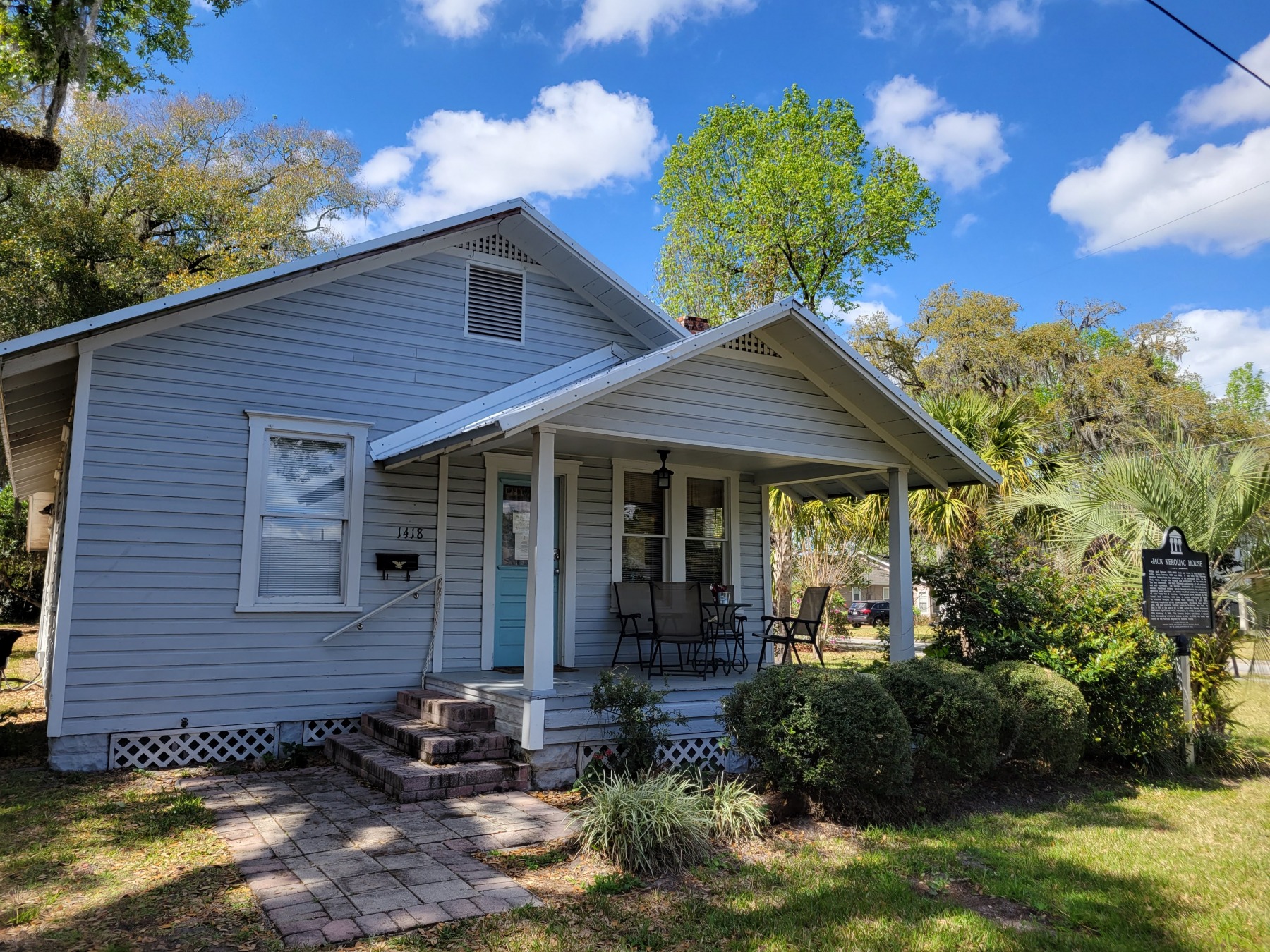
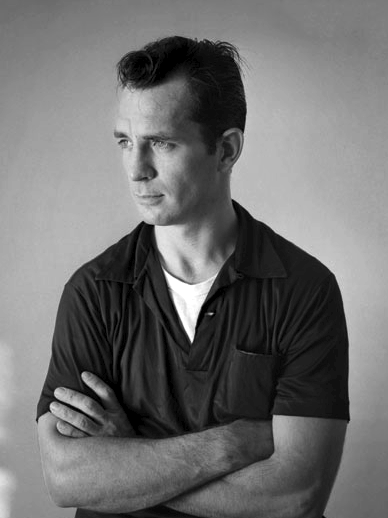
Jack Kerouac House in Orlando, Florida: A Must See if You are “On the Road”

Jack Kerouac House
1418 Clouser Avenue
Orlando, FL 32804

By Kerouac_by_Palumbo.jpg: Tom Palumbo from New York, NY, USA derivative work: Sir
Richardson at en.wikipedia – This file was derived from: Kerouac by Palumbo.jpg:, CC BY-SA
2.0, https://commons.wikimedia.org/w/index.php?curid=85963062

When most people think of the Beat Generation, certain visuals often come to mind.
Unemployed young adults, sitting around a coffee house in San Francisco, smoking away, rambling on self-importantly about books most of main stream America has never read seems to often fit the description. These descriptors are really about beatniks and not a literary movement. For those a bit more acquainted with the Beat Generation, certain names will come immediately to mind; Kerouac, Burroughs, Kesey, Ginsberg, and maybe even Ferlinghetti. Literature titles such as Howl, Naked Lunch, and On the Road  are probably the most famous. Despite the passage of nearly seventy years, these books and others of the movement are still in print and widely read today.

In July of 1957, only months before the groundbreaking On the Road would receive tremendous praise in the New York Times, the then 32-year-old Kerouac rented a small apartment for him and his mother. The home did not have air conditioning and the Florida heat was almost too much for Kerouac, who took to writing at night. Today, visitors to the city of Orlando have the opportunity to see the home where Jack Kerouac and his mother lived during 1957, the year that catapulted him to fame.

On the Road by Jack Kerouac                                                                The praise was not to be long, nor universal. The beatnik movement seemed to take over. Musician David Amram believes that the beatnik movement was a manufactured one, arguing Beat writers such as Kerouac were not the goateed, beret wearing, pretentious types. Rather, he described themselves as hicks, not wanting to draw attention to themselves. Author Bob Kealing, a noted Kerouac expert, has put forth that Kerouac himself claimed that those of the Beat Generation “were searching for spiritual truth and meaning beyond the confines of post-World War II life.” This search is what confounded and worried critics.
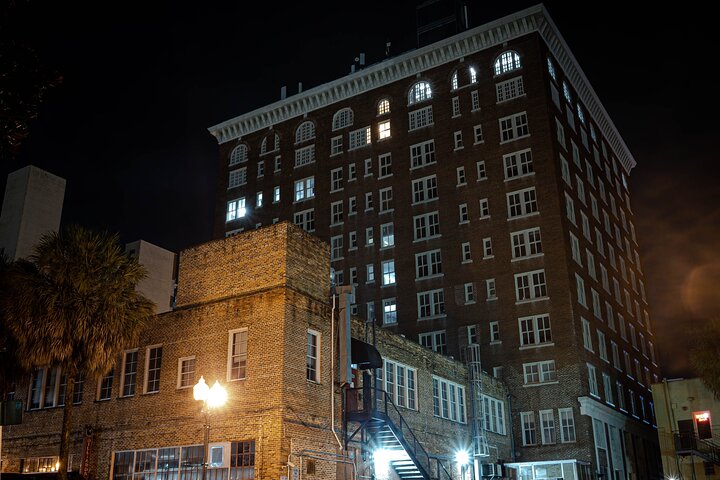
Meanwhile, in his small Orlando apartment, Kerouac continued typing away on his follow-up, to
be titled Dharma Bums. In a rapid fire twelve days of output, Kerouac finished the novel on
December 7, 1957, Pearl Harbor Day. Kealing reminds us that to Kerouac, the term “dharma”
meant truth.

Orlando Walking Ghost Tour – $54.67

Every year since its inception, the Orlando Ghost Tour has grown exponentially, with more and more people coming to enjoy their spooky stories and all-around demonic fun.


In April 1958, Jack and his mother packed into a station wagon owned by Robert Frank and
made off for Long Island, New York. Dharma Bums was published in October of that year.
Fame was not something Kerouac was ever comfortable with, nor does it seem that he sought it
out. Kerouac was to become too familiar with the bottom of a bottle, and on October 21, 1969, at
age 47, he died a painful death from cirrhosis of the liver. His remains were transported to
Lowell, Massachusetts, where he was buried at Edson Cemetery.

Jack Kerouac House, Orlando, FL

Listed today on the National Register of Historic Places, the future of the Orlando, Florida Kerouac House was not always assured. Once it was determined that this location was the residence of Kerouac during a critical time in the author’s life, efforts began in order to purchase and rehabilitate the house. Led by Kealing, former bookstore owners Marty and Jan Cummins, and others, they founded the not-for-profit Kerouac Project of Orlando. With the generous financial support of Jeffrey Cole and Cole National, they were able to purchase and rehabilitate the house. Today, the Project provides several writer in residence opportunities each year, allowing the visiting author to live and work in the home made famous by Jack Kerouac.

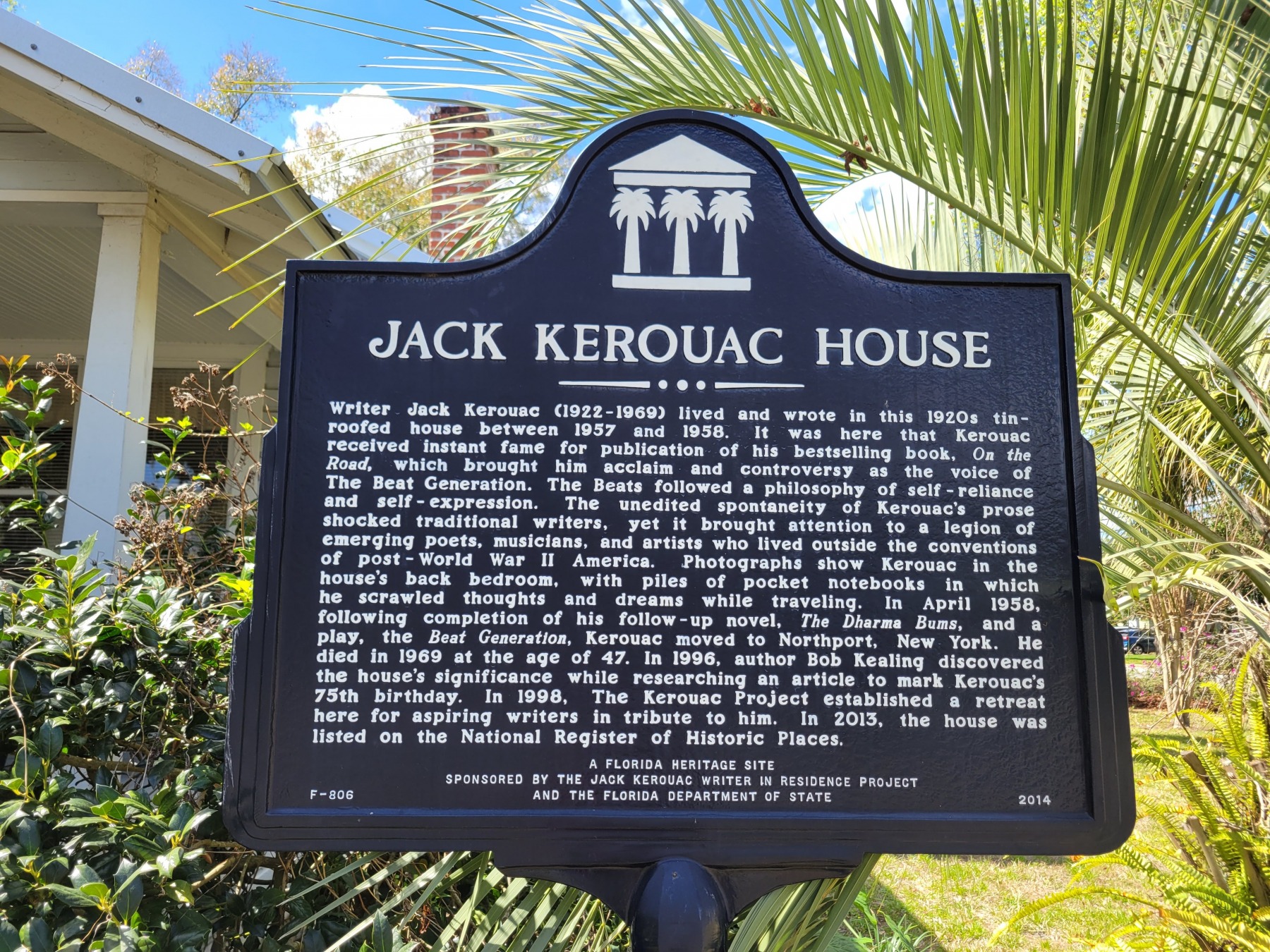
The home is not open to the public. Those wishing to see the house may drive by and briefly stop to take it in. There is not public parking available and this is a residential area so please be mindful of those who live in the area and if you are taking photos be on the watch for traffic. A state of Florida historical marker is on-site. The text reads

State of Florida Historic Marker–Jack Kerouac House Orlando, FL

Writer Jack Kerouac (1922-1969) lived and wrote in this 1920s tin-roofed house between 1957 and 1958. It was here that Kerouac received instant fame for publication of his bestselling book, On the Road, which brought him acclaim and controversy as the voice of The Beat Generation. The Beats followed a philosophy of self-reliance and self-expression. The unedited spontaneity of Kerouac’s prose shocked traditional writers, yet it brought attention to a legion of emerging poets, musicians, and artists who lived outside the conventions of post-World War II America. Photographs show Kerouac in the house’s back bedroom, with piles of pocket notebooks in which he scrawled thoughts and dreams while traveling. In April 1958, following completion of his follow-up novel, The Dharma Bums, and a play, the Beat Generation, Kerouac moved to Northport, New York. He died in 1969 at the age of 47. In 1996, author Bob Kealing discovered the house’s significance while researching an article to mark Kerouac’s 75th birthday. In 1998, The Kerouac Project established a retreat here for aspiring writers in tribute to him. In 2013, the house was listed on the National Register of Historic Places.

To learn more about Jack Kerouac and his time in Florida, readers should find a copy of Bob Kealing’s excellent book, Kerouac in Florida.

Readers wishing to learn more about the Beat Generation, I recommend Desolate Angel: Jack Kerouac, the Beat Generation, and America, or perhaps Women of the Beat Generation: the Writers, Artists, and Muses at the Heart of a Generation. 

Sources:
Florida Master Site File, OR8407

Kealing, Bob. Kerouac in Florida: Where the Road Ends. Arbiter Press, 2004.

Kealing, Bob. “The Road to Kerouac: He Came to Orlando in 1957.” Orlrlando Sentinel. March 9,
1997.

National Park Service. National Register of Historic Places Registration Form: Jack Kerouac
House. 2013.

This post may contain affiliate links. If you click these links and make a purchase, I may receive a small commission. This commission does not affect any price that you pay. All views and opinions provided are my own and are never influenced by affiliate programs or sponsors providing products.


Desolate Angel

Women of the Beat Generation

The Dharma Bums by Jack Kerouac

Allen Ginsberg, Howl
Naked Lunch by William S. Burroughs


Posted on Leave a comment

Book Review: London’s Blue Plaques 2nd Edition

London's Blue PlaquesSpencer, Howard, editor. The English Heritage Guide to London’s Blue Plaques, 2nd edition, revised, and updated. Tewkesbury: September Publishing, 2019. ISBN 9781912836055, 528 pages, index, photos, maps. $25.95 or £17.99.


Walk around London for even a few minutes and you cannot help but see a blue plaque attached to a building. These plaques are associated with London just as red double-decker buses, black cabs, Big Ben, and the Royal family. So just what are these and why are they there?

These plaques help commemorate not just individuals but the places that are associated with these persons. Curated by English Heritage, this program has been in existence since 1867. English Heritage is now the fourth organization to manage the program, following up on work carried out by the (Royal) Society of the Arts, the London County Council, and the Greater London Council. English Heritage took over management in 1986 and is now responsible for well over 900 plaques.


Plaque nominations are provided by the public (the criteria are on the English Heritage website) and go
through a vetting process. Traditionally, the person is the most important part of the selection process.
One of the most important selection criteria is the person must have “made a positive contribution to
human welfare and happiness.” (Page 8) However, some additional guidelines must be followed in order
for a plaque to be awarded.

In order to be recognized, a person must have been dead for twenty years. This allows the selection
committee to judge the impact and enduring legacy of the candidate. A second rule is that the person
may only have one plaque. This rule is more stringently enforced than in the past. Spencer notes that
William Makepeace Thackeray has three blue plaques. A building where a plaque is being proposed may
have no more than two plaques in place. This often rules out buildings such as churches, theatres, and
schools. In fact, there are currently only eighteen structures with more than one plaque.

The London Blue Plaque program helps bring together a person, a place, and a story. As such, you
cannot just nominate a person, there needs to be a structure standing that the commemorated person
would recognize. This means the building must be period appropriate. As Spencer interprets this, “the
thought being that once the original bricks and mortar have gone, so has the meaningful connection
between person and place.” (Page 9) If an imaginary plaque was placed at 1050 Blackstoneberry for Stan
Ridgeway, and the imaginary building was to burn down, a replacement plaque would not be issued to any new
structure built there. The newly constructed building and Ridgeway would have no association.

For the keen observer, you will note that not all plaques are the same. Some are not round and several
are not even blue. The key as to whether a plaque is part of this initiative is to pay attention to the
sponsoring organization. Other plaque sponsoring groups you might see throughout England include the
Westminster City Council Green Plaque, Nubian Jak Community Trust, Ealing Civic Society, and others.

Book editor Howard Spencer is correct to point out the value of this program in addition to name and
place remembrance. This program helps reflect the shifting perceptions of what is historically significant
and what society values and thinks is worthy of memory. History is an evolving field of study and this program is a prime example of this evolution. He points out that currently only fourteen  percent of plaques recognize women and less than five percent honor minorities. While continued efforts are needed on these fronts, Spencer states that these imbalances are being addressed and a wider diversity of people are being publicly commemorated.

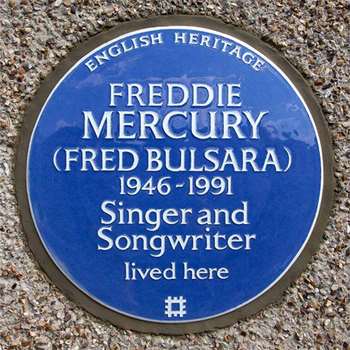
Freddie Mercury Blue Plaque located at 22 Gladstone Avenue Feltham, London Burough of Hounslow Photo courtesy English Heritage

A book such as this has value but maybe not so much as a travel or tour guide. For most people, there are more user-friendly ways to learn about these plaques. English Heritage has an excellent search feature on their website allowing you to search by name, keyword, category, or borough. An example; for those interested in rock music, you can find plaques for Freddie Mercury, Jimi Hendrix, and John Lennon; certainly three of the biggest names in the field.

As a travel tool, I would recommend downloading the official app from your preferred app store. The app will allow you to find all plaques that are near you, search all blue plaques, or take guided tours. When I open the app today, there are two tours listed, Literary Kensington and Soho, Creatives, and Visionaries. Both take you to twelve stops and range from 45 minutes to an hour and a half estimated.


All those positives of other options aside, I still have a place on my shelves for this book. One being, I don’t live in London and don’t have the ability to regularly visit. This book gives me a “fix” so to speak. The reality is, most of us will know very few of the names on these plaques. The plaques themselves provide very little information, think “George Washington Slept Here.” Spencer provides a bit more background on each individual allowing readers to determine if they wish to learn more. Most receive about half a page of text. Unfortunately, the majority do not have a photo of their plaque included. This is no doubt a cost issue as including 900+ photos would become prohibitively expensive and the book would balloon from an already large 528 pages to nearly double the size.

For casual readers such as myself, the book is divided geographically into 36 chapters. Each chapter
contains a small-undetailed map. Numbers on the map correspond to listings in the chapter helping you
somewhat orient yourself but street names are not included. Tube stops and names are shown.

The book appears to be solidly constructed and the paper is good quality. Should you wish to throw this
in your backpack while walking the city it doesn’t take too much room but it does weigh a couple of
pounds.

At around $20-$25 US, I have no problem recommending this title. It is a great addition to any armchair
traveler’s library.

If you are in the Covent Garden area of London be sure to find the Young Dancer sculpture. Learn about this great piece of public art in my blog post. 

This post may contain affiliate links. If you click these links and make a purchase, I may receive a small commission. This commission does not affect any price that you pay. All views and opinions provided are my own and are never influenced by affiliate programs or sponsors providing products.

Posted on Leave a comment

Osteen, Florida World War I Monument

Osteen, Florida World War I monument
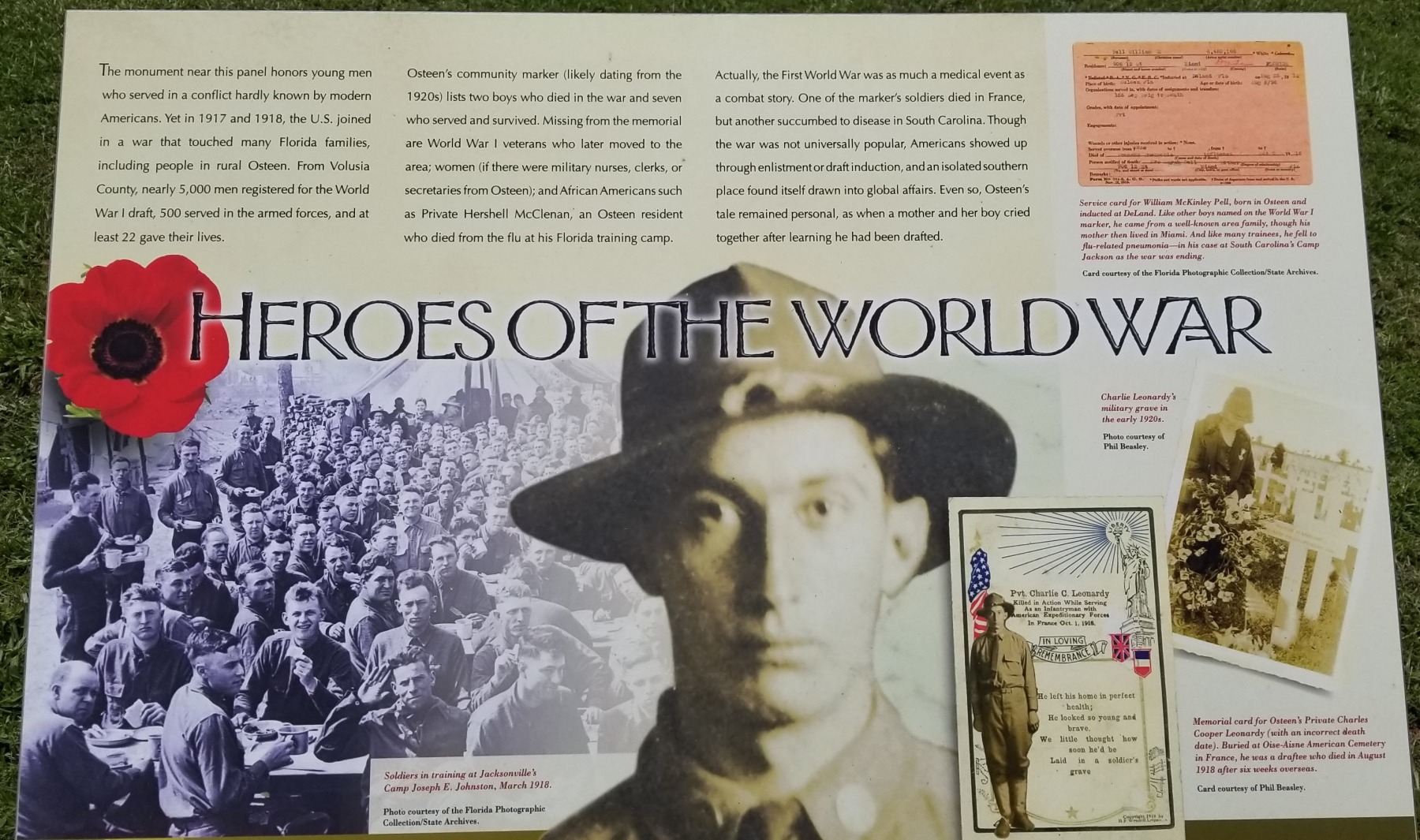
Panel at I. Walter Hawkins Park in Osteen, Florida
Interpretive panel located at I. Walter Hawkins Veterans Memorial Park in Osteen, Florida

Located off busy State Road 415, north of the pedestrian bridge which is a part of the East Central Regional Rail Trail, is a marble monument dedicated to Osteen residents who served, and in some case died, during World War I.

Information contained in the Florida Master Site file states that the original date and location of this monument is not clearly known. Tax assessor records indicate the monument was erected in 1936. This date however seems highly unlikely for multiple reasons. The first being, why would local residents wait so long to commemorate local soldiers who fell in service of their country. While a delay of nearly twenty years is possible, raising funds was certainly not an easy task, it seems that the local residents would have wished to dedicate this monument sooner.

The Master Site File indicates that the original location may have been near the intersection of
Thompson and Carpenter Avenues. If so, the 1936 date above may indicate that the monument
was moved to allow for road construction. The site file record is not clear on the 1936 location or
if the monument was again moved, but by 1969 the monument was located near the newly
constructed post office. Today, the monument is located in I Walter Hawkins Veterans Memorial
Park.

In April 1957, Hawkins, a local attorney and World War I veteran himself, appeared before the
Board of County Commissioners requesting they donate property “as a site for a War Memorial.”
Commissioners duly approved the resolution in part reading,

That that portion of the County barn property in County Commissioner’s District No. 5 of
Volusia County, Florida, located in Section 7, Township 19, Range 32 East, Volusia
County, Florida, lying south of the Florida East Coast Railway Right of way and east of
the Sanford-New Smyrna Road as relocated and west of the original Sanford-New
Smyrna Road be and the same is hereby dedicated as a Memorial Park in honor of the
United States Veterans of all wars.

On May 28, 2016, the Volusia County Council proclaimed it I. Walter Hawkins Veterans
Memorial Park Day. Based upon this proclamation, it is believed that the land donated in 1957 is
the same as that which was renamed in Hawkins honor.

Today, the park sits near the much busier State Road 415, in the rapidly growing area near
Deltona. The park contains an interpretive panel in addition to the monument. The monument
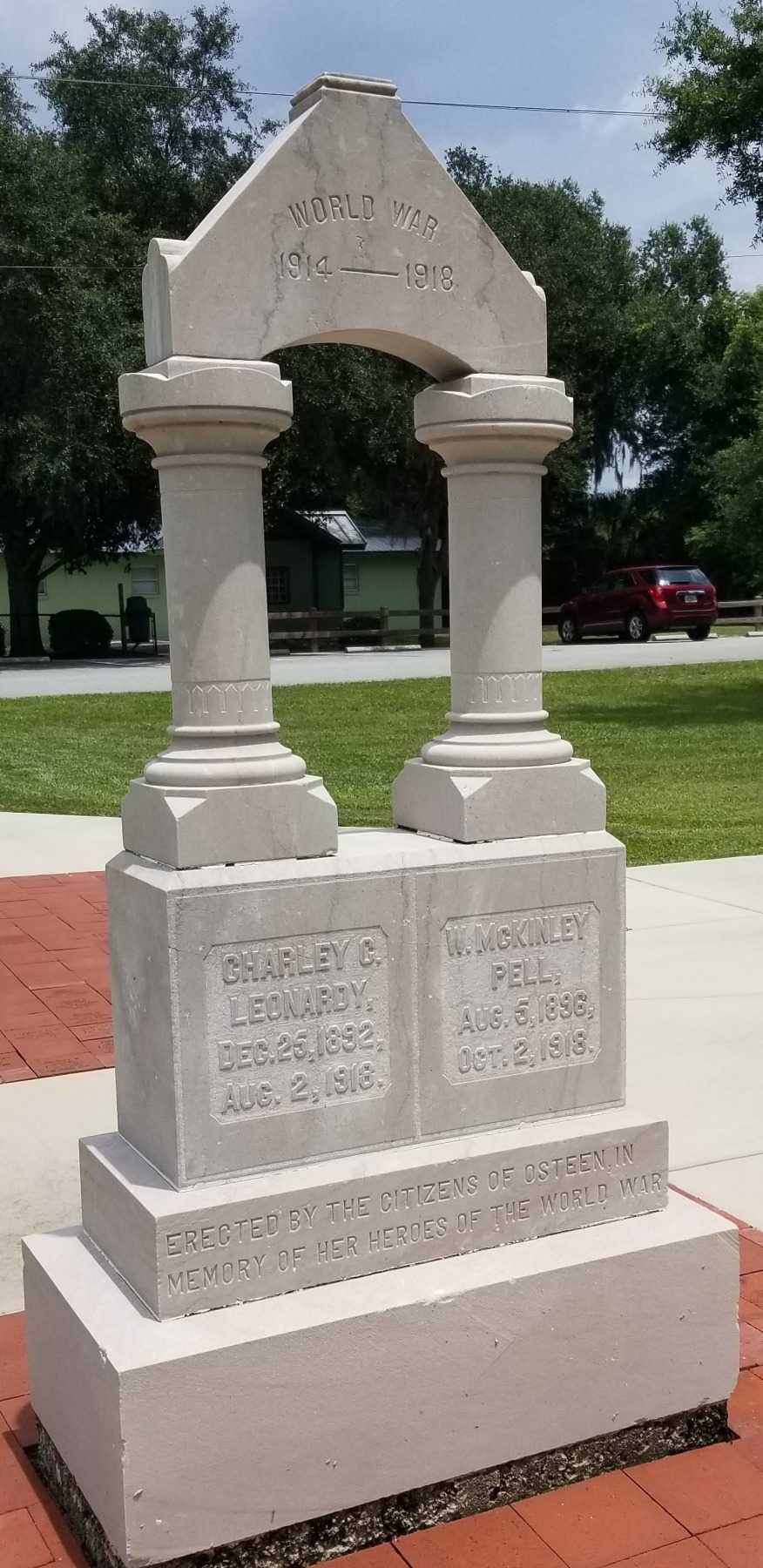
itself is made of marble and is approximately seven feet tall. The monument has a triangular top,
inscribed with “World War I, 1914-1918 on one side and a United States flag on the other. This
sits upon two columns and a three-stepped base. According to an interview conducted with local
resident Albert Pell on October 7, 2014, by Tom Baskett, Jr., County of Volusia Public
Historian, a marble sphere that was located on the top of the triangle is now missing from the
monument.

Osteen, Florida World War I monument
Osteeen,, FL monument honoring two locals who perished while in service during World War I.

On the second step is the phrase, “Erected by the citizens of Osteen in memory of her heroes of the World War.” Above this are the names of Charley (listed in some records as Charlie) C. Leonardy and W. McKinley Pell, two residents who both perished while in the service of the United States. Both Leonardy and Pell were from prominent local families.

Charley Leonardy enlisted in DeLand in October 1917 and served overseas for less than two months before losing his life. He is buried in Oise-Aisne American Cemetery in France. William McKinley Pell enlisted in DeLand in August 1918 and died of complications from pneumonia in October while serving at Camp Jackson, South Carolina.

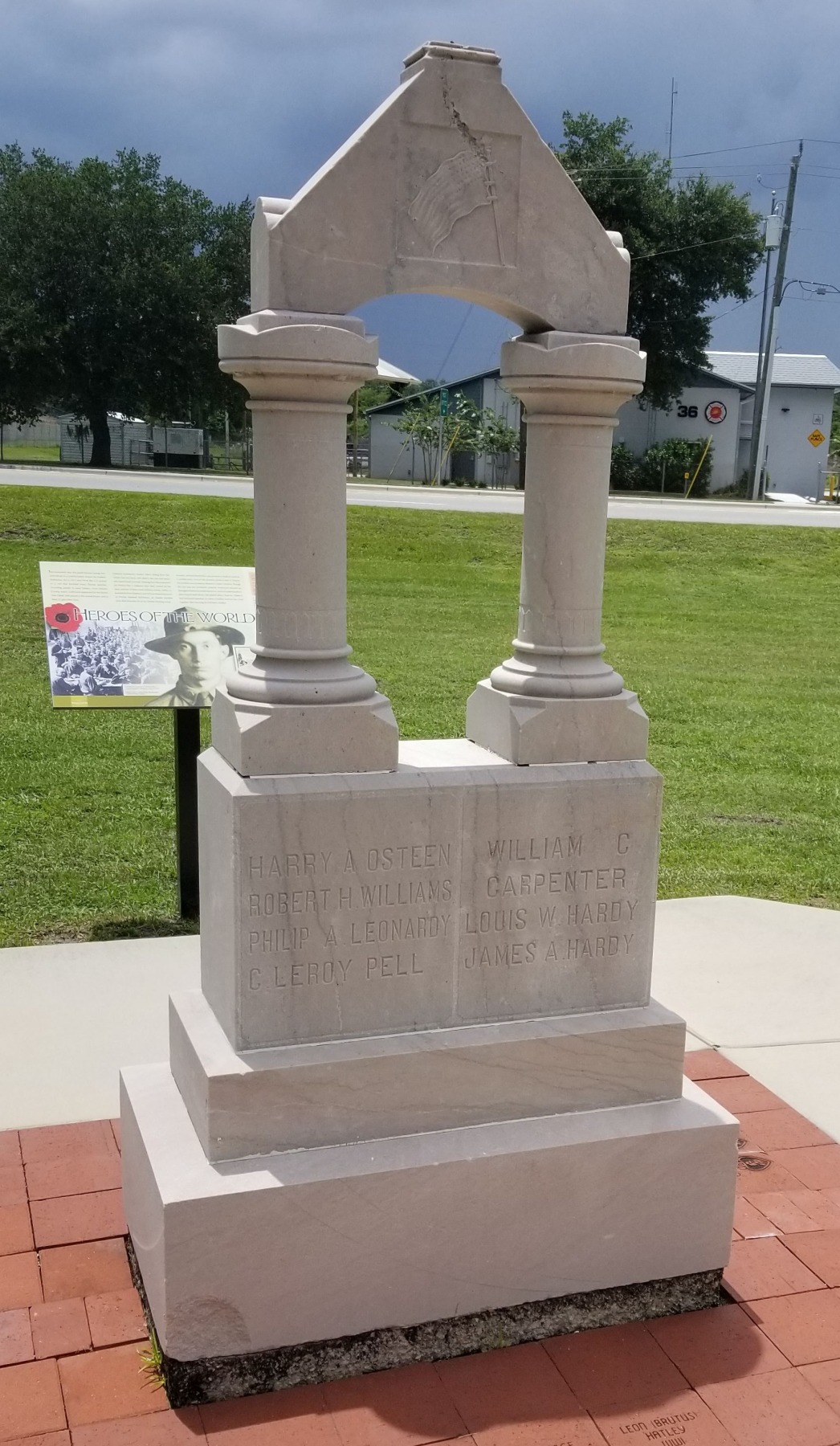
On the reverse side of the monument are the names of other Osteen residents who served in
wartime. These individuals include (alphabetically) William C. (this should be O. as his middle
name was Ora) Carpenter, James A. (his middle initial may be C.) Hardy, Louis W. Hardy,
Philip (possibly Phillip) A. Leonardy, Harry A. Osteen, C. LeRoy Pell (his headstone and
enlistment record show his name as Calvin R. Pell, his father’s name was Calvin LeRoy Pell),
and Robert H. Williams.

Osteen, Florida World War I monument
Osteen, Florida monument honoring multiple local residents who served during World War I. Absent are the names of African Americn soldiers who served.

Mr. Baskett has pointed out a troubling aspect of this monument. He has questioned the selection process, as to whose names were included. He correctly points out that not all local residents who served are recorded. However, as he points out, some of these could be transplants who had no familial ties to the city when they registered. However, Mr. Baskett points out two names that should be included. Unfortunately, both of these men were African American, an “oversight” that cannot be imagined or accepted today.

Hershell McClenan enlisted in February 1918 and died later that year while still in the service
from pneumonia and influenza. James Radford enlisted in August 1918 and received an
honorable discharge in December. Born in Osteen but living in DeLand at the time of his
enlistment was African American soldier Morris Smith, Jr. Smith served from September 1918
through his discharge in July 1919.

The park and monument are open during daylight hours. There is no parking directly at the park but there are spaces close by.

Sources:

Baskett, Jr., Tom. “Osteen’s World War I Monument”. Typescript in possession of author.

Commissioners of Volusia County. Resolution passed April 18, 1957. Record Book 33, page
330.

County of Volusia. I. Walter Hawkins Veterans Memorial Park Day proclamation. May 28,
2016.

Findagrave

Florida Master Site File. World War I Monument. Site 8VO4929.

Florida Memory. World War I Service Cards.

If you are interested in veterans memorials in Volusia County, be sure to take a look at my post about the veterans park in Edgewater, FL. This small park is located on the Indian River and is a nice reflective area that you might not find if you aren’t looking for it.

This post may contain affiliate links. If you click these links and make a purchase, I may receive a small commission. This commission does not affect any price that you pay. Affiliate programs or sponsors providing products do not influence the views and opinions shared on this blog. 

Posted on Leave a comment

In Memory: Staff Sgt. William Lee Owen Brown KIA Vietnam

William Lee Owen Brown KIA during the Vietnam War. His remains are buried in Oakdale Cemetery in DeLand, FL.
William Lee Owen Brown headstone, Oakdale Cemetery, DeLand, FL

Staff Sergeant William Lee Owen Brown was killed in action (KIA) on February 10, 1968. Enemy fire struck the C-130 Brown was a passenger on as they approached the Khe Sanh airfield during the Vietnam War. The damaged plane was able to land but did not stop safely, running off the end of the runway, exploding in flames. Five of the ten passengers escaped the burning wreckage and received treatment at the US Army hospital.

Brown was born January 20, 1934 in DeLand, FL where he attended public schools. Brown  joined the Marine Corps in June 1953. He attended military photography schools at Fort Monmouth, NJ and Tokyo, Japan. His many USMC roles included that of recruiter, a drill instructor at Parris Island, NC, and at the time of his death, he served as a non-commissioned officer in charge of the First Marine Air Wing Photo Lab.

During his career Sergeant Brown was awarded multiple decorations. Brown received the Good Conduct Medal, the National Defense Ribbon, was a six-time recipient of Expert Rifleman awards, the Navy Commendation Medal with Combat (V), Air Medal and Combat Aircrew Insignia with three stars.


William Lee Owen Brown KIA during the Vietnam War. His remains are buried in Oakdale Cemetery in DeLand, FL.
Military headstone for William Lee Owen Brown, KIA during the Vietnam War.

At the time of Brown’s death, his wife Pauline (Kerr), son Hugh William, and daughter Karen Denise, lived in Albany, New York. His mother Emma Lee Brown lived in DeLand. Robert Owen Brown, William’s father, predeceased him.

Sergeant William Lee Owen Brown, who was KIA during the Vietnam War, is buried in Oakdale Cemetery, in DeLand, FL. On online memorial for Sergeant Brown can be found HERE.


Sources:

DeLand Sun News

For readers interested in military burials located in Oakdale Cemetery, I invite you to read my blog post about Sergeant Adam Quinn, who perished while serving in Afghanistan.


Last Stand at Khe Sanh written by Gregg JonesIn a remote mountain stronghold in 1968, six thousand US Marines awoke one January morning to find themselves surrounded by 20,000 enemy troops. Their only road to the coast was cut, and bad weather and enemy fire threatened their fragile air lifeline. The siege of Khe Sanh-the Vietnam War’s epic confrontation-was under way.

To learn more about Khe Sanh, I recommend readers to Gregg Jones, highly regarded work, Last Stand at Khe Sanh: The U.S. Marines’ Finest Hour in Vietnam. With positive reviews from Leatherneck Magazine, Vietnam Magazine, Michigan War Studies Review, and more, this book will take you into the heat of battle and put you on the frontlines with the men who fought there. 


This post may contain affiliate links. If you click these links and make a purchase, I may receive a small commission. This commission does not affect any price that you pay. Affiliate programs or sponsors providing products do not influence the views and opinions shared on this blog. 


Buy Me A Coffee donation link
Click the image to support this site through Buy Me A Coffee. Your support pays for web services, research trips, photocopies, and photo usage fees. You may be buying an actual cup or bag of coffee. I do love my coffee after all.