Posted on Leave a comment

Sands Fish & Oyster Company Florida Historic Marker

Sands Fish & Oyster Company Florida Historic Marker side two

The Sands Fish & Oyster Company two-sided Florida Historic Marker can be found in Port Orange, FL and is accessed through Riverwalk Park, located on the east side of US1 (Ridgewood Avenue).

Florida Marker Program

The Florida Historical Marker Program is one of the Division of Historical Resources’ most popular and visible public history programs. It is designed to raise public awareness of Florida’s rich cultural history and to enhance the enjoyment of our historic sites by citizens and tourists. These markers allow us to tell the stories of the places and people who created the Florida that we all enjoy today, by identifying the churches, schools, archaeological sites, battlefields and homes that represent our past.

If you wish to learn more about this state program, including qualifications, how to apply, the application, costs, and more, please use THIS LINK.


Sands Fish & Oyster Company b/w photo. Courtesy Facebook
Image courtesy Volusia County History Facebook group


Sands Fish & Oyster Company Florida Historic Marker side oneSide One

The Sands Fish & Oyster Company supplied oysters to markets and restaurants up and down the Atlantic Seaboard from 1916 until 1955. Founded  by William Sands, Sr., the company earned Port Orange, Florida, the title of “Oyster Capital of the World” by harvesting fresh, delicious oysters known far and wide. In addition to oysters, the company supplied clams, fish, and shrimp. Sands managed oyster leases along the Halifax River as far south as New Smyrna Beach and as far north as St. Augustine. Before starting his company he had worked as a bookkeeper for Daniel DuPont’s Port Orange Oyster Company. Originally located just north of Herbert Street along Halifax Drive, the Sands oyster house moved one block north to the corner of Ocean Avenue and Halifax Drive in the 1930s. In exchange for use of City of Port Orange property, the company provided the city with oyster shells for local roads. As the business grew, the oyster house expanded eastward over the river on pilings. Harvesting an average of 500 gallons of oysters per week, the company reached a high mark of 905 gallons during one week in 1943. Packed in gallon siz metal cans, the oysters were shipped out by truck.

Joy of Oysters cookbook
This definitive oyster bible and cookbook from expert food writer Nils Bernstein delivers an array of tips, trivia, and history, plus approachable recipes that celebrate the delicious bivalve.


Sands Fish & Oyster Company Florida Historic Marker side twoSide Two

A mainstay of the Port Orange business community, the Sands Fish & Oyster Company provided numerous jobs. Workers traveled from New York and Georgia to work the eight-month oyster season. During the off season, workers replenished the oyster beds and fished the river. For each gallon of oysters shucked, workers received a token known as a “Sands Dollar” that could be turned in for pay or used in local stores. In 1947, William Sands, Sr., passed away and his wife Mabel Sands and her son William Sands, Jr., took over the company. Success of the oyster business continued, but the water quality of the river declined after the construction of the second Dunlawton Bridge in early 1951. The bridge’s earthen causeway design, known locally as the “Port Orange Dam,” restricted the water’s tidal flow. Contaminants from septic tanks coupled with restricted flow raised bacterial levels in the river enough to end oyster harvesting. Sands Fish & Oyster remained in business selling fish, smoked mullet, clams, shrimp, and oysters that were supplied from other parts of the state. Mabel Sands sold the company to Fred and Martha Downing in 1956. The Downings continued the fish and shrimp market until 1961.

A Florida Heritage Site

Erected by the Port Orange, The City of Port Orange, and the Florida Department of State

F-851

2015

Fat Boy Surf Club--Surf Club for thicc boys (and girls) because you do't have to be ripped to rip.
Shop Fat Boy Surf Club today! 


Comments About the Marker

As is often the case unfortunately, these markers do contain errors and the information should be confirmed independently. The text is often not written by historians, or many times even folks with any level of historical knowledge. At the state level, the details are not reviewed, rather, they are trusting that the writers and sponsors have done their research properly. There are some requirements during the submission phase. The review committee will only catch glaring errors of fact or omission. They are more used for stylistic edits and program consistency. They are not experts in every facet of local history.

Please note the unusual language in the “erected” notation at the bottom of the marker. There is definitely something missing. Whether this was submitted in this manner and missed during editing or was a manufacturing error I am unsure.

Sands Fish & Oyster Company founder, William Edward Sands, Sr. passed away on February 4, 1958 at the young age of 59. The historic marker incorrectly lists his death year as 1957. An online memorial for Sands, Sr. can be found HERE. In addition to confirming his death date on the memorial site, I have confirmed the 1958 date through newspaper obituaries and government death records.

William Edward Sands, Jr., who took over and ran the market for several years passed away in 2014 at age 93. An online memorial for Sands, Jr. can be found HERE.

I was able to verify that the Downings received a transfer of the property lease from Ms. Sands in July 1956. I have been unable to verify when the Downing family closed the business.

If you have additional information on the Sands Fish & Oyster Company, or if you have images to share, please reach out. I will be glad to post an update and provide the appropriate credit.


Buy Me A Coffee donation link
Click the image above to support this site through Buy Me A Coffee. Your helps pay for website fees and maintenance, research fees for blog and book writing, photo usage and rights fees, and other associated costs. It might go to buying a bag of coffee, keeping me focused on the research topic at hand.

This post may contain affiliate links. If you click these links and make a purchase, I may receive a small commission. This commission does not affect any price that you pay. Affiliate programs or sponsors providing products do not influence  my views and opinions.


Thermacup coffee warmer. Never be without hot coffee
Click the image and never be without hot coffee!


The marker can be a bit tricky to find. Use Google Maps to quickly and safely navigate your way to it.

Posted on Leave a comment

Tampa Baseball Museum in Ybor City, Florida

Close up of the front entrance to the Tampa Baseball Museum located in the Ybor City neighborhood

Any fan of baseball should make a visit to the Tampa Baseball Museum, located in the former home of National Baseball Hall of Fame member Al Lopez, in Ybor City, Florida.

Tampa Baseball Museum building exterior Ybor City neighborhood

Ybor City

Ybor City is a neighborhood located to the northeast of downtown Tampa. The area is perhaps most known for being a cigar producing are founded by Vicente Martinez Ybor and other cigar producers. Ybor City is widely known for the influence of its Cuban immigrants. Italians and Spaniards have also played a considerable role in the history of the community.

Beginning in the 1880s through the years of the Great Depression, Ybor was known its cigar production. Historian Frank Lastra has stated that in 1929 more than 500 million cigars were rolled. Today, cigar makers ca still be found, with makers such as J.C. Newman Cigar Company, La Faraona Cigars, and Tabanero Cigars satisfying the tobacco needs of users across the country.


Old b/w baseball image. Clickable link to find Florida sports history books.
Click the image to visit my bookshop.org site. Here you will find many Florida sports books, including books on baseball in Tampa.


Visiting Ybor City

Whether you are in town departing or arriving on a cruise, taking in a sporting event, or a day tripper, a visit to Ybor City is worth your time.

Finding Ybor City is quite easy. From the north, the easiest route is I-275 South, taking the east I-4 exit and getting off at exit 1 for the Port of Tampa and Ybor City. From the east, travel on I-4 and get off at exit 1. I recommend using Google Maps for the most accurate route. Use the map embedded below or click the link in the prior sentence to find the best route for you.

The weather in Ybor City can  be considered hot for much of the year but being located near the Gulf of Mexico, the worst of the summer heat is avoided. May through September have an average high of around 90 degrees with lows in the lower 80s. The winter months are a bit cooler, with highs in the low to mid 70s and lows averaging in the 60s. You will seldom need long sleeves.

The rain comes to Ybor City during the summer months. From June through September, you’ll have about a 50% chance of rain on most days. During July, the area receives rain on average two out of three days. Bring your umbrella. The remainder of the year is comparatively dry. Snow? Forget about it. Hurricanes and tropical storms? Definitely. Keep watch during the season and be prepared to evacuate if need be.

If you are a first time visitor, a stop at the Ybor City Visitor Center is a must. They will help orient you, suggest must see spots, suggest dining and hotel options, and much more. Visit the website and click Info Request. They’ll get you everything you need ahead of your visit.

Don’t miss the Gasparilla Pirate Festival each January. The Ybor Saturday Market, held during the non-summer months, is a must do event. Find local foods, music, art, plants, pet related items, jewelry, and more.

Tampa Baseball Museum

Located at

2003 N. 19th Street                                                                                                                                        Tampa, FL 33605                                                                                                                                                813-400-2353

Hours                                                                                                                                                      Sunday during Spring Training and the MLB season: 11:00a.m. until 5:00p.m.                                                              Monday through Wednesday: CLOSED                                                                                                                  Thursday through Saturday: 10:00a,m until 4:00p.m.                                                                                              CLOSED on New Years Day, Thanksgiving, and Christmas  (They are not listed as closed on Easter but I would make that assumption.)

Admission                                                                                                                                                          $12 Adults                                                                                                                                                          $10 Seniors 65+, active military, first responders, teachers, students age 18+ (ID required for discount)                        $6 children                                                                                                                                                    Free children ages 5 and under

Bring your Baseball Attractions Pass-Port and get it stamped!

Follow the Tampa Baseball Museum on Instagram.

The island of Cuba has a long love of the game of baseball, and with the close association that Ybor City has with its Cuban heritage, it should be no surprise that baseball is important to the community. The Tampa Baseball Museum in the Ybor City  neighborhood, is a great visit for baseball fans, history enthusiasts, locals looking to learn more about their community, or visitors soaking in the aura that makes this area so unique.

The museum is located in a circa 1905 home that was the boyhood home of National Baseball Hall of Fame member Al Lopez. The structure no longer sits in its original location. The home was moved during a 14 hour, mile and a half journey made possible through the Interstate Historic Mitigation Plan during a widening of I-4 in 2013.

The information below on Hillsborough County and the City of Tampa is taken from the museum website.

Hillsborough County

In addition to providing the land, the Hillsborough Board of County Commissioners has awarded three Historic Preservation Challenge Grants to the Ybor City Museum Society to support the rehabilitation of the Al Lopez House and development of the Tampa Baseball Museum. The grants provide a 100% match for monetary and in-kind donations. Through the generosity of community partners and individual donors, the Society is actively funding from the most recent grant to complete exhibits for the Museum.

The City of Tampa

At the very beginning of development, the City of Tampa awarded a Community Redevelopment Area Façade Improvement Grant to the Ybor City Museum Society for the Tampa Baseball Museum. The grant provided financial assistance for exterior renovation, restoration, and rehabilitation as well as landscaping improvements. Then, the City gifted the house to the Society to help make this new museum a reality.

Who was Al Lopez

Al Lopez was born in Tampa in 1908 to parents born in Spain, who worked in Cuba, before moving to the Ybor City area in search of work in the cigar industry. Lopez’s baseball career began locally  in 1924 when he signed with the Florida State League, Tampa Smokers, at age 16. At the young age, Lopez was already recognized as a promising catcher. Working his way through the minor leagues, he debuted in the major league in 1928 before becoming the Brooklyn Dodgers starting catcher in 1930.

Lopez’s career as a player would last until 1947, an unusually long tenor both for the era and for his position. He played for Brooklyn, Boston Bees, Pittsburgh Pirates, and Cleveland Indians. Upon retiring as a player, he had caught 1,918 games, a record that would stand until broken in 1987 by Bob Boone.

In 1948, the year following his last as an active player, Lopez began his managerial career, serving as skipper for the Pittsburgh Pirates AAA affiliate, Indianapolis Indians. He would stay with the team through the 1950 season before returning to Cleveland as manager in 1951. He resigned from the team following a disagreement with management after the 1956 season, boasting a record of 570 wins and 354 losses.

Al LopezTampa Baseball Museum in Ybor City
Courtesy Florida Sports Hall of Fame

Lopez was far from finished in his career, signing on to be the field boss with the Chicago White Sox in 1957. He would stay with the team through the 1965 season, never winning less than 82 games. He then transitioned into a Vice President role with the team before returning to the field during the 1968 season.

During his long bench career he posted a record of 1,410 wins against 1,004 losses. His teams went to the World Series twice, losing both times however. Ten times, his team finished second in the American League, narrowly missing visits to the World Series. Lopez currently ranks 29th on the all-time list of major league wins for a manager.

Lopez was elected to the Florida Sports Hall of Fame in 1961 and  later, in 1977, the Veterans Committee elected Lopez to the Baseball Hall of Fame in Cooperstown, NY.

Lopez died in 2005, at the age of 97 after suffering a heart attack. Lopez had lived just long enough to witness his White Sox team win the World Series, their first in 88 years. An online memorial for Lopez can be found using THIS LINK.

The Museum

Here are a few photos from the collection and exhibits when we visited. It’s important to remember that museums are not static facilities. They need to change and update to survive. What you see below may or may not be on exhibit during your visit.

Close up of the front entrance to the Tampa Baseball Museum located in the Ybor City neighborhood
A close up of the logo signage on the outside of the Tampa Baseball Museum.


Memorabilia from Al Lopez Field that stood from 1954 until it was demolished in 1989
Artifacts from the now demolished Al Lopez Field. Click the image link to learn more.
Al Lopez was elected to the National Baseball Hall of Fame in 1977.
Lopez was elected to the Hall of Fame by the Veterans Committee in 1977.


Senaida "Shu Shu" Wirth was born in Tampa and played in the All American Girls Professional Baseball League from 1945-1951.
Senaida “Shu Shu” Wirth was born in Tampa and played in the All American Girls Professional Baseball League from 1945-1951. Click the link to learn more about her.


Sit and watch videos on the center field screen.
Learn more about the career of Al Lopez when you sit and watch videos shown on the center field screen.


Autographed baseball from every MLB player from Hillsborough County, FL
Autographed baseballs from every MLB player from Hillsborough County, FL. Signed caps from Tony La Russa.


Plaque acknowledging the signed baseballs. Tampa Baseball Museum in Ybor City, FL.
Plaque acknowledging the signed baseballs.


Al Lopez Quote.
Some of the wisest advice ever spoken.

“Do what you love to do and give it your very best. Whether it’s a business or baseball, or the theater, or any field. If you don’t love what you’re doing and you can’t give it your best, get out of it. Life is too short. You’ll be an old man before you know it.” Al Lopez


Buy Me A Coffee donation link


Click the image above to support this site through Buy Me A Coffee. Your helps pay for website fees and maintenance, research fees for blog and book writing, photo usage and rights fees, and other associated costs. And maybe, it will go to buying a bag of coffee to help keep me focused on the research topic at hand.

Click the image to save this post to your Pinterest boards

This post may contain affiliate links. If you click these links and make a purchase, I may receive a small commission. This commission does not affect any price that you pay. Affiliate programs or sponsors providing products do not influence  my views and opinions.


Plan your next road trip with Greyhound.
Plan your next road trip with Greyhound. With improved seating, more than 1,600 North American destinations, more than 700 low emission buses, free onboard wi-fi, power ports, and more, this isn’t your grandparents Greyhound.


Posted on Leave a comment

Visit Chetham’s Library in Manchester

Photo of many of the antique books at Chetham's Library in Manchester, UK

Some of the many rare and unique volumes held at Chetham's Library, a must visit during any trip to Manchester.For many visitors, a trip to Manchester, UK, is about one thing: football. Soccer as it is more commonly called in the United States. Fans of Manchester United and Manchester City follow their teams with a devotion American fans can’t fully understand. To be a European football fan means something different than being a sports fan in the states. There are many other delightful things to take in during a visit to Manchester. One I can recommend is a visit to Chetham’s Library in Manchester, and while there, don’t miss the small but impactful World Wars commemoration, honoring students who fell during one of the two World Wars.


Reserve Your Tour Date and Time

A visit to Chetham’s Library starts with reserving your tour. No, library tours are not free, but your tour fees go to a good cause. It is recommended you begin on the Visitor Information page. Here you will find the crucial information needed ahead of your planned visit. How far in advance can you reserve your tour? How long are tours? Do visitors have to go through security? Are photos allowed? How accessible is the library? These questions and many more can be answered by a short visit to their website, linked prior in the paragraph.

Once you know you want to visit, and this really is a must see attraction, head over to the tours reservation page and start the process. Tours cost £13.50 for adults, with discounts for seniors, students, and children under age 10. Tour space is limited and reservations must be made in advance. There appear to be several tours on most days so with a bit of planning, you should be able to get in on your preferred day.

Researchers

Photo of many of the antique books at Chetham's Library in Manchester, UKIf you are a researcher and you think Chetham’s might have material of use to you, please consult their online catalog and finding aids. If there are materials in their collection that can assist you, please make an appointment in order to review said materials. You can find information on that process through the link provided earlier in the paragraph.

Researchers and the general public may also view many of the library’s holdings using their Digital Resources collection. Check back regularly as items are always being added.

As you can see in the photo on the left, the library is filled with thousands of rare and antique volumes. During a visit to Chetham’s Library in Manchester, you are able to see these amazing shelves but are not able to access or handle the fragile volumes.

Never stop learning. Stream over 18,000 lectures in topics such as history, religion, travel, literature, foreign languages, and more. Click the link below or the image to get started.                                    Welcome to New Home of the Great Courses – Save 20% Off!


About Chetham’s Library

Chetham’s Library and the Chetham’s School of Music were originally established through a bequest in the will of Humphry Chetham, a wealthy English textile merchant.

Chetham’s Library is housed in medieval building that dates to 1421. The library was originally founded in 1653 and began accumulating materials in 1655, making it the oldest public library in the English speaking world. In addition to early printed books, the library collection includes ephemera, manuscript diaries, letters and deeds, prints, paintings and glass lantern slides.

Karl Marx table on exhibit at Chetham's Library in Manchester, UK. The Library is known for being the place where Marx and Engels met to discuss their revolutionary ideas, and visitors will be able to see this area. It’s also where Dr. John Dee supposedly summoned the Devil! Learn more about this story HERE or HERE.

Image of a larger door which contains a smaller cut out door at floor level which used to allow cats to access different areas of the Chetham's Library building. On your tour, your guide will point out many interesting facets of the building. During your tour, your guide will point out unique features of the building, such as several doors which contain smaller, “cat doors” located at floor level. Look closely at the image on the left to see the small cut out area.


Remembering Those Lost in World War I and II

To the Glory of God and in memory of old boys of Nicholls Hospital who died for their country 1914-1919 and 1939-1945

During a guided tour, visitors will pass two separate memorials to students who gave their lives in service of their country during World War I and World War II. The first is the small marker shown in the image above.

The second, and more impressive memorial is a large triptych with a large crucifix center panel including an inscription below. The center panel is flanked by two wooden panels containing the names of young men who perished while in service. The left panel contains the names of those who died in World War I and the right hand honors those who died during World War II. In total, 52 names are included and referenced below. Click to enlarge the images.

World War I and II memorial at Chetham's Library featuring the names of those students who perished during the wars.


Detail of Crucifix portion of large World War I and II memorial at Chetham's Library

To the enduring memory of the sons of this school who gave their lives for King and Country in the Great War 1914-1918 and 1939-1945


World War I names are listed on the left, wooden panel
World War II names on the rights side of the crucifix


1914-1919                                                 1939-1945

H.M. Atkinson                                             D. Bamber

J. Atkinson                                                 D. Bauldie

G.A.M. Bennett                                           E.S. Blood

J. Bisson                                                    W.P. Booth

T.H. Boardman                                           S.W. Cleghorn

J. Chadwick                                                H. Clough

J. Cheatle                                                   S. Fletcher

H. Chippendale                                            L. Hardy

R. Cooper                                                   A. Helsby

R. Darlington                                               R.I. Laycock

A. Edwards                                                 F. Livesy

G.E. Edwards                                               F.G. Plowman

F. Goldberg                                                 A.F. Rooke

R.T. Harrison                                                J.K. Schofield

R. Hicks                                                       R. Skelton

H.L. Hilton                                                    T.D. Smith

H. Hoff                                                         J. Taylor

T. Holt                                                          H. Trainor

S. Kershaw                                                    A. Wilkinson

J. Lancaster

H. Lord

A. Marsden

G.E. Mart

W.T. McEwen

T. Prestage

A. Sedgwick

R. Shoreman

E. Singleton

G.W. Tyrer

D.A. Whitley

J. Williamson

H.F. Wilson

These are more than names on a plaque or a wall. They were young men, cut down in their earliest years. They were sons, brothers, husbands, and fathers. Their service and bravery should not be forgotten. I have not performed any research on any of these young men. If you are a descendant and have done genealogical work on any of these soldiers, please feel free to  get in touch. If you would be interested in submitting  a photo or a guest post about your family member, please let me know. We may be able to arrange something. If you have posted about a relative listed above on your own site, please let me know so that I can share a link.


Manchester at War 1939-1945 book purchase link
Manchester at War 1939-1945 This book chronicles the difficulties, hardships, restrictions, and morale of the city year by year as the war dragged on, and is a timely reminder of how the local community strived to fight the odds that were stacked against them.


Buy Me A Coffee donation link


Click the image above to support this site through Buy Me A Coffee. Your helps pay for website fees and maintenance, research fees for blog and book writing, photo usage and rights fees, and other associated costs. And maybe, it will go to buying a bag of coffee to help keep me focused on the research topic at hand.


CLICK TO PIN THIS POST TO YOUR PINTEREST BOARDS FOR EASY ACCESS AND FOR YOUR FOLLOWERS TO FIND!

This post may contain affiliate links. If you click these links and make a purchase, I may receive a small commission. This commission does not affect any price that you pay. Affiliate programs or sponsors providing products do not influence  my views and opinions.

DeLonghi Dedica Pro espresso machine ad link
Up your morning espresso game with the DeLonghi Dedica Pro. Available in multiple color options to fit in with any kitchen decor. Priced at a budget friendly $300, this is a perfect machine for every coffee lover. Includes a digital touch display, commercial style steam wand, and a tool kit, you’ll be making coffee shop quality hot and cold drinks in no time with the DeLonghi Dedica Duo.


Posted on Leave a comment

Smokey Yunick Historic Marker Holly Hill Florida

Smokey Yunick image courtesy Findagrave

For racing fans, a visit to Daytona Beach, Florida is a bucket list item. In addition to visiting Daytona International Speedway, there are a multitude of racing related spots for fans to seek out. One of those is the Smokey Yunick historic marker located at Riverside Park in Holly Hill.

Smokey Yunick

Smokey Yunick image courtesy Findagrave
Image courtesy Findagrave

Smokey Yunick is a name that transcends motorsports. Smokey was not only a driver, but rather, he was more a behind the scenes personality, being best known as an expert mechanic and engine builder, who was not afraid to take risks in an attempt to gain horsepower and speed. His career is most associated with NASCAR where cars he helped prepare won the Daytona 500 in 1961 and 1962, national driving championships in 1951 and 1953, and numerous other accolades. His abilities stretched further however, and he served as chief mechanic for Jim Rathmann when he won the 1960 Indianapolis 500.

Yunick worked with some of the all-time great racers including Bobby Allison, Mario Andretti, Bobby Unser, A. J. Foyt, and many others.

Around the Daytona Beach area, Yunick was known for his “Best Damn Garage in Town,” which he opened in 1947, after having served in the Air Force during World War II. Yunick would close the garage in 1987 and his descendants sold the property in 2003. The last remaining building burned to the ground in 2011.

Career accolades include induction into the International Motorsports Hall of Fame in 1990 and Motorsports Hall of Fame of America in 2000.

Smokey Yunick passed away May 9, 2001 from leukemia. An online memorial can be found HERE.


Get your admission ticket to the Daytona International Speedway and Motorsports Hall of Fame by click the link.
Tiqets is your key to get ticket and admission prices. Click THIS LINK or the image above to find your tickets to Daytona International Speedway and Motorsports Hall of Fame of America. Race tickets are not included.


Historic Marker

Smokey Yunick historic marker in Holly Hill, FloridaOn August 24, 2023, a marker to Yunick was dedicated. It sits close to the former location of his “best damn garage in town.” Located on Smokey Yunick Way in Riverside Park, it is near the intersection of Riverside Drive and 2nd Street.

Text on the marker reads:

Legendary NASCAR mechanic, crew chief & owner, Henry “Smokey” Yunick’s (May 25, 1923 – May 9, 2001) famous garage stood just south of this spot from 1947 – 2001. He was a self taught mechanical genius who excelled in all forms of auto racing winning the Daytona 500 in 1961 and 1962. Indianapolis 500 winner in 1960. The innovations and designs Smokey invented here improved performance of race cars and passenger vehicles over several decades. The last remnant of the garage burned on April 25, 2011. Memorialized in conjunction with the City of Holly Hill, Florida and concept by the members of the Motor Racing Heritage Association.


Images shown on the Smokey Yunick historic marker in Holly Hill, FloridaImage depicting text on the Smokey Yunick historic marker in Holly Hill, Florida


Use Google Maps to find the location.


Buy Me A Coffee donation link
Click the image above to support this site through Buy Me A Coffee. Your help pay for website fees and maintenance, research fees for blog and book writing, photo usage and rights fees, and other associated costs. It might go to buying a bag of coffee, keeping me focused on the research topic at hand.


CLICK TO PIN THIS POST TO YOUR FAVORITE PINTEREST BOARD

This post may contain affiliate links. If you click these links and make a purchase, I may receive a small commission. This commission does not affect any price that you pay. Affiliate programs or sponsors providing products do not influence  my views and opinions.


bookshop.org affiliate button
Support small businesses. Click this link to purchase from bookshop.org and help support my blogging efforts. I truly appreciate your support. Check back as I am regularly updating my shop listings. 


Posted on Leave a comment

Library Additions Lower Battlefield of Antietam

Cover for The Lower Battlefield of Antietam written by Robert M. Dunkerly. Click to order.

Cover for The Lower Battlefield of Antietam written by Robert M. Dunkerly. Click to order.Dunkerly, Robert M. The Lower Battlefield of Antietam: The Forgotten Front of America’s Bloodiest Day. Charleston: Arcadia Publishing. 2025. Index, bibliography, notes, order of battle, maps, b/w photos. ISBN 9781467159289, $24.99.

Use the Arcadia Publishing link and enter my discount code, REDD24, at checkout and save 15%.

This book is scheduled for release on July 15, 2025.

Thank you to Arcadia Publishing for supplying a complimentary review copy. A regular review will be forthcoming.


About the Book

While Antietam remains one the most famous engagements of the Civil War, history largely overlooks the lower end of the battlefield.

Only here did the Confederates use Antietam Creek as a barrier, so it was the only place where Union troops had to force their way across. Here the Union army waged its final attack, and the Confederates launched their last counterattack led by A.P. Hill’s division. It might as well have been a different battle entirely from the more famed northern field.

Using dozens of journals, diaries, newspaper accounts and reports, author Robert M. Dunkerly examines the action in detail and explores the gradual preservation of this oft-neglected portion of America’s bloodiest battle.

About the Author

Robert M. Dunkerly is a historian who is active in historic preservation. He has authored seventeen books about the American Revolution, Civil War and other topics. Dunkerly has served as president of the Richmond Civil War Round Table, taught classes at the Virginia Museum of History and Culture and Central Virginia Community College and writes for the Emerging Civil War and Revolutionary War blogs. He has visited more than one thousand battlefields worldwide.


Buy Me A Coffee donation link
Click the image above to support this site through Buy Me A Coffee. Your helps pay for website fees and maintenance, research fees for blog and book writing, photo usage and rights fees, and other associated costs. It might go to buying a bag of coffee, keeping me focused on the research topic at hand.


CLICK SAVE TO PIN THIS POST ON PINTEREST FOR EASY REFERENCE AND FOR YOUR FOLLOWERS TO SEE

This post may contain affiliate links. If you click these links and make a purchase, I may receive a small commission. This commission does not affect any price that you pay. Affiliate programs or sponsors providing products do not influence  my views and opinions.


bookshop.org affiliate button
Support small businesses. Click this link to purchase from bookshop.org and help support my blogging efforts. I truly appreciate your support. Check back as I am regularly updating my shop listings. 
Posted on Leave a comment

Betsy Ross Airfield for Women Florida Historic Marker

Side One Betsy Ross Airfield for Women Orange City, Florida Historic Marker

Road sign for Sparkman and Rhode Island Avenues in Orange City, FL. This is the location of the Betsy Ross Airfield for Women Florida Historic Marker.Located at the intersection of S. Sparkman and W. Rhode Island Avenues in a growing section of Orange City, FL is the Betsy Ross Airfield for Women Florida Historic Marker. This Marker commemorates important moments in both women’s history and the history of flight in Florida.

This is a two-sided marker. The marker is set back a bit from the intersection. Use caution when visiting. There is no close parking so you will be parked on the side of the road. There are sidewalks close by to make the short walk easier.


Florida Marker Program

The Florida Historical Marker Program is one of the Division of Historical Resources’ most popular and visible public history programs. It is designed to raise public awareness of Florida’s rich cultural history and to enhance the enjoyment of our historic sites by citizens and tourists. These markers allow us to tell the stories of the places and people who created the Florida that we all enjoy today, by identifying the churches, schools, archaeological sites, battlefields and homes that represent our past.

If you wish to learn more about this state program, including qualifications, how to apply, the application, costs, and more, please use THIS LINK.

The Music Stand--Music gifts, school supplies, and more.
Since 1977 – We are the top source of music gifts for musicians, music lovers, and anyone who enjoys music. Shop thousands of music-themed presents including music jewelry, stationery, home decor, music clothing, music awards, and much more. The Music Stand: Always in Tune.

Side One Betsy Ross Airfield for Women Orange City, Florida Historic MarkerSide One:

On May 9, 1931, the land beyond this sign was donated to the Betsy Ross Air Corps, a pre-World War II organization of female pilots. Designated the Betsy Ross Airport, the airfield was the only airport in the nation entirely owned and operated by women. Its purpose was a place for female pilots to learn to fly and improve their skills. In the northeast corner of the 160-acre site was Arawana Lodge, used as the Corps regional headquarters and a place for the pilots to vacation. The vision, gift, and construction were all realized by Orange City’s Dr. Frances Dickinson. She was an educator, woman’s rights advocate, ophthalmologist and club woman. A flyer herself, Dickinson noted female pilots were not provided equal opportunity in the growing field of aviation. By 1932, Dickinson completed construction of one 1,000-foot runway and a 600-foot central axis designed to serve seven more runways. On January 13, 1932, the Betsy Ross Air Corp’s National Commander, Opal Kunz, and Lt. Commander, Lillian Perkins, assumed operations and continued development of the airfield.

Betsy Ross Airfield for Women side two Orange City Florida Historic MarkerSide Two:

The Betsy Ross Air Corps’ period of existence was short-lived (1931-1933), and never formally recognized by the U.S. Military. Dickinson secured funding to complete the airport construction from Florida’s Federal Emergency Relief Administration in December 1934. By 1935, Volusia County signed a five-year lease to use the airfield as an emergency landing field. After World War II, the airfield was renamed to the DeLand-Orange City Airport. In January 1945, J. Wade Coleman of the Orange State Flying Services leased the airfield to operate an educational facility. Coleman contracted with Stetson University to provide flight training supplementing the university’s existing aviation ground school courses. Before Dickinson’s death on May 19, 1945, four women earned their solo pilot’s licenses from her airfield. The field remained an active private airfield until a television tower was constructed over the western edge in the mid-1960s. Portions of the former airfield are now home to Manatee Cove Elementary and River Springs Middle School. The Compass Landing Subdivision pays tribute to the legacy of the Betsy Ross Airport and Dr. Frances Dickinson’s vision to advance women fliers.

A Florida Heritage Site

Sponsored by the City of Orange City, and the Florida Department of State

F-1197     2022


You may learn more about the Betsy Ross Air Corps using THIS LINK.


Buy Me A Coffee donation link
Click the image above to support this site through Buy Me A Coffee. Your helps pay for website fees and maintenance, research fees for blog and book writing, photo usage and rights fees, and other associated costs. It might go to buying a bag of coffee, keeping me focused on the research topic at hand.

CLICK TO PIN THIS POST TO YOUR PINTEREST BOARDS FOR EASY ACCCESS AND FOR YOUR FOLLOWERS TO FIND!

This post may contain affiliate links. If you click these links and make a purchase, I may receive a small commission. This commission does not affect any price that you pay. Affiliate programs or sponsors providing products do not influence  my views and opinions.


bookshop.org affiliate button
Support small businesses. Click this link to purchase from bookshop.org and help support my blogging efforts. I truly appreciate your support.
Posted on Leave a comment

Library Additions–The Weather Gods Curse the Gettysburg Campaign

The Weather Gods Curse the Gettysburg Campaign book cover
The Weather Gods Curse the Gettysburg Campaign book coverNese, Jon M. and Jeffrey J. Harding. The Weather Gods Curse the Gettysburg Campaign. Charleston: Arcadia Publishing, 2025. ISBN 9781467158466. Notes, maps, color and b/w images. 238 pages, 206 pages of text. $24.99


Order your copy on Amazon by clicking the image or link above. Order directly from the publisher by clicking THIS LINK and use my special discount code REDD24 and save 15%.

As the nation’s future hung in the balance, the Weather Gods delivered a wrath of fury on Union and Confederate forces throughout the Gettysburg Campaign. First, record-breaking heat and humidity wore down the warring armies during ungodly forced marches. Next, relentless storms plagued the soldiers with resultant muddy slogs on nearly impassable roads.


As the armies met in mortal combat, soul-crushing heat turned the bucolic fields of Gettysburg into a sanguinary and barren expanse. Finally, torrential rains haunted the Confederate retreat and narrow escape across a swollen Potomac River.


Authors Jeffrey J. Harding and Jon M. Nese present firsthand accounts, harrowing narratives and groundbreaking meteorological research that reshapes how we view the Civil War’s Gettysburg Campaign.

Thank you to Arcadia Publishing for providing a complimentary review copy.

This book has received considerable early interest and has words of praise from licensed battlefield guides, academics, weather professionals, and expert National Park Service employees. I am looking forward to reading this.


Buy Me A Coffee donation link
Click the image above to support this site through Buy Me A Coffee. Your helps pay for website fees and maintenance, research fees for blog and book writing, photo usage and rights fees, and other associated costs. It might go to buying a bag of coffee, keeping me focused on the research topic at hand.

This post may contain affiliate links. If you click these links and make a purchase, I may receive a small commission. This commission does not affect any price that you pay. Affiliate programs or sponsors providing products do not influence  my views and opinions.


bookshop.org affiliate button
Support small businesses. Click this link to purchase from bookshop.org and help support my blogging efforts. I truly appreciate your support.
Posted on Leave a comment

Book Review Hidden History of Civil War South Carolina

Hidden History of Civil War South Carolina Book Review

Thank you for your interest in my book review of Hidden History of Civil War South Carolina written by D. Michael Thomas.

Hidden History of Civil War South Carolina Book ReviewThomas, D. Michael. Hidden History of Civil War South Carolina.  Charleston: Arcadia Publishing. 2025. ISBN 9781467158077. 141 pages, 126 pages of text. Index, bibliography, notes, b/w photos. $24.99.

Thank you to Arcadia Publishing for providing a complimentary review copy of this work. Order directly from Arcadia using my discount link and save 15% on all titles ordered. You will receive free shipping on order of $50 or more. 

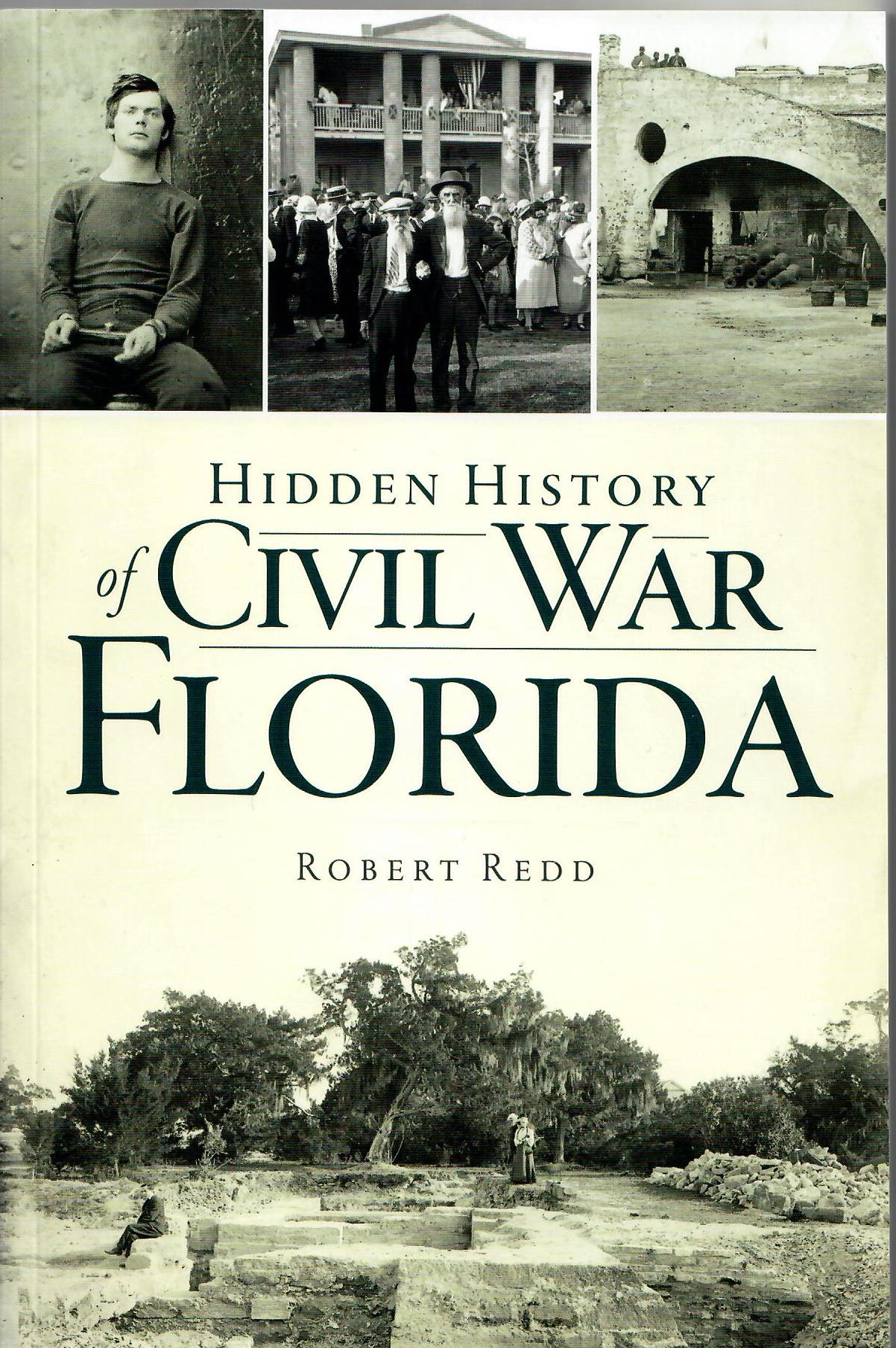
Arcadia Publishing imprint The History Press has released several Civil War titles in the “Hidden History” series including mine on the state of Florida.  Others that come to mind cover Tennessee, Savannah, and Oregon. Each author has their own thought on how the book should be set up. That is a strength and weakness of this series. While the book covers are often similar, the meat of the book is decidedly different in format, style, and substance. This can lead to confusion for some readers,  who might expect the books to be similar.

Mr. Thomas wastes no time in putting forth his primary beliefs when he states “Though it is most commonly called the Civil War or the War Between the States, the most appropriate moniker is the War for Southern Independence (page 9). That aside, the book cover 50 stories, covering topics the author believes are rarely mentioned elsewhere, staying away from “great battles, leaders, and other topics covered numerous times by others…” That is a noble goal and perfect for this series. In fact, I followed this route when I declined to include Olustee in my own book.

Thomas breaks his subject matter into six major themes with subchapters in each. The themes include the early days, leadership, blockade of South Carolina’s coast, naval operations, soldiers’ stories, and postwar years and remembrance. The individual chapters in each subject are usually short; two to three pages at most, allowing for the book to be easily picked up and put down.

With South Carolina being the first state to secede, I was disappointed to not find an in depth look at secession, how it came about, and the outcomes of the movement in the pre Confederacy days. Unionists are given no space in the book and the story of Robert Smalls (OK, maybe that’s not truly HIDDEN HISTORY) is not discussed. With 50 chapters being included, it seems there could be space carved out for these stories.

Arcadia is known for books which contain many b/w images to supplement the text. This title follows that template, though with maybe not as many as some Arcadia titles come with. The Library of Congress and Naval History and Heritage Command serve as primary sources for the photos in this book.

For those seeking a brief introduction to South Carolina Civil War history this might be a book you will enjoy. The chapters are brief which along with the notes and abbreviated bibliography will provide good starting points for further inquiry.


Buy Me A Coffee donation link
Click the image above to support this site through Buy Me A Coffee. Your helps pay for website fees and maintenance, research fees for blog and book writing, photo usage and rights fees, and other associated costs. It might go to buying a bag of coffee, keeping me focused on the research topic at hand.

This post may contain affiliate links. If you click these links and make a purchase, I may receive a small commission. This commission does not affect any price that you pay. Affiliate programs or sponsors providing products do not influence  my views and opinions.


bookshop.org affiliate button
Support small businesses. Click this link to purchase from bookshop.org and help support my blogging efforts. I truly appreciate your support.
Posted on Leave a comment

Bethune Beach Florida Historic Marker

Bethune-Volusia Beach center of panel

County of Volusia operated Mary McLeod Bethune Beach Park in New Smyrna BeachLocated in what is now an exclusive and expensive part of beachside New Smyrna Beach is the small Mary McLeod Bethune Beach Park. Here you will find a Florida Historic Marker in recognition of Bethune Beach. This area was once reserved for African American beachgoers in the days of segregation.

Mary McLeod Bethune Beach Park hosts two markers detailing the importance of this area to African Americans in the days of Jim Crow segregation. Today, the area is littered with homes valued in the seven figures, offering incredible beach views that at one time were reserved for black visitors. Fortunately, those days are past and visitors, no matter their race, can enjoy the beaches throughout the area, without intimidation.


Looking for great airline prices? Use Aviasales for tickets to and from all the major destinations. Their free flight aggregator will find the tickets you want at the best prices. 


The first marker we’ll discuss is from the Florida Department of State

Mary McLeod Bethune Beach Park Florida Historic Marker side 1Bethune-Volusia Beach side one

When Daytona Beach was first founded in 1876 two of its founders, John Tolliver and Thaddeus S. Gooden, were African American. Over the years, Jim Crow laws changed the state drastically, and by the 1920s African Americans were banned from most of Florida’s public beaches. In response, beaches opened that catered specifically to African Americans like Butler Beach in St. Augustine, American Beach on Amelia Island, and Paradise Park at Silver Springs in Ocala. In 1935, only two places in Volusia County allowed African Americans beach access, and only during the summer and on specific holidays. Bethune Cookman College co-founder and president, Dr. Mary McLeod Bethune wanted to create a beach in Volusia County for African Americans to enjoy without restriction or fear of harassment. Born in Mayesville, South Carolina to formerly enslaved parents, Bethune moved to Daytona Beach in 1904. She opened the Daytona Literary and Industrial School for the Training of Negro Girls, which later merged with Cookman Institute in Jacksonville to become Bethune-Cookman College. Bethune was an active crusader for educational advancement and Civil Rights for African Americans in Florida and throughout the nation.

Bethune-Volusia Beach side two Mary McLeod Bethune Beach Park Florida Historic MarkerBethune-Volusia Beach side two

Bethune approached architect and developer Mr. Dana F. Fuquay about purchasing a two-and-a-half mile strip of land south of New Smyrna Beach. Fuquay owned most of the land along the Intracoastal Waterway in Volusia and Flagler counties. In need of investors, Bethune used her influence to arrange a meeting at the Rogers Hotel in Tampa with some of the wealthiest African Americans in Florida, and on December 9, 1945 the Bethune-Volusia Beach Corporation was formed. The charter members included president, Mr. G.D. Rogers; executive vice president Mr. George W. Powell; vice president, Dr. W.H. Gray; secretary, Mr. James A. Colston; and treasurer, Dr. Mary McLeod Bethune. The new beach quickly became a popular vacation destination for African Americans from all over the country. During the July 4th celebration in 1950, over 5,000 people came out to enjoy the festivities. Bethune-Volusia Beach was open to all races though ownership of land and businesses was retained soley (sic) by African Americans. Following the passage of the Civil Rights Act on 1964, the beach lost popularity, and many visitors, particularly those from out of state stopped coming as other options became more  available.

A Florida Historic Site sponsored by Volusia County Coastal Division, Bethune Beach Property Owners Association, Bethune Foundation, and the Florida Department of State

F-940

2017

Click the image above to easily save this post to one of your Pinterest boards so you can quickly find it later.


Find tickets to all the incredible events happening in and around Daytona Beach at the best prices using TicketNetwork! Whether you want Tortugas tickets, concerts, car races, college football, or something else. Always give TicketNetwork a look for great seats at great prices. 

The second marker we’ll discuss was placed by the County of Volusia

Bethune Beach Swimming Freely Bethune Beach Florida Historic Marker

This panel features some nice imagery provided by Bethune Cookman University Archives.

Bethune Beach Swimming Freely left third of panelWelcome to Volusia County’s Mary McLeod Bethune Beach Park–once part of a nationally known African American resort. Named for a noted educator and presidential advisor, this spot gave black people a place of their own when most Florida beaches were closed to them by segregation. Bethune had seen her own students turned away from local beaches, and in the 1940s she and other investors bought 2.5 miles of oceanfront plus lands along the Indian River. After all, she reportedly said, this was “God’s water” for everyone to enjoy.

People did enjoy themselves here. By the 1950s Bethune-Volusia Beach, its corporate name, was a popular destination for swimming, fishing, picnicking and car racing. Crowds also came for live music, dancing, and–as more than one informant recalled–dressing to be seen. Central Floridians made up most of the day users, but others journeyed great distances to stay in a motel and private houses. From New Smyrna to Atlanta and Pittsburgh, black Americans knew about Bethune Beach.


Bethune Beach center of panel


Bethune Beach Swimming Freely right third of panelBethune herself envisioned a big, year round resort, controlled by African Americans but open to “all people.” Yet the larger development never really took off, and by the 1970s the dream had faded. Most black landowners–by choice or economic necessity–gave up their property over time, and the coming of integration meant that beachgoers had other places to go. Even so, during its heyday Bethune Beach became a beloved site for people of color. It was that rare place on Florida’s Atlantic coast where they could gather, relax, and swim freely.


Wide view of Mary McLeod Bethune Beach Park
View of Mary McLeod Bethune Beach Park
View of the Atlantic Ocean and beach at Mary McLeod Bethune Beach Park
The Atlantic Ocean and beachfront as seen from Mary McLeod Bethune Beach Park


Buy Me A Coffee donation link
Click the image above to support this site through Buy Me A Coffee. Your helps pay for website fees and maintenance, research fees for blog and book writing, photo usage and rights fees, and other associated costs. It might go to buying a bag of coffee, keeping me focused on the research topic at hand.

This post may contain affiliate links. If you click these links and make a purchase, I may receive a small commission. This commission does not affect any price that you pay. Affiliate programs or sponsors providing products do not influence  my views and opinions.


Mary McLeod Bethune in Florida: Bringing Justice to the Sunshine State
Mary McLeod Bethune in Florida: Bringing Social Justice to the Sunshine State, written by Bethune scholar Dr. Ashley N. Robertson